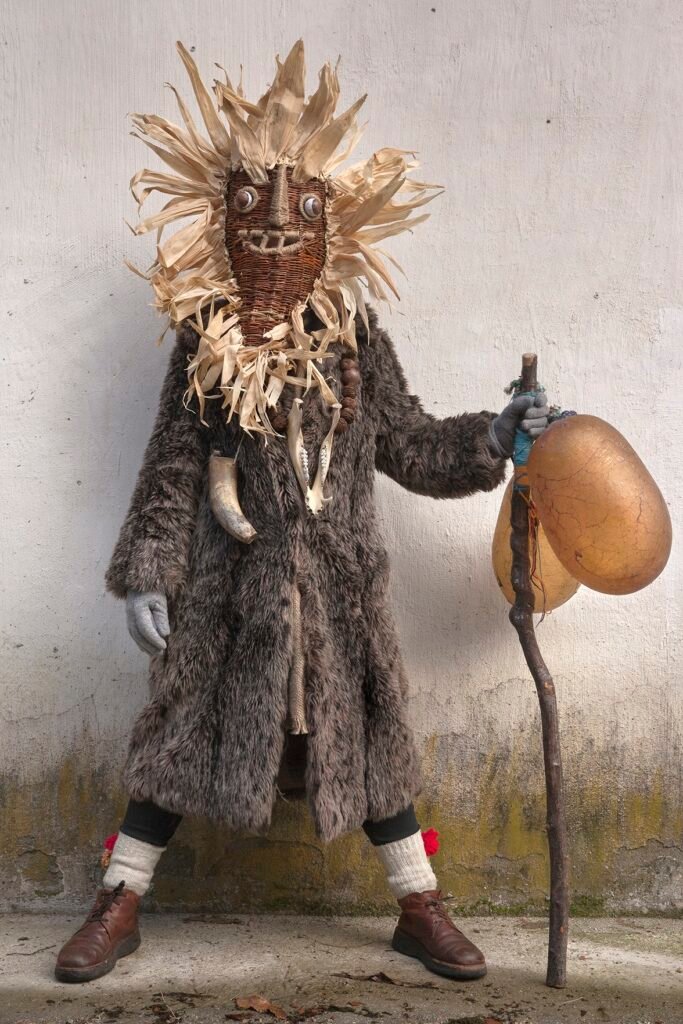
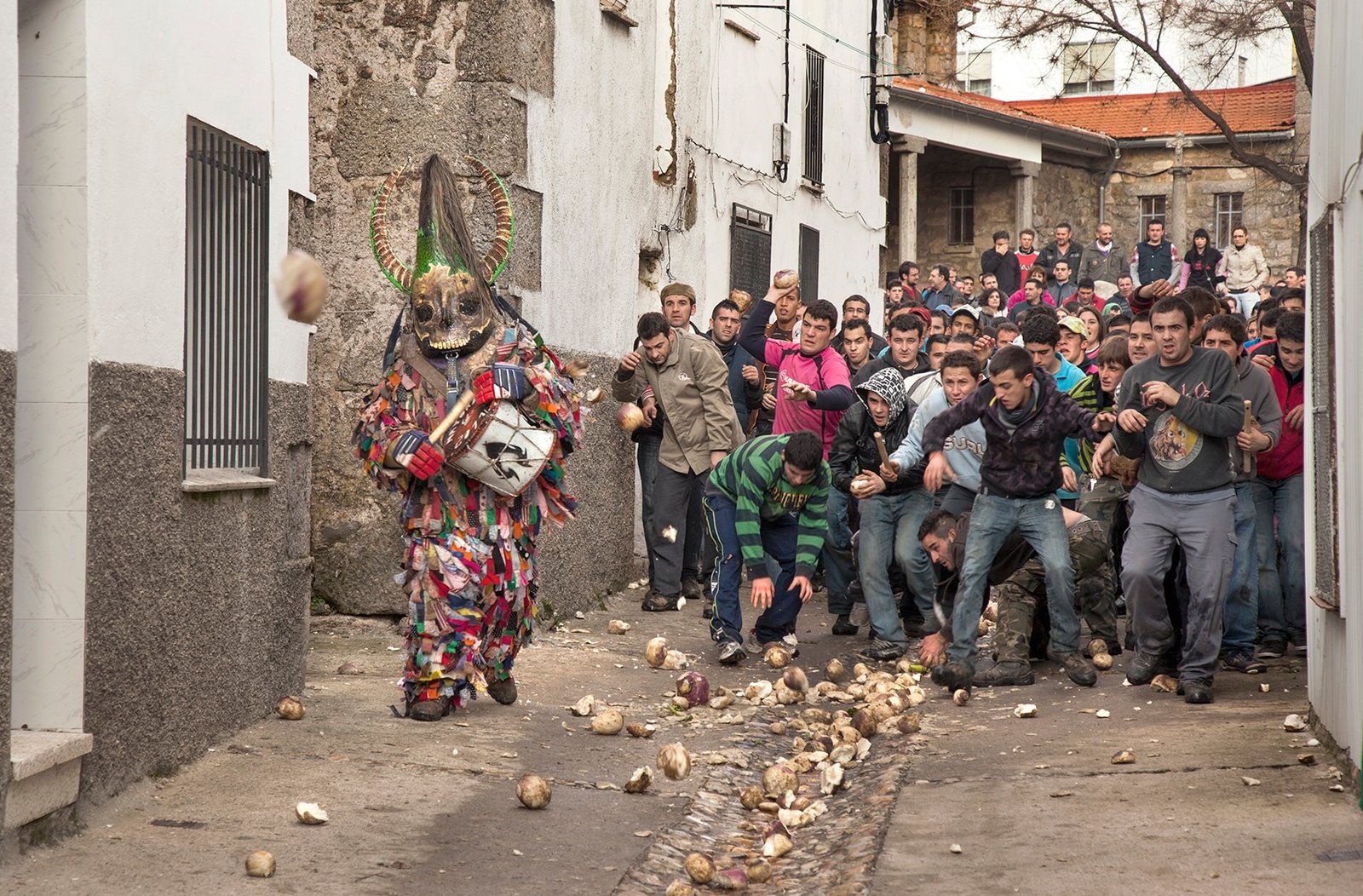
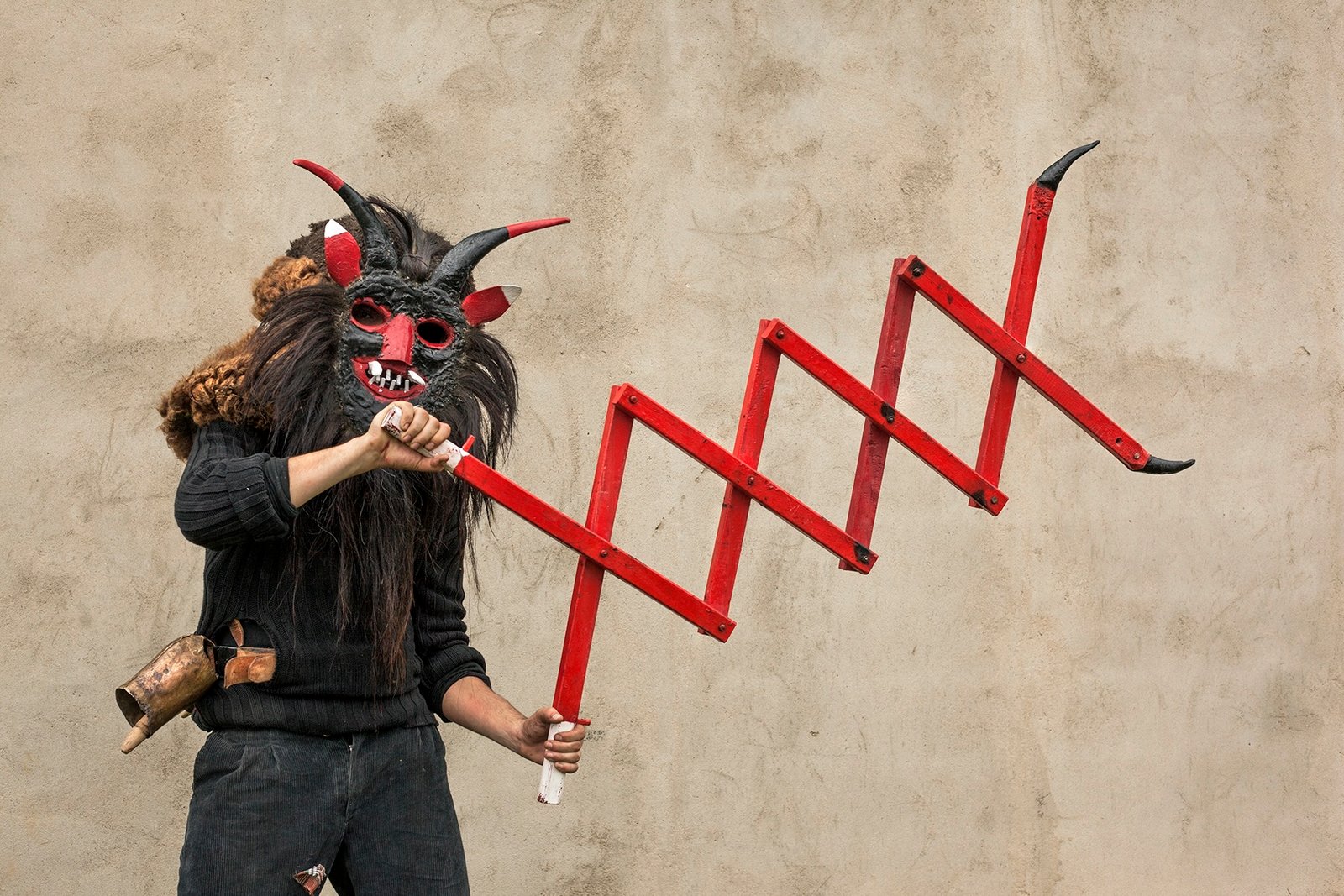
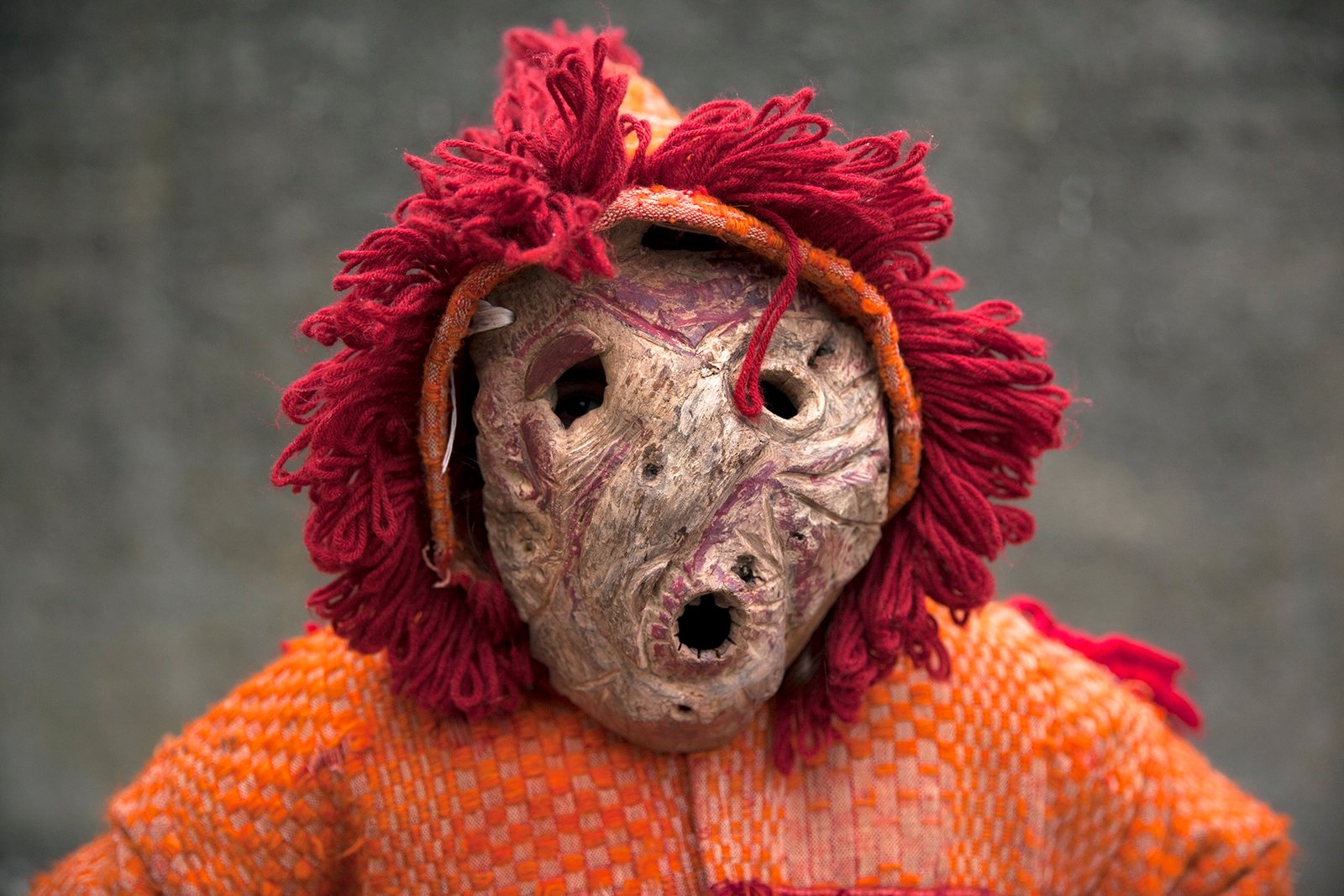
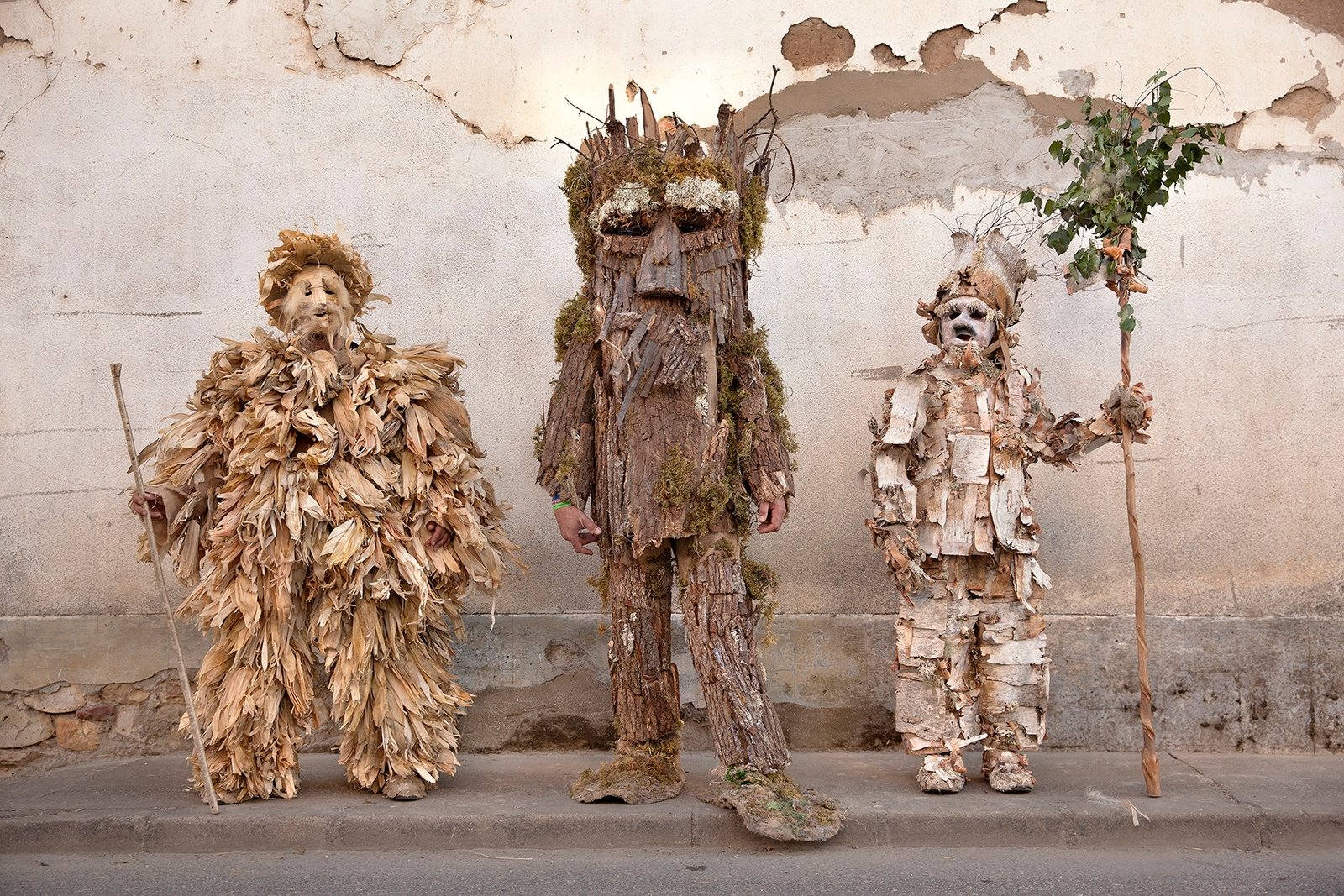
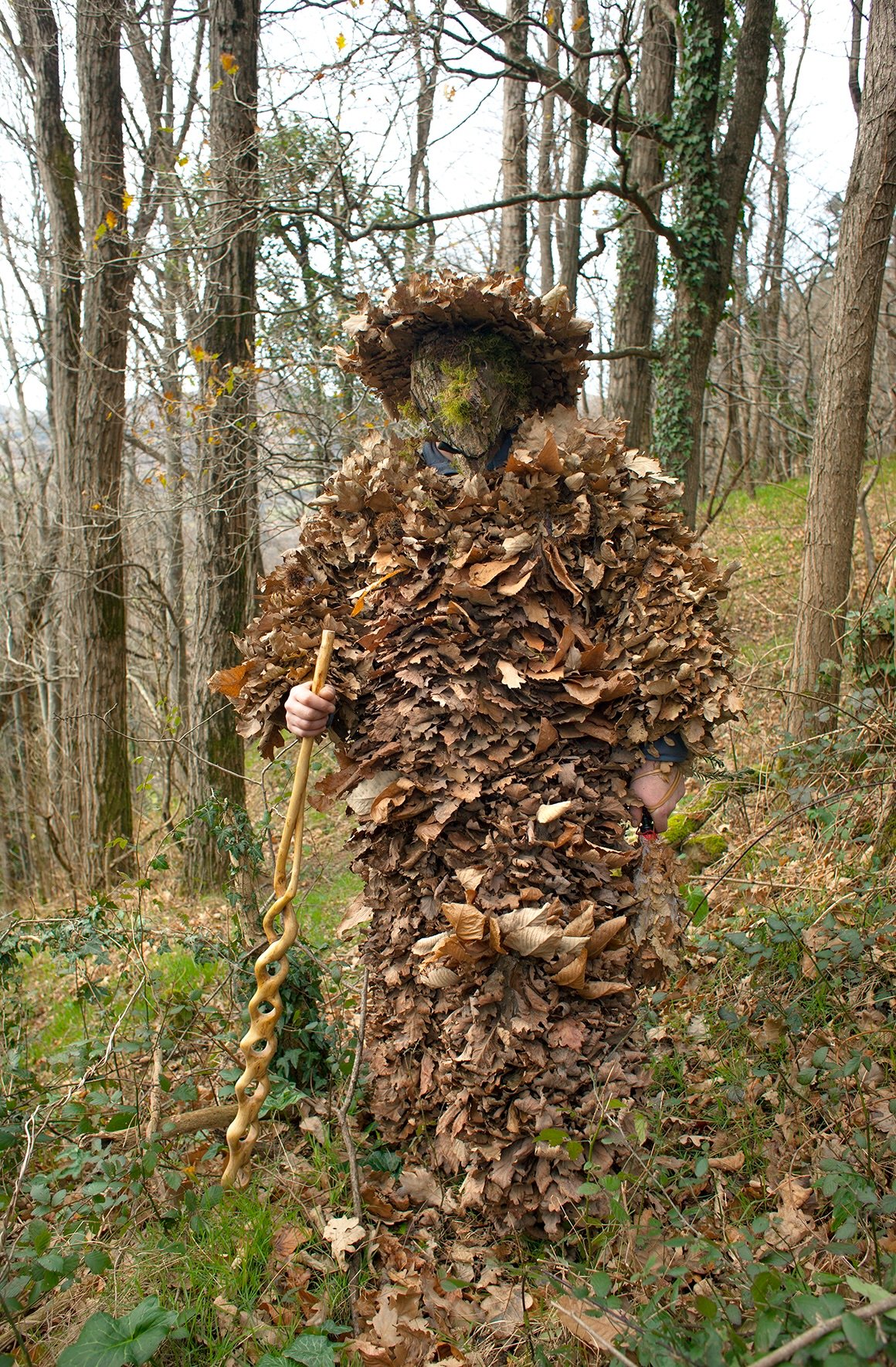
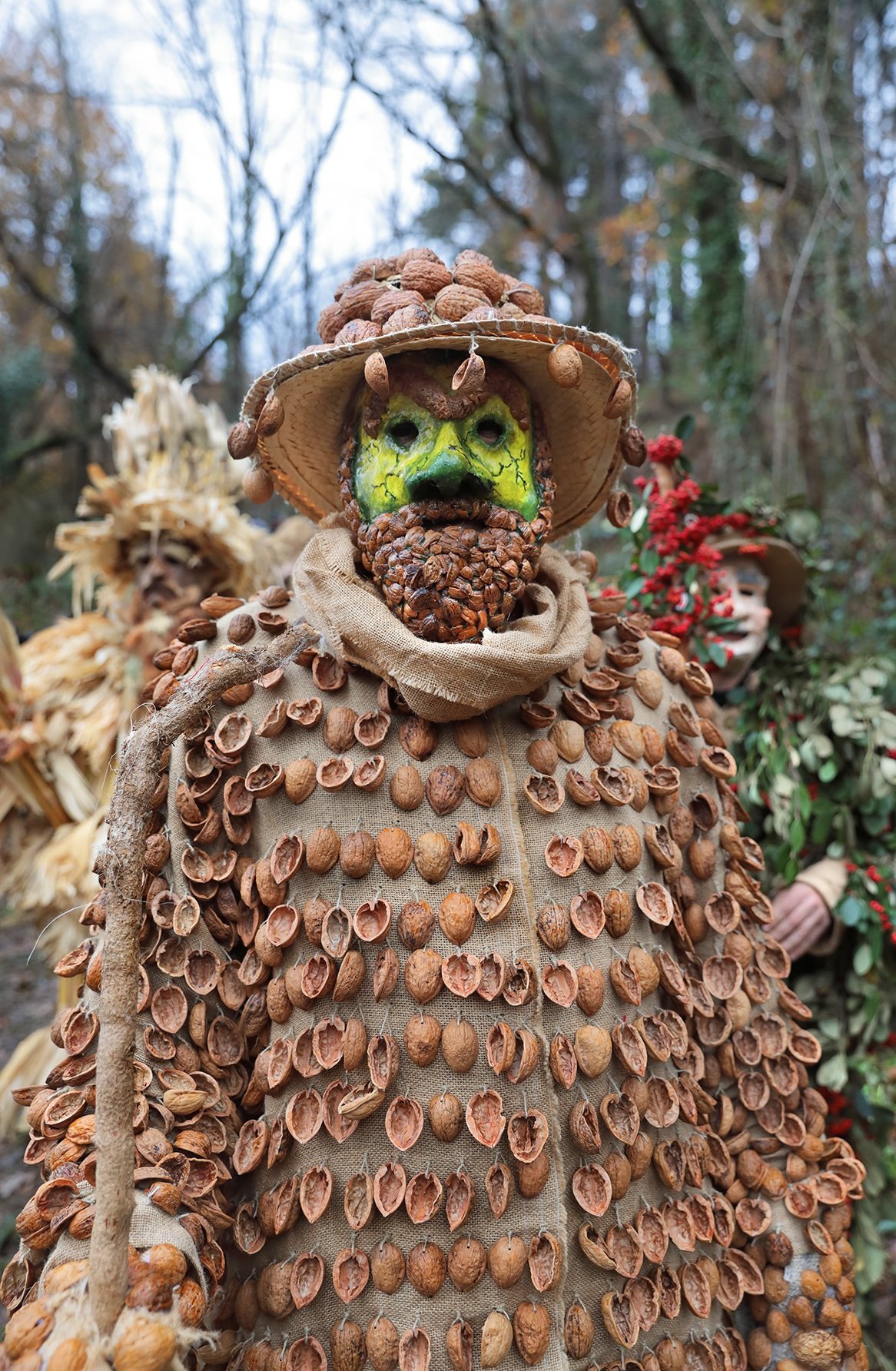
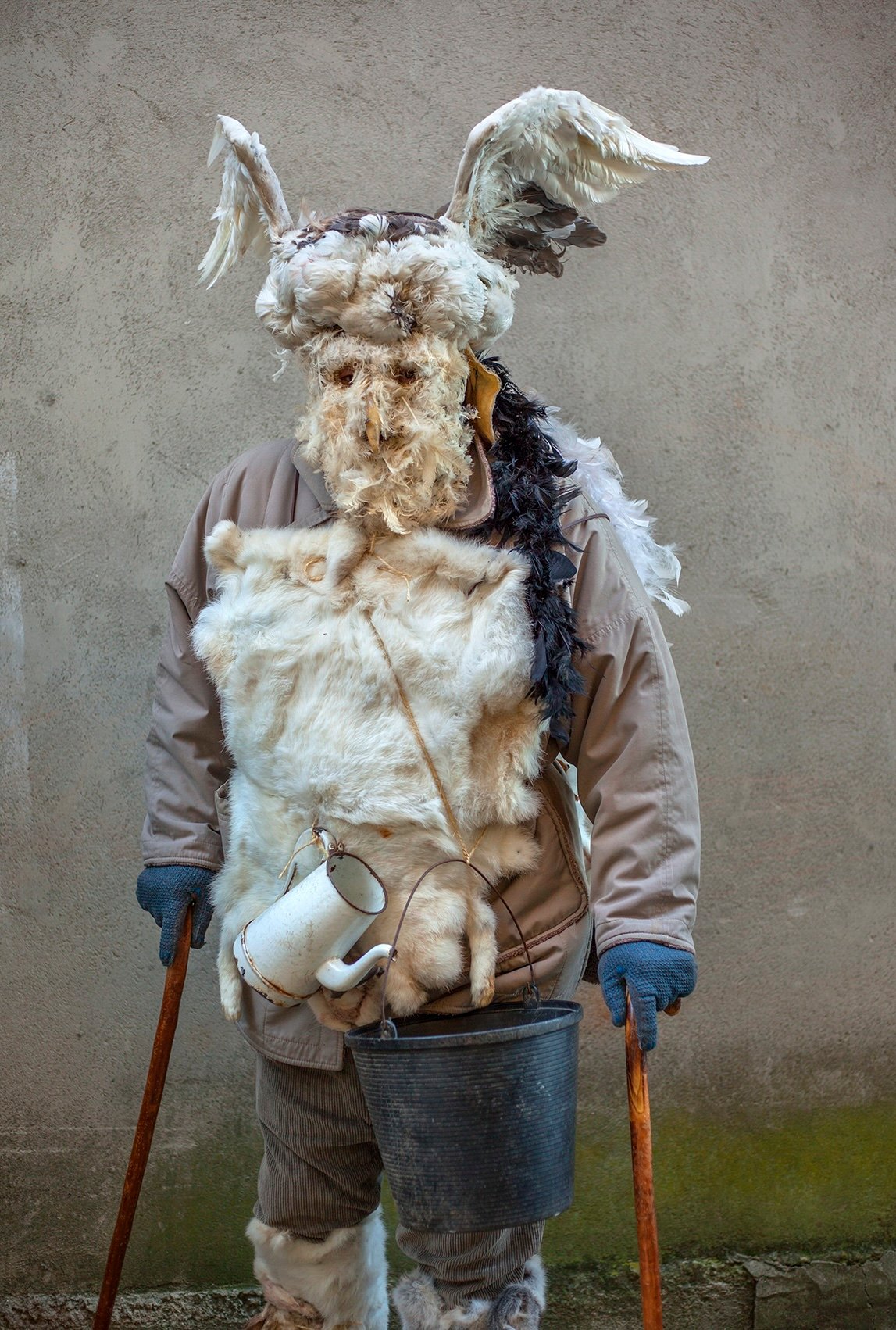
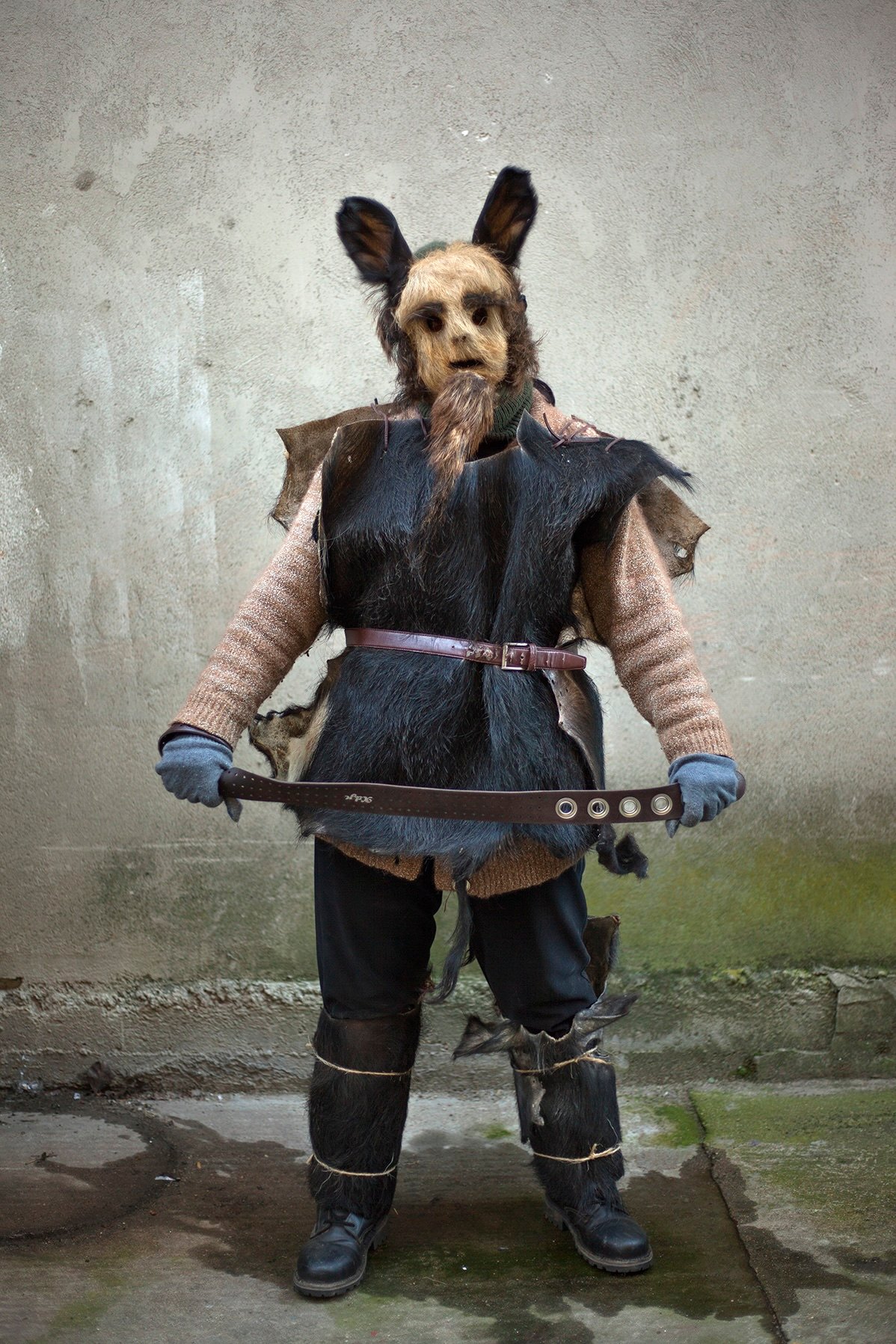
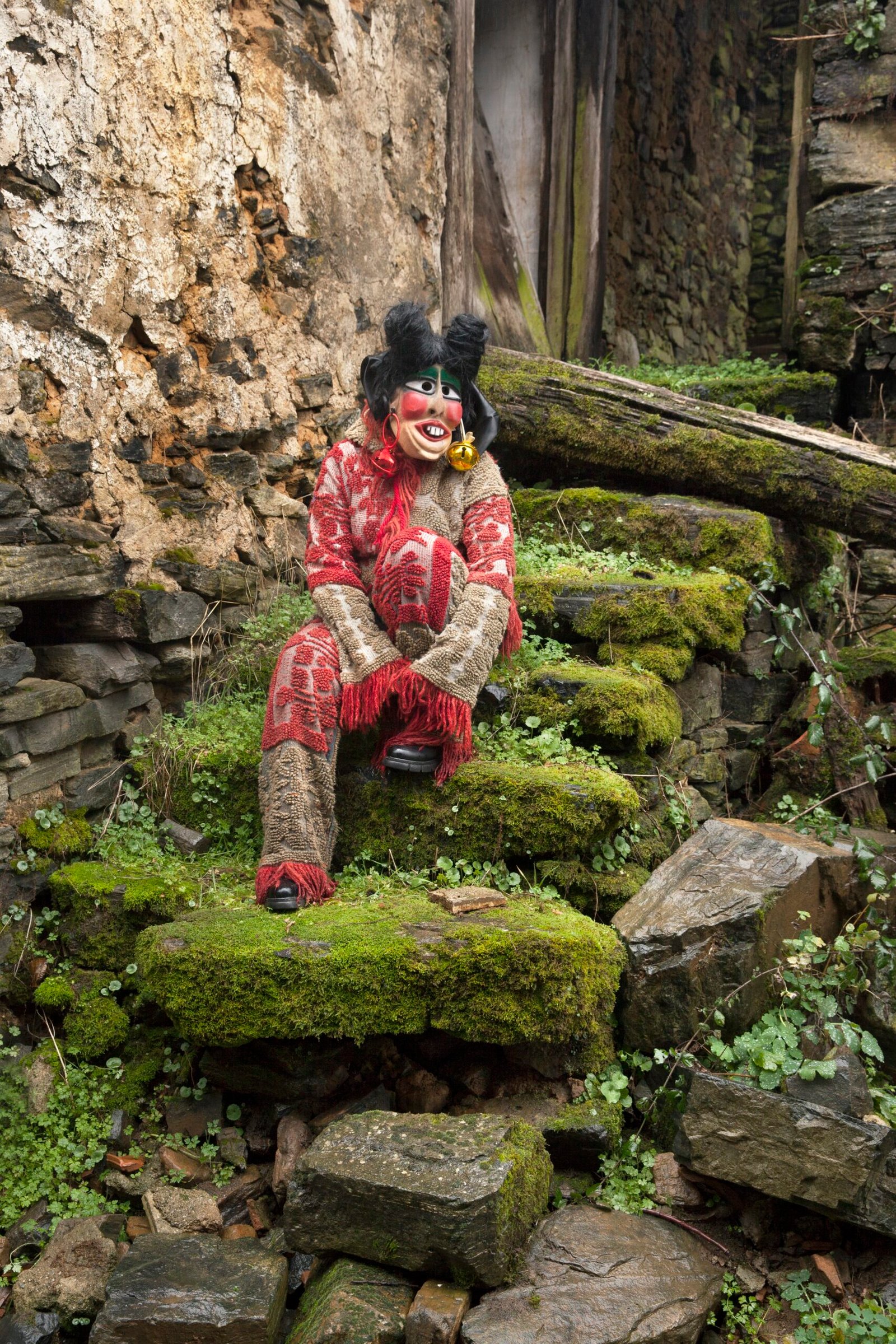
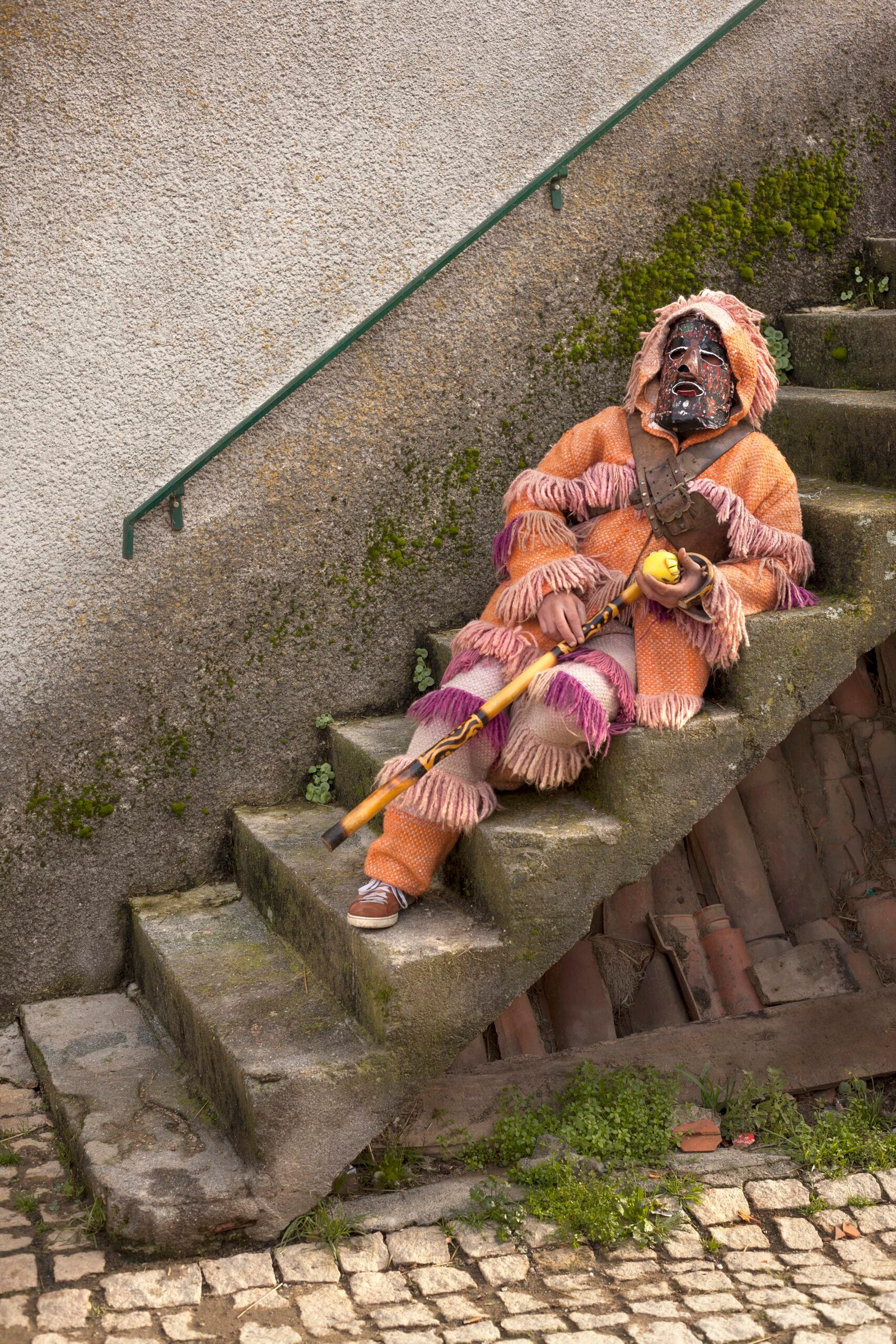
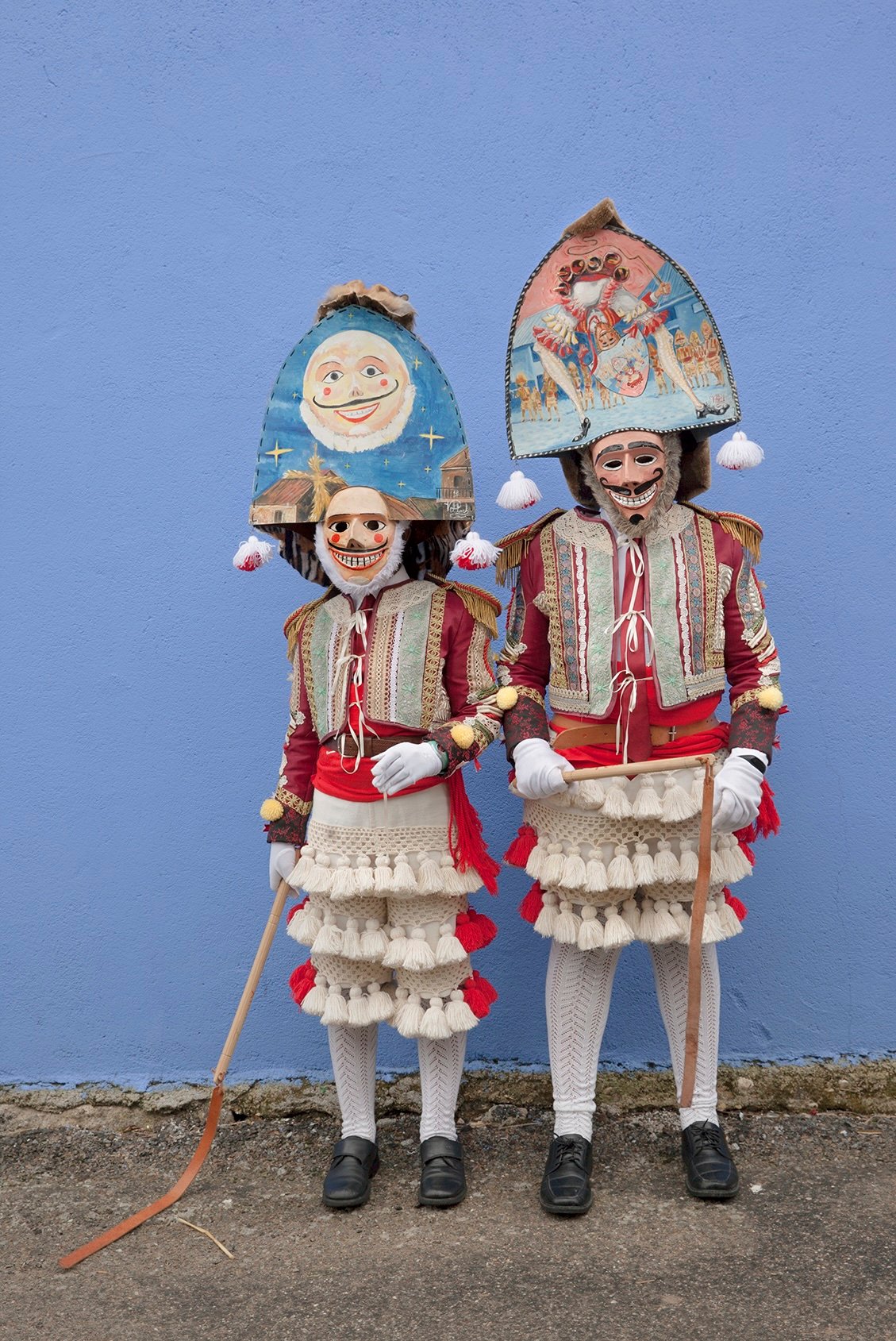
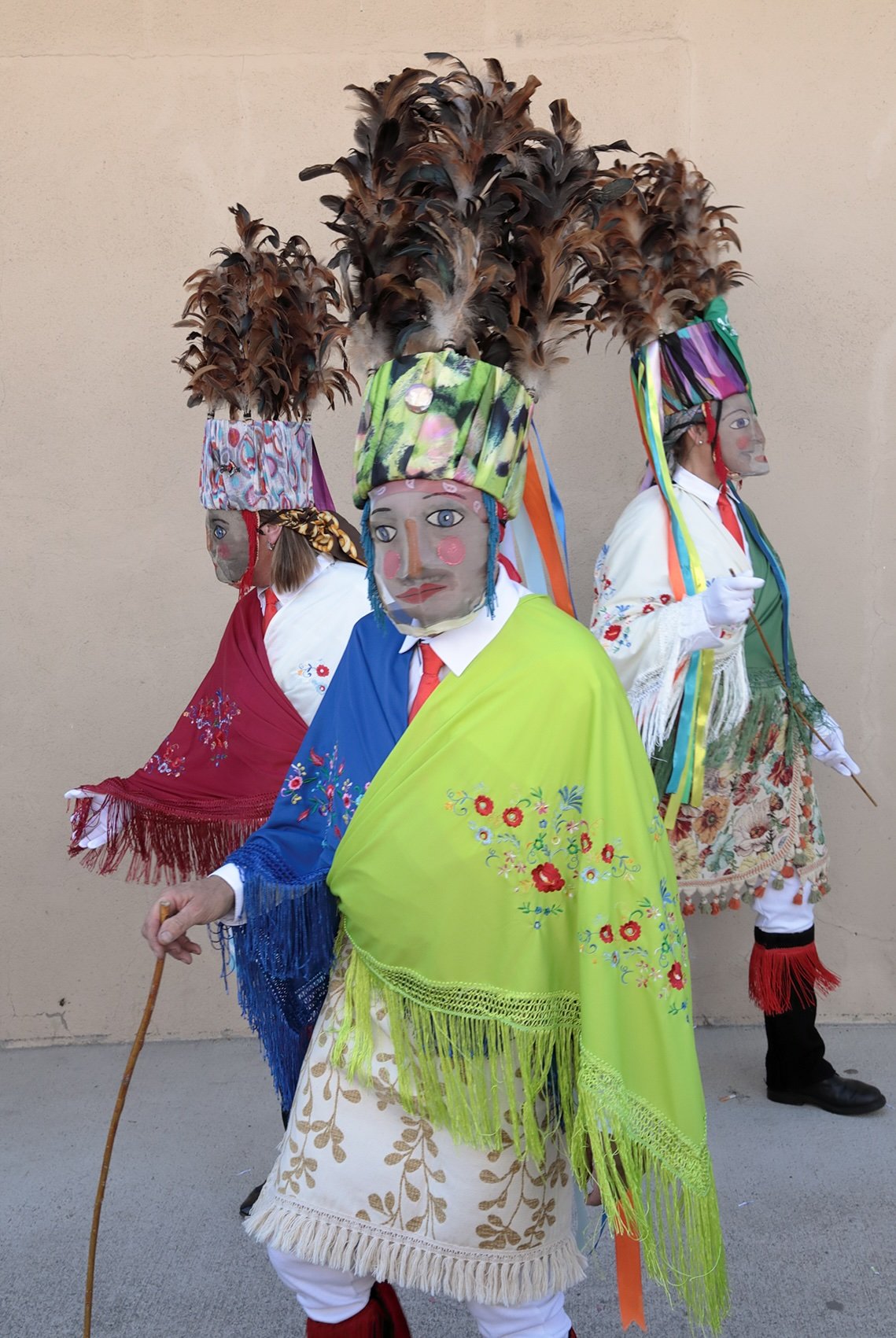
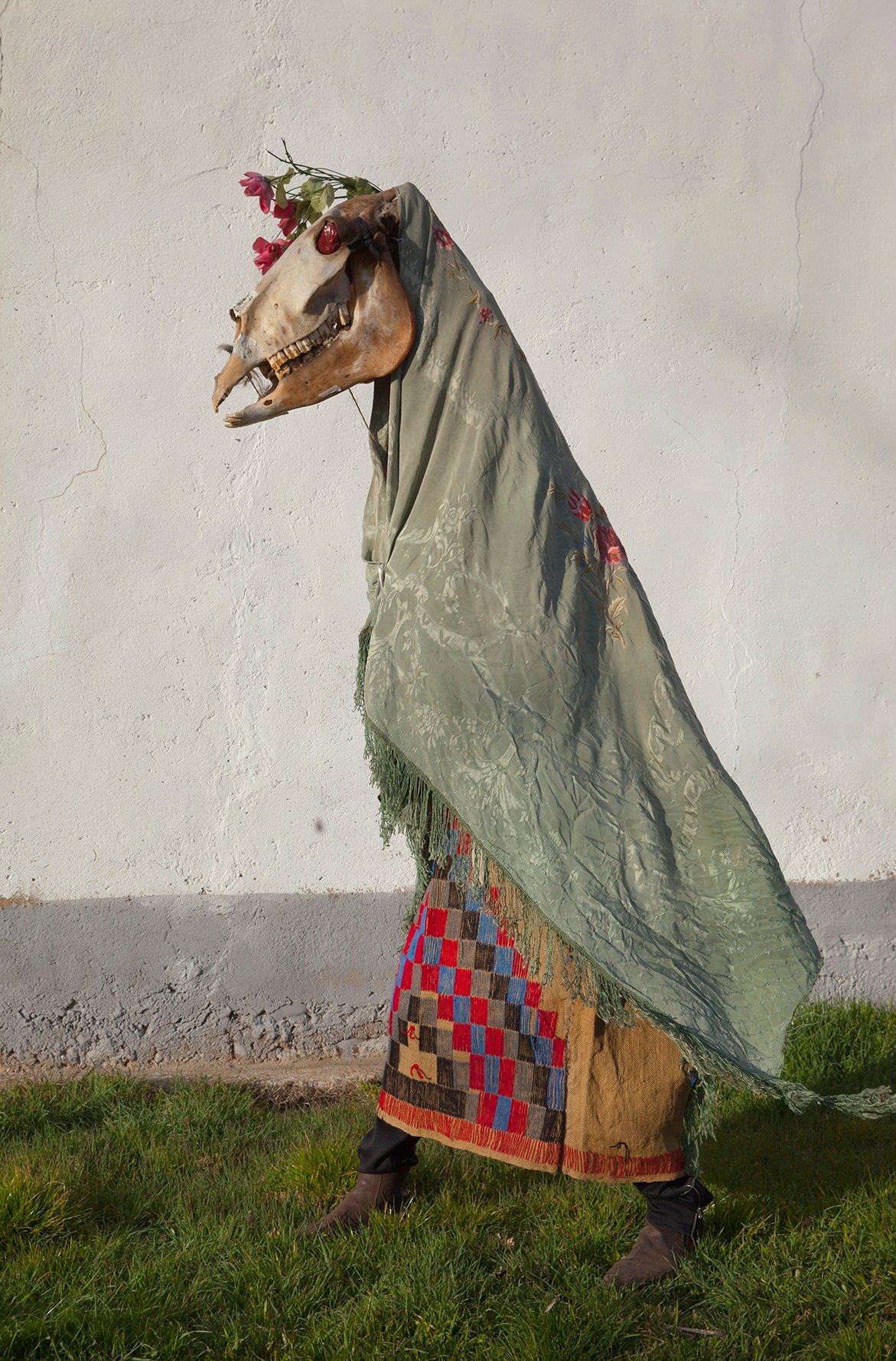
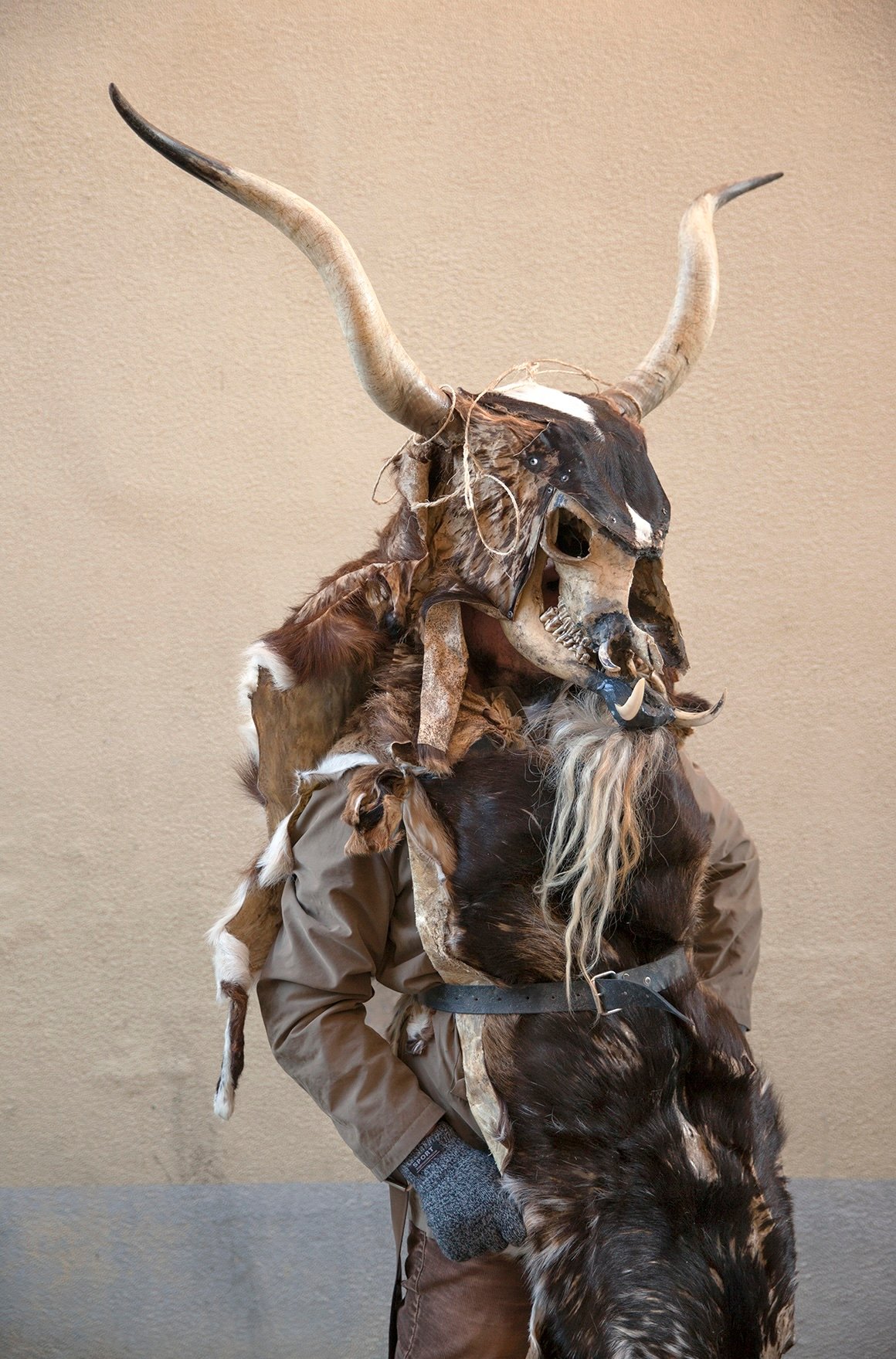
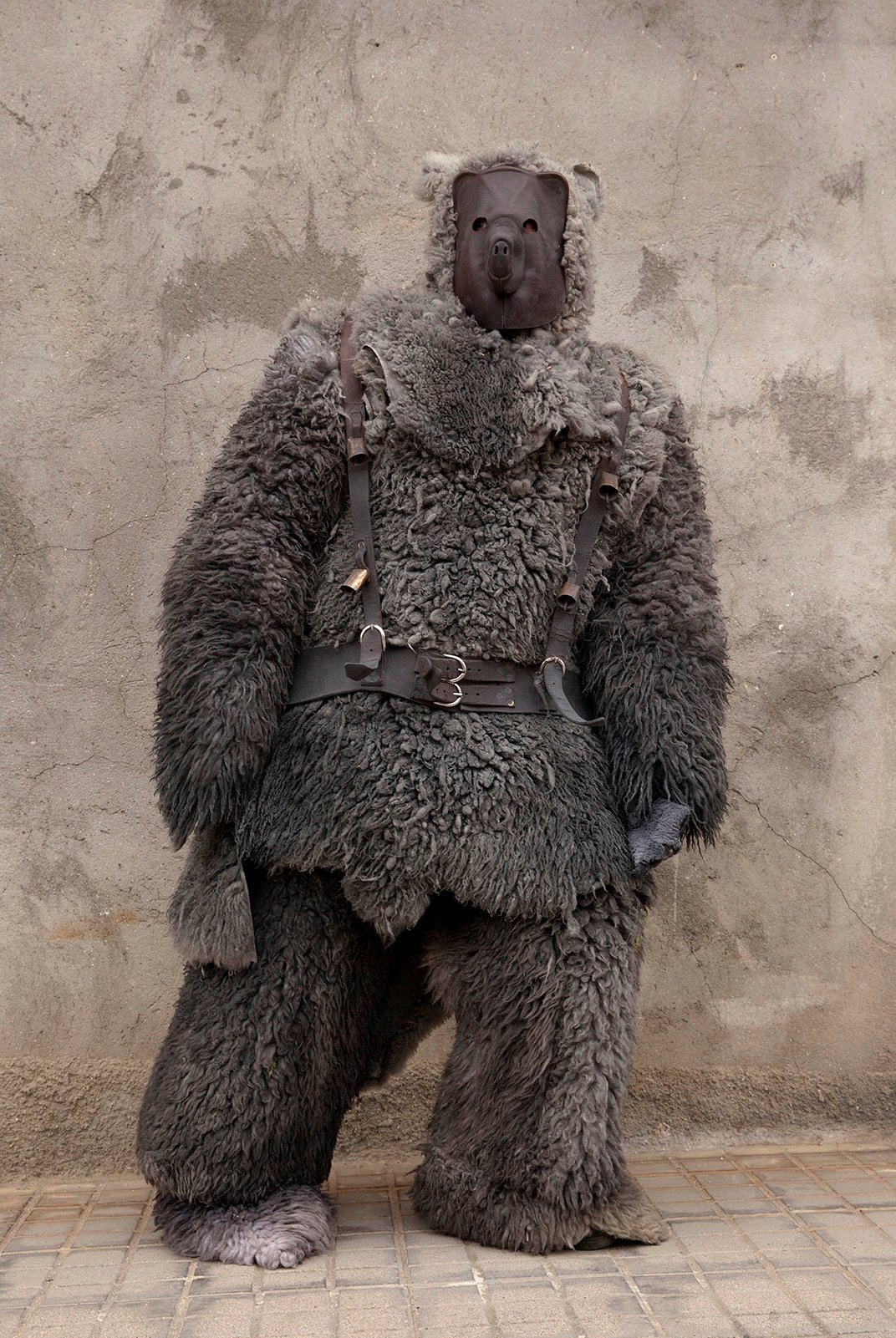
MANIFESTO OF A JOURNEY THROUGH MASKS More than thirty years ago, I embarked on a journey driven by a profound desire: to understand the ancient traditions of masks. I sought the rituals that speak of time, of the land, and of those who inhabit it. What began by observing local practices in villages of the northwest of the Iberian Peninsula expanded to Portugal, Bulgaria, Romania, the Amazigh peoples of the Atlas Mountains, communities in Mexico, and other places I still keep marked on my maps, where traditions preserve echoes of ancient and, at the same time, universal secrets. From the beginning, I was accompanied by one question: WHY? Why cover the face, maintain gestures and sounds that connect with the community and with the cycles of the sun and moon, the solstices and equinoxes? I soon learned that no theory can replace experience. Only by looking, waiting, listening, and feeling can one discover the deep rhythm that animates these rituals. The camera became my inseparable companion. Each photograph seeks to capture what words cannot: the breath behind the mask, the tension between the human and the symbolic, the energy that transforms the everyday into living memory. What began as ethnography became a journey of symbolic evolution, where each image reveals the continuity of an ancestral language that connects generations. While our cities lose their cycles and natural light is diluted among buildings, in many villages the rhythms remain marked by the earth and the sky. Masquerades are part of a profound calendar that reminds us that time is cyclical and that we belong to something greater than ourselves. This book brings together nearly one hundred and fifty photographs that bear witness to that journey and that living memory. It is not a closed catalog nor a definitive archive; it is an invitation to look and feel, to leave our urban caves, to walk through villages, to hear cowbells in the fog, to feel the winter chill and the warmth of a shared fire. May these pages open our senses to smells, gestures, sounds, and presences that connect us to the memory of our ancestors. And that, in doing so, they remind us of the urgency of nurturing human connections, recovering the rhythms of life, and looking again at the cycles that sustain us.
Carlos González Ximénez (Madrid, 1961) comes from a family of Jerez artists and is the fourth generation of photographers, a heritage that has shaped his visual sensitivity and his interest in cultural memory. His formation also included painting and naturalistic drawing, tools that helped him refine his gaze and record details that often go unnoticed. From an early age, he grew surrounded by artistic references: his father, a specialist in Goyaʼs painting, nurtured in him an appreciation for pictorial tradition and for the books that filled every corner of their home. Photography quickly became his primary language. He has traveled to nearly every corner of the Iberian Peninsula and much of Portugal, seeking the magical and hidden aspects of our traditions: rites, festivals, and gestures that reveal the living memory of communities. His work has also taken him to Bulgaria, Romania, the Amazigh villages of the Atlas, and various regions of Mexico, documenting the continuity of symbols across generations and the energy of rituals that still sustain these communities.
For the past fifteen years, he has fully embraced digital photography, adapting to a medium that has transformed photographic practice, without losing the closeness and respect that have always guided his vision. His work combines ethnographic observation with artistic sensitivity, and he has participated in multidisciplinary projects, from documenting festivities to collaborating on the Judit Polgár documentary, integrating photography, illustration, and visual narrative. He has also worked as a conservator and curator of historical archives, contributing to the preservation of our visual heritage.
Carlos continues to explore unique cultural expressions, traveling to places where the symbolic and the human intersect. His gaze remains guided by curiosity and respect, seeking to capture the essence of traditions that connect us with our heritage and with the force that sustains rituals across time.
We use cookies to make your experience better. Check out our Privacy & Terms for more info... AcceptCookie settings
Privacy & Cookies
Privacy Overview
This website uses cookies to improve your experience while you navigate through the website. Out of these cookies, the cookies that are categorized as necessary are stored on your browser as they are essential for the working of basic functionalities of the website. We also use third-party cookies that help us analyze and understand how you use this website. These cookies will be stored in your browser only with your consent. You also have the option to opt-out of these cookies. But opting out of some of these cookies may have an effect on your browsing experience.
Necessary cookies are absolutely essential for the website to function properly. This category only includes cookies that ensures basic functionalities and security features of the website. These cookies do not store any personal information.
Any cookies that may not be particularly necessary for the website to function and is used specifically to collect user personal data via analytics, ads, other embedded contents are termed as non-necessary cookies. It is mandatory to procure user consent prior to running these cookies on your website.