AMIN YOUSEFI
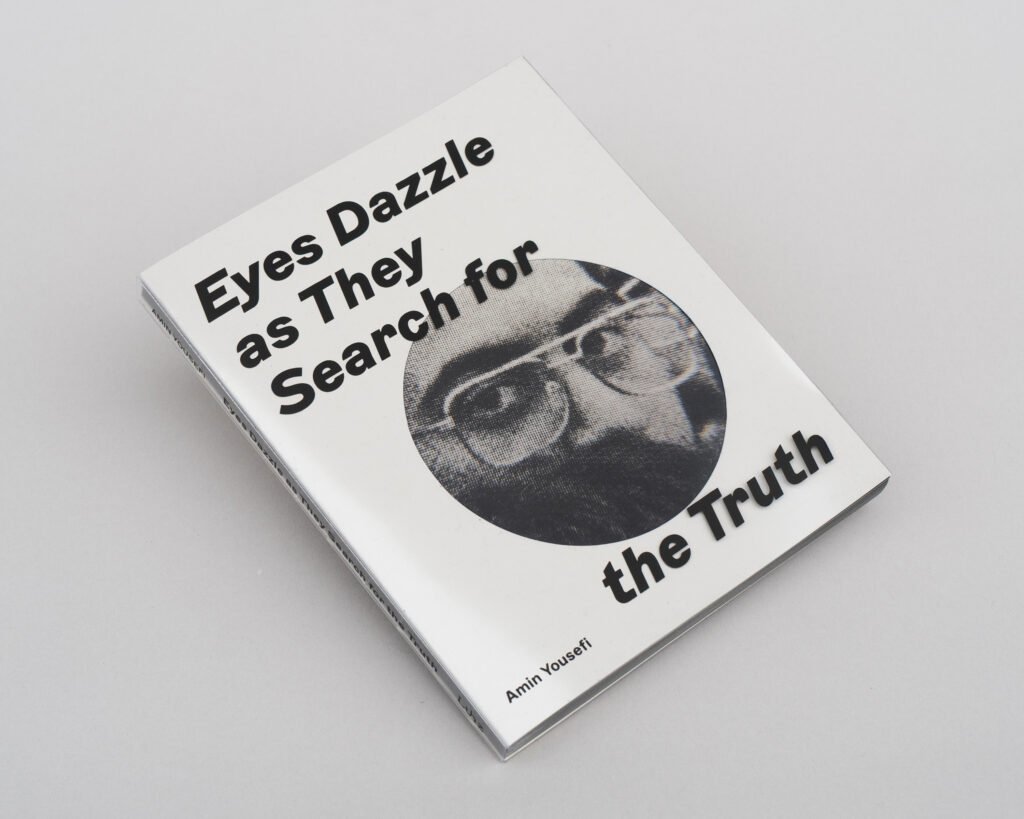
Eyes Dazzle as They Search for the Truth
website
Instagram
Published by: Luhz Press
Text by: Matteo Cremonesi
The Past That Continues to Look
“The past is never dead. It’s not even past.”
William Faulkner, Requiem for a Nun
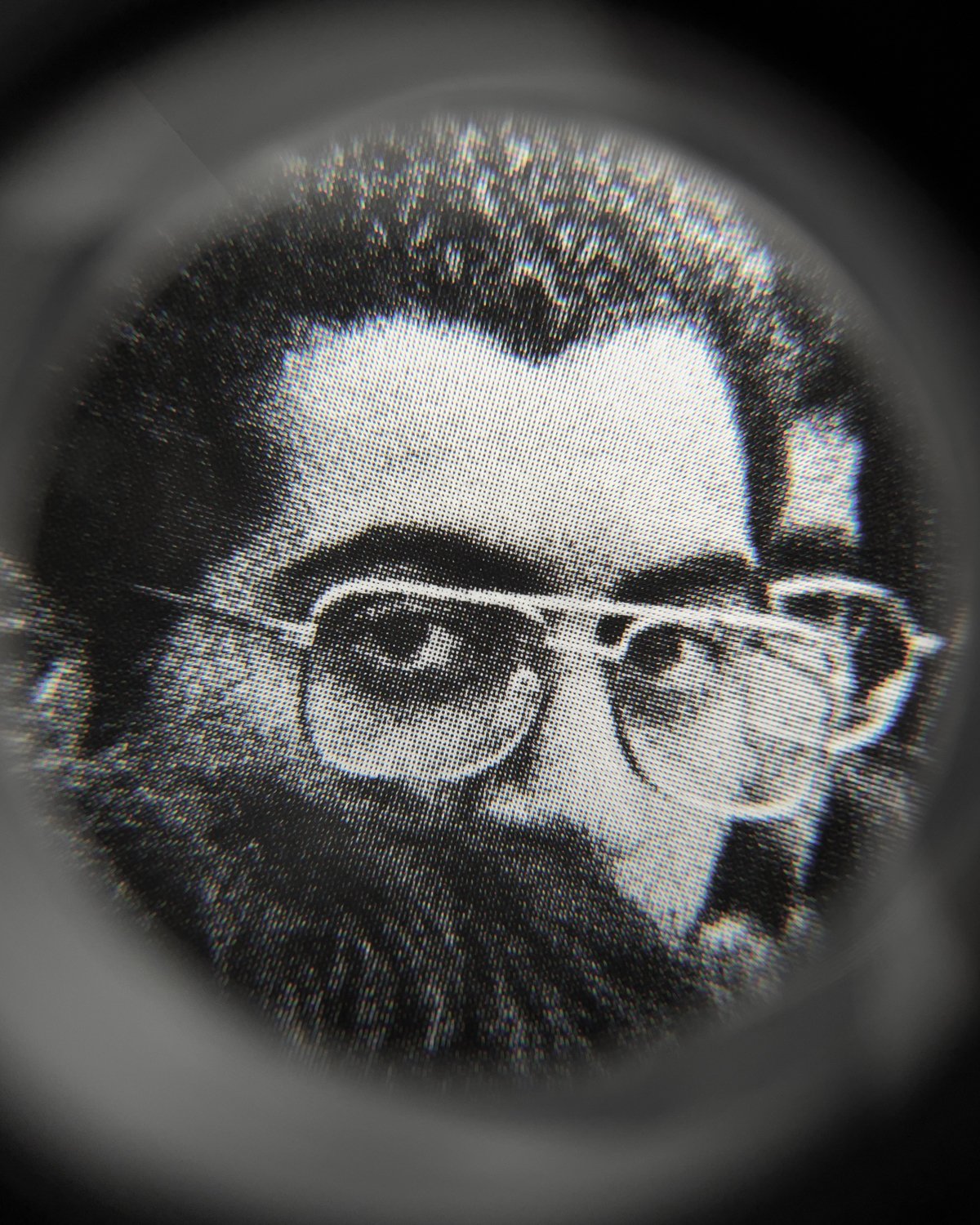
Every historical photograph contains a quantity of future that we can no longer recover. Not simply because it records people, places, and events that belong to the past, but because, at the moment it is taken, it remains open to everything that might happen afterwards. The demonstrators photographed by Amin Yousefi during the Iranian Revolution of 1978–79 did not know what future awaited their country, just as the photographers observing them could not have known which of those faces would survive the processes of historical memory. Photography therefore preserves something that history, in its retrospective form, necessarily tends to erase: the indeterminacy of the future. Eyes Dazzle as They Search for the Truth, published by Luhz Press in 2026, emerges precisely within this friction between what has happened and what, at the moment it was photographed, had not yet happened. The project does not simply recover marginal figures from images of the revolution; through their gaze, it reactivates a temporality that history has already closed. In this sense, photography becomes what Roland Barthes called the sign of “a necessarily real thing which has been placed before the lens,”¹ yet Yousefi’s work pushes this condition one step further: what was placed before the lens was not, at the moment of exposure, yet what we now know it to have been.
Perhaps this is the most unsettling aspect of Yousefi’s work. These faces belong to an event whose historical sequence we already know: we know that the Shah would fall, that Khomeini would return from exile, and that the revolution would assume a political and religious configuration destined to profoundly transform Iran and the geopolitical balance of the region. We therefore look at these photographs with the disturbing privilege of those who know the future of the people appearing within them. But the subjects themselves do not possess this privilege. Their eyes still belong to an open present. It is precisely this temporal asymmetry that Yousefi brings to the surface. To look at these faces is to observe people who, at the moment of exposure, did not yet know what kind of history would eventually be assigned to them. Photography thus becomes a paradoxical machine: it preserves a present only because, afterwards, that present can be recognised as the past. Its documentary power is produced retrospectively.
Here Yousefi’s practice encounters one of Walter Benjamin’s most fertile insights into photography. In his celebrated essay on photography, Benjamin argues that the photographic apparatus can make accessible a dimension of reality that escapes ordinary perception, what he calls the “optical unconscious.”² The photographic image therefore always contains more than what the photographer has consciously decided to see. Yousefi constructs his practice precisely upon this excess. The photographs of the revolution have already been taken, published, reproduced, archived, and transformed into historical documents; yet within them there remain details whose capacity to signify has not been exhausted. The artist does not add information to the archive: he alters the hierarchy of the visible. A face that, in the original photograph, was a secondary element within the crowd now becomes the centre of the image. The shift is minimal, but its consequences are profound, because it demonstrates that every photograph contains a plurality of possible images and that history, by selecting some of them, inevitably condemns others to invisibility.
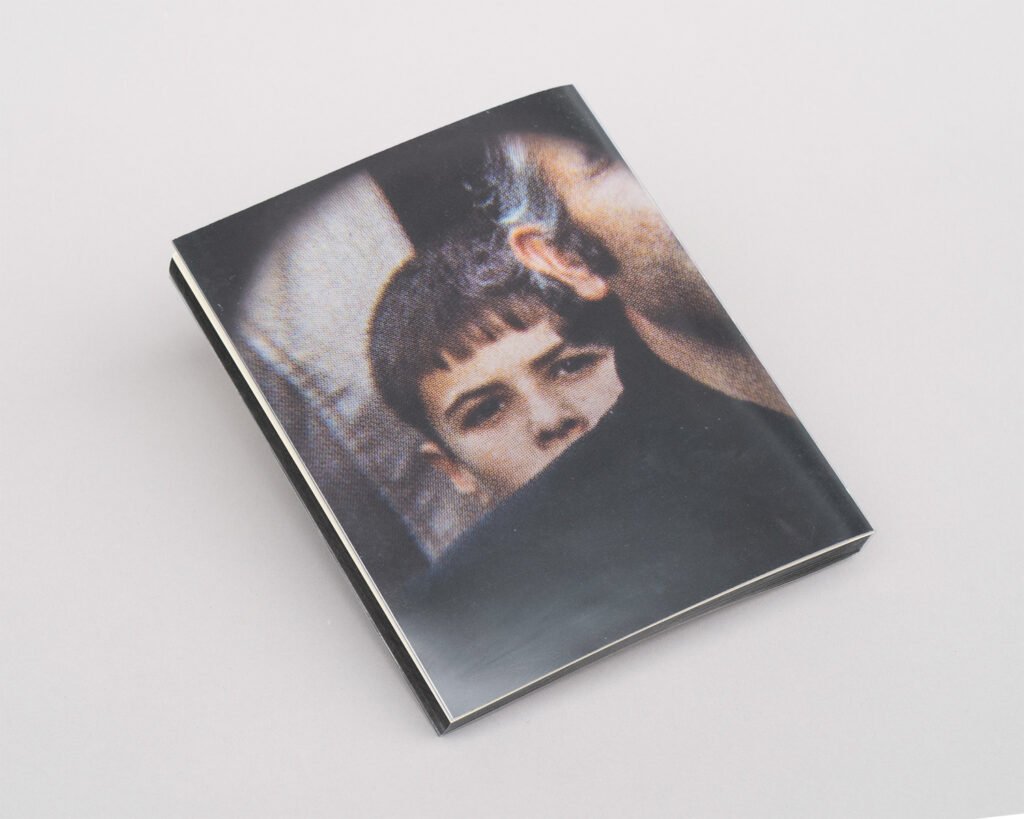
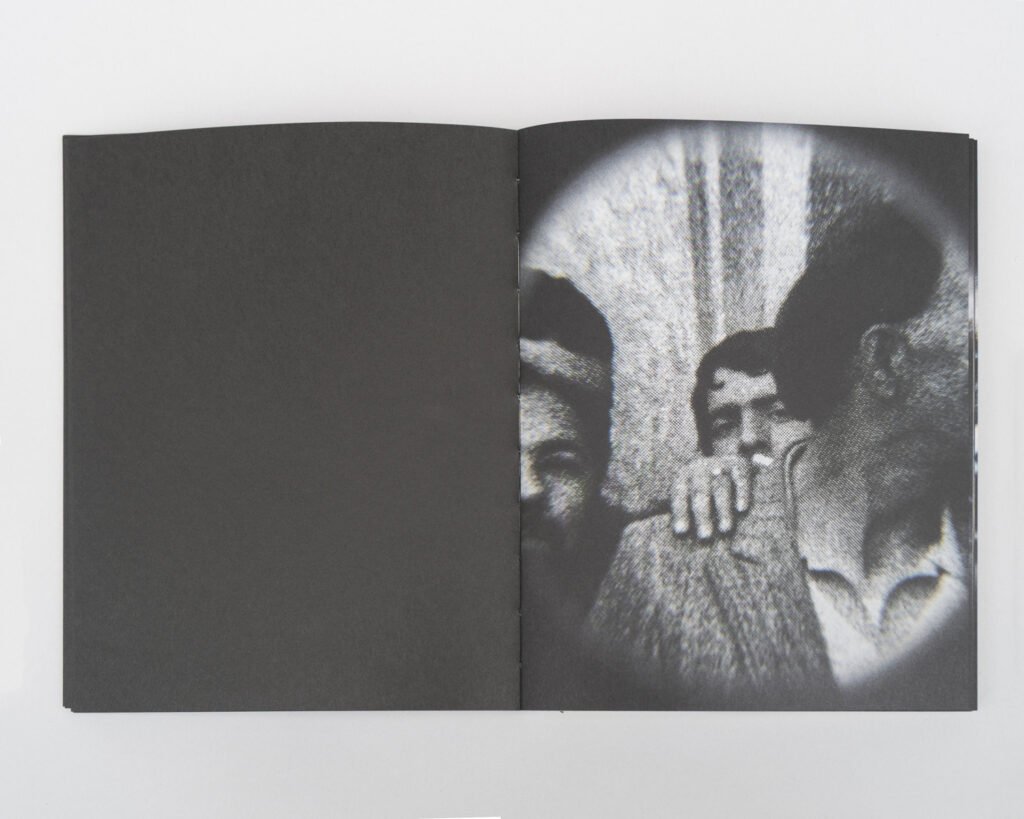
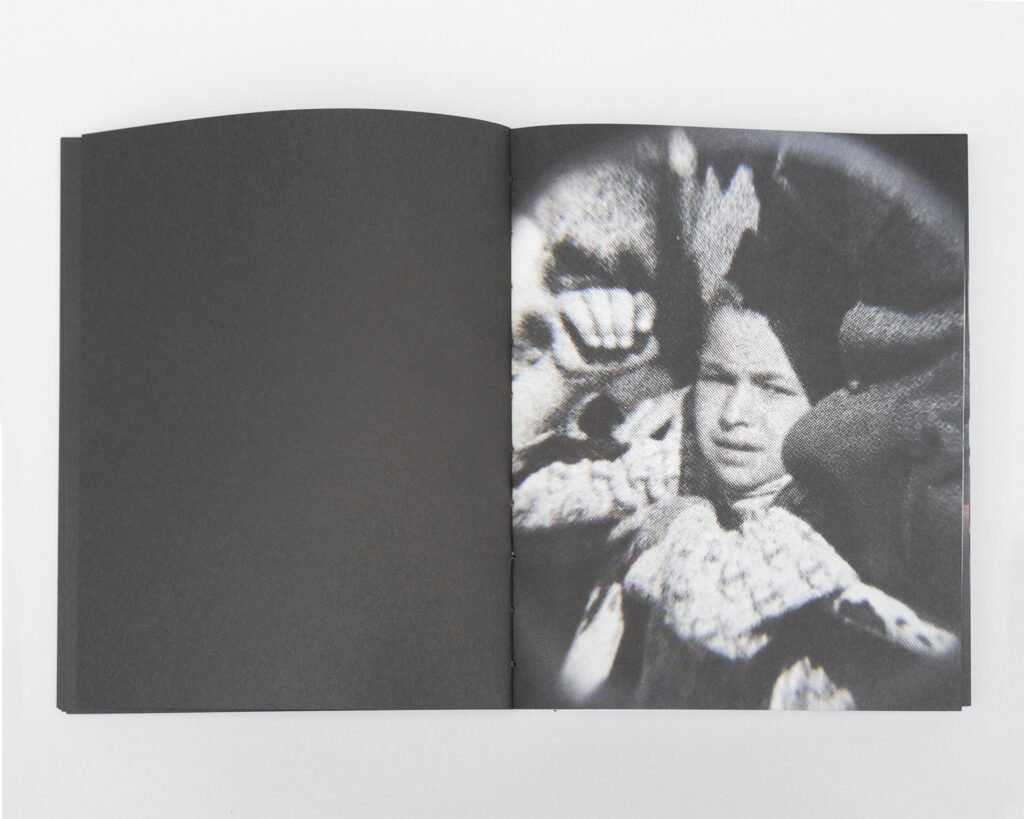
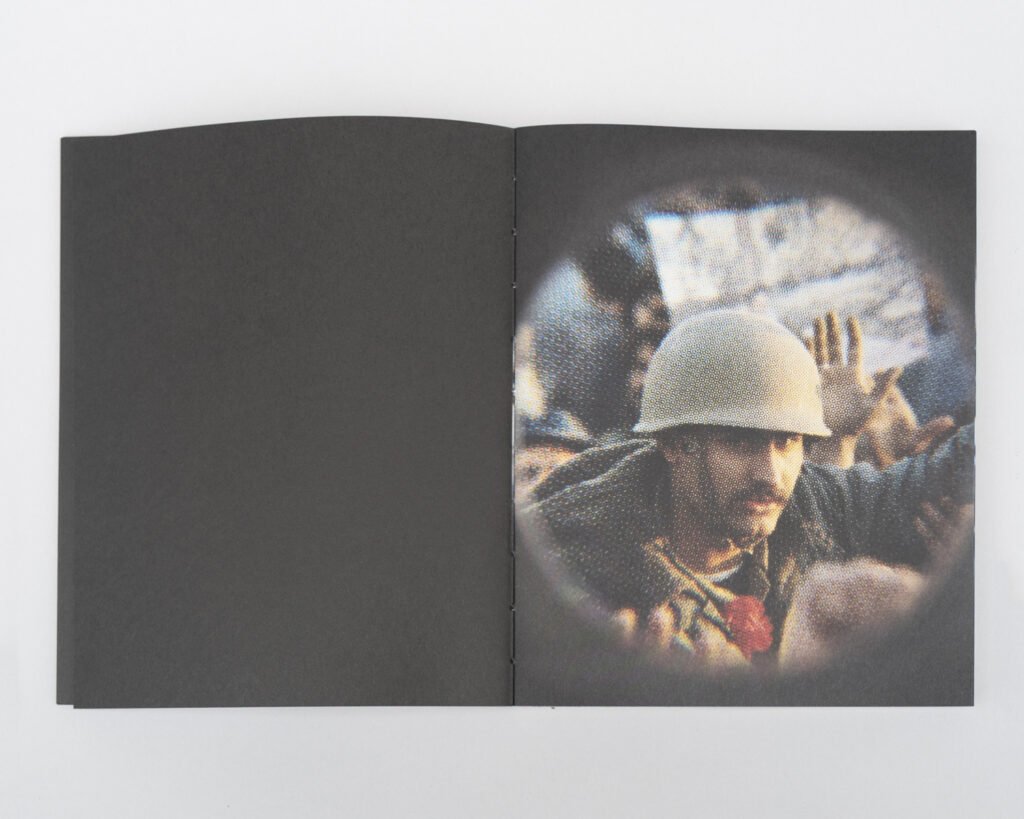
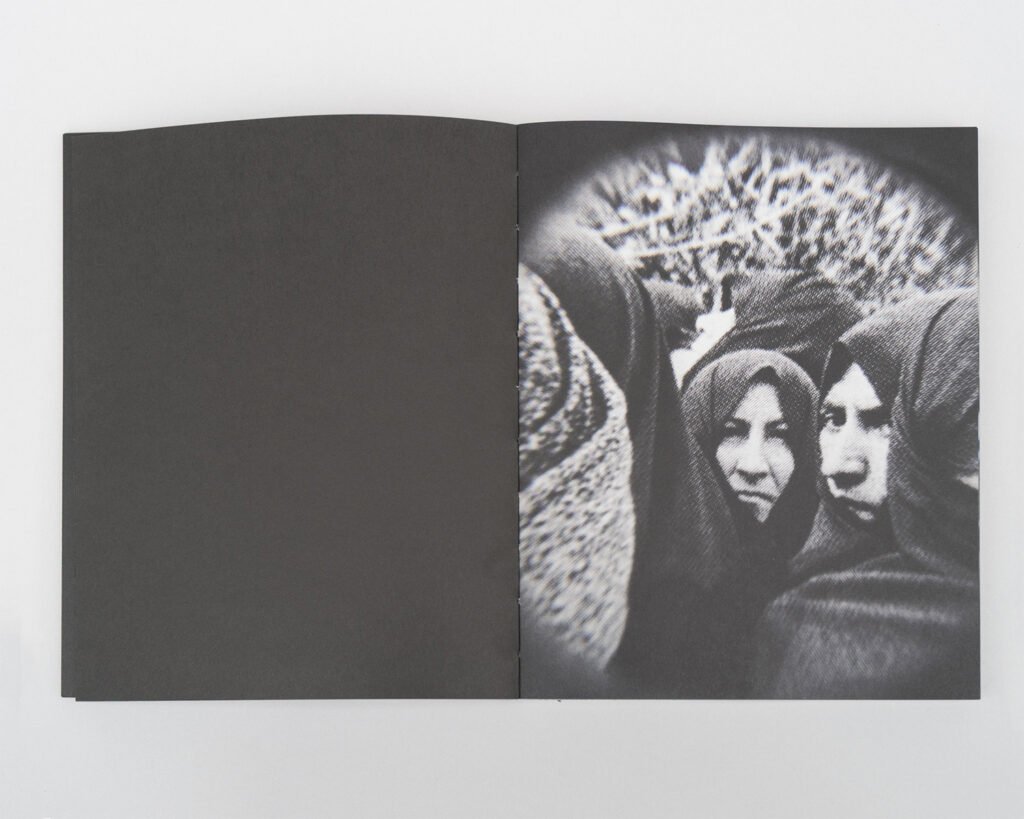
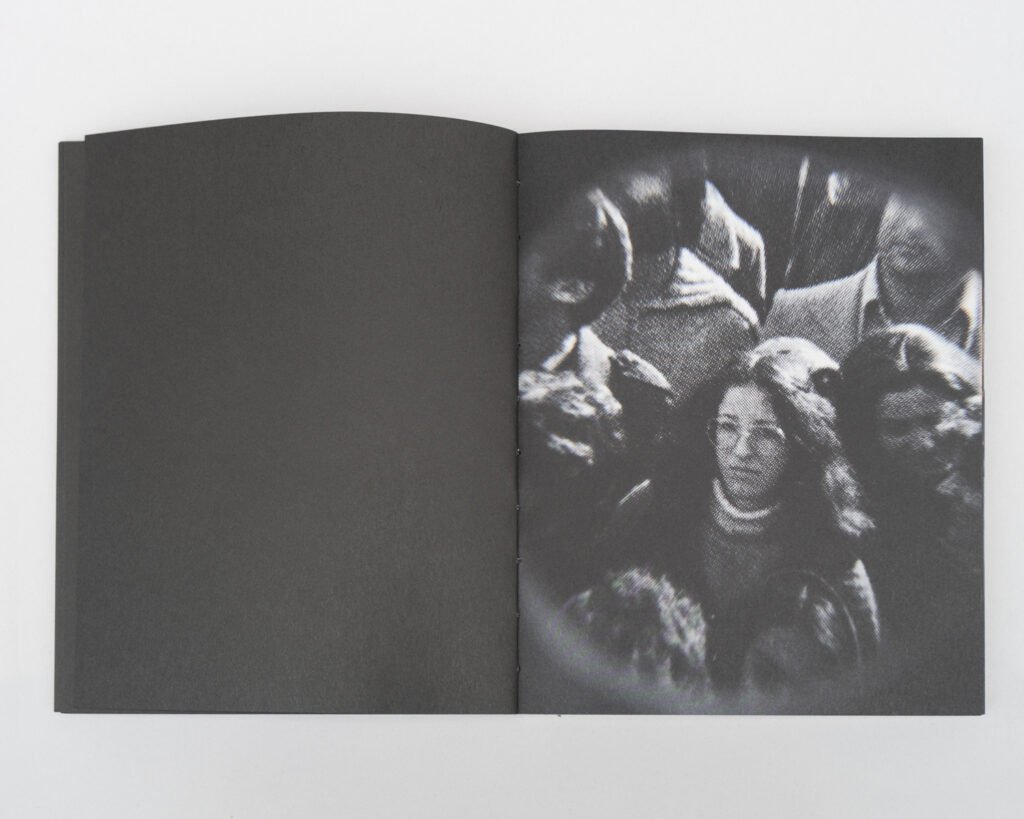
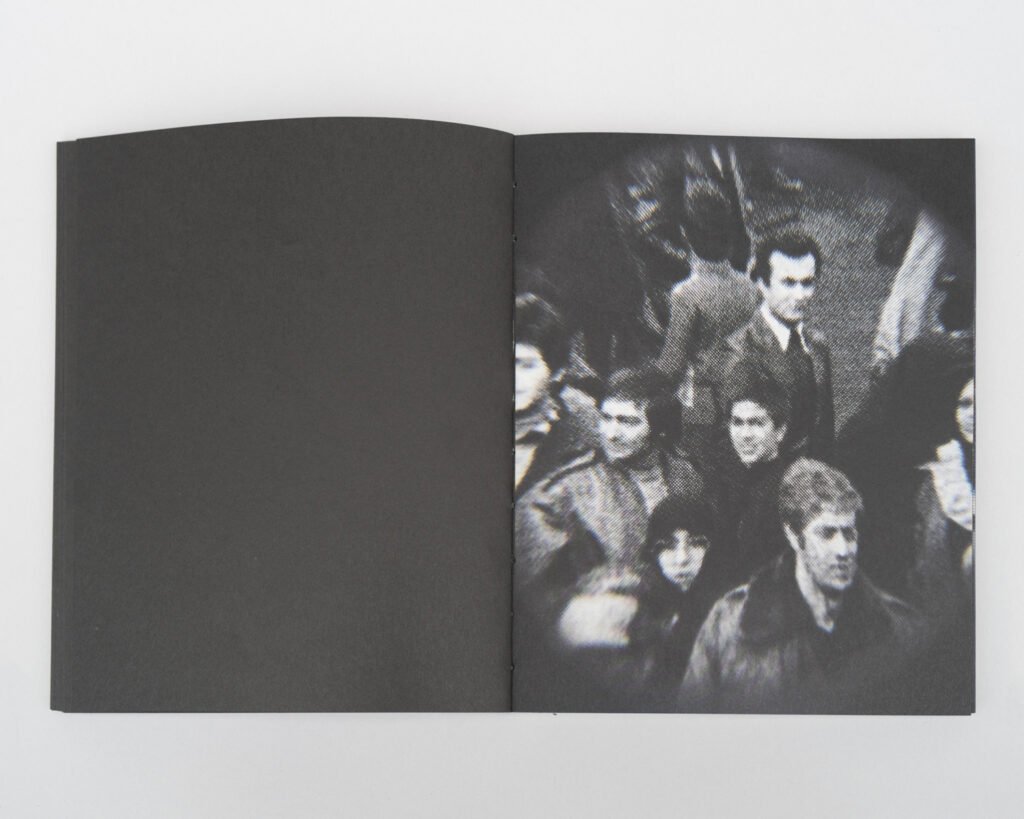
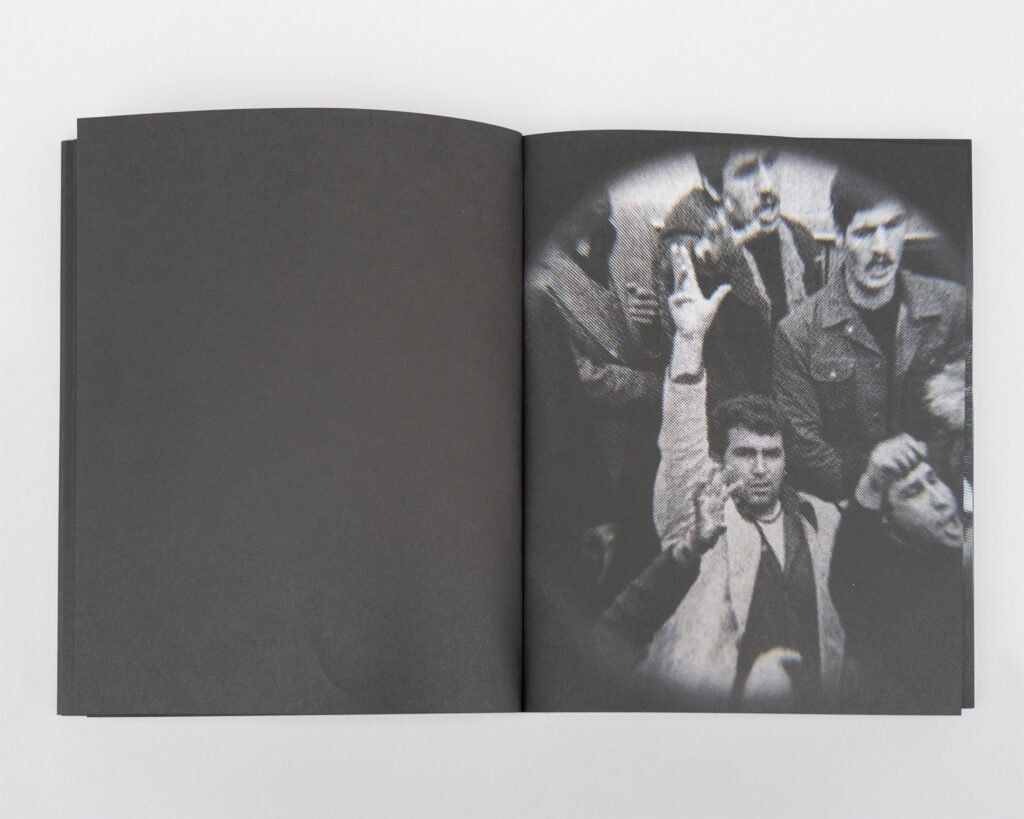
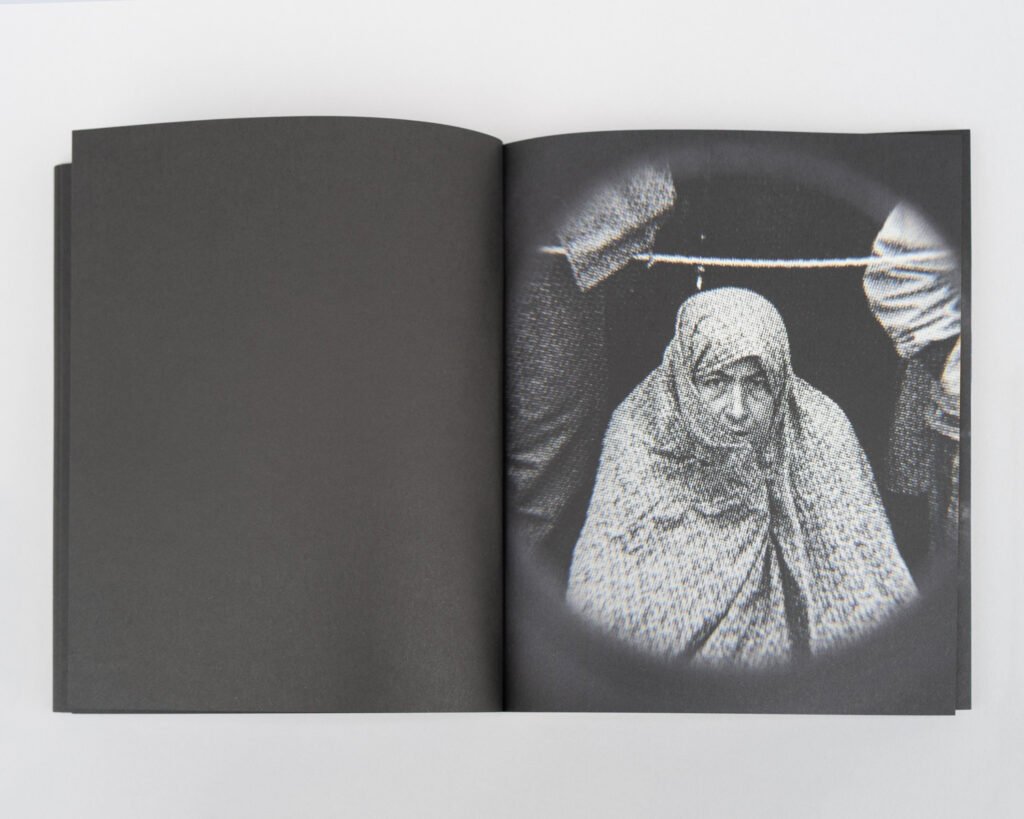
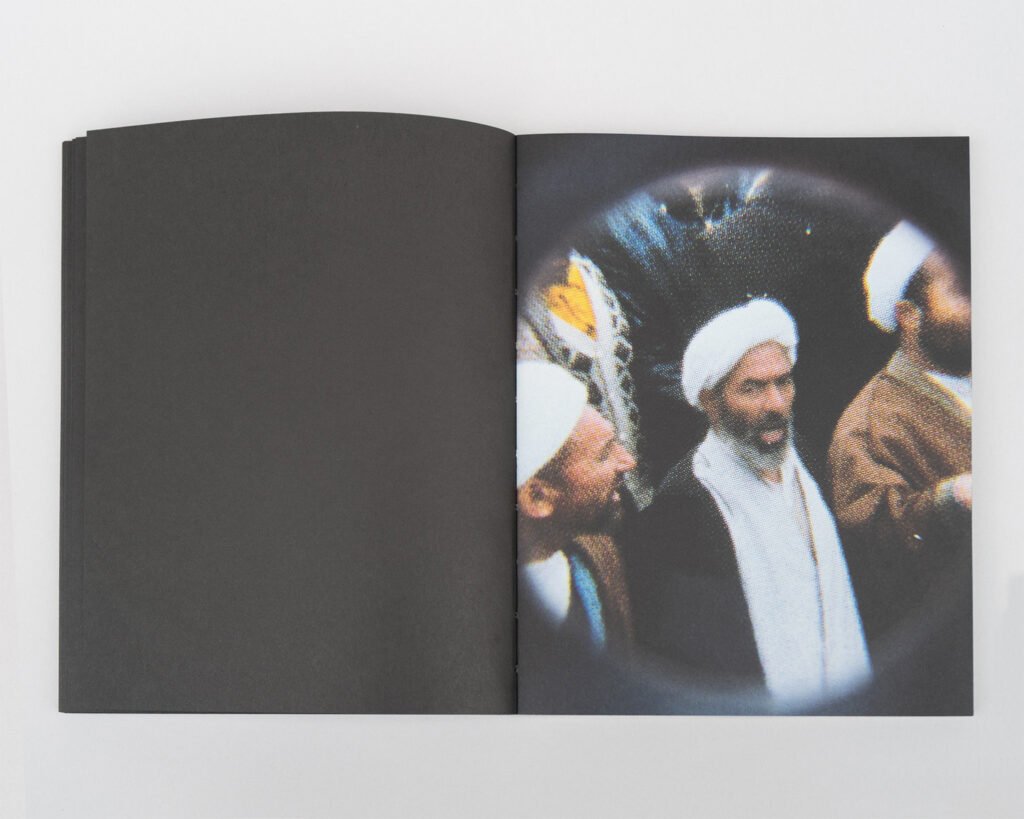
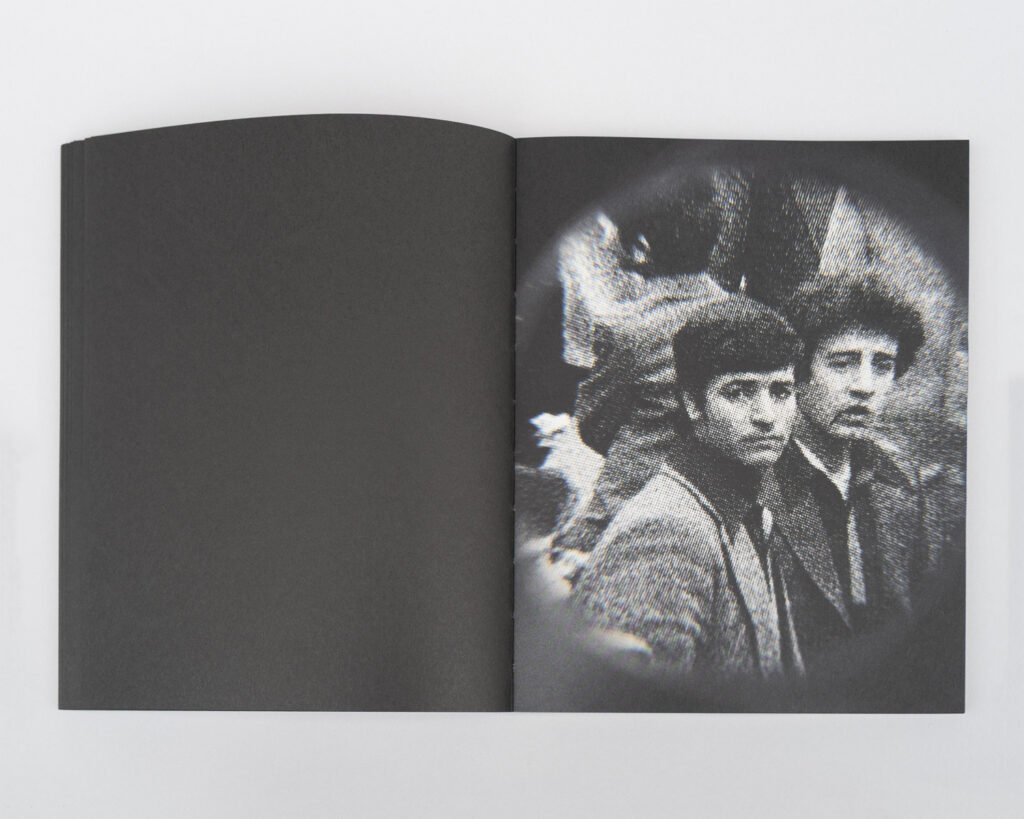
Yousefi’s practice can therefore be understood as a form of archaeology of the possible. He is not simply looking for what the photographs of the revolution show, but for what they might have shown and what, for a variety of reasons, remained at their margins. The face extracted from the crowd is a fragment of an unrealised future, or at least of a future that was never represented. We do not know who this person was, what their political position might have been, or what happened to their life after that day. Their anonymity is not a defect of the image, but the condition that allows the face to remain open. It cannot easily be reduced to a biography, an identity, or a completed narrative. It remains suspended in time, and it is precisely this suspension that makes it contemporary. Here Yousefi’s work resonates with what Mark Fisher, writing about hauntology, described as the persistence of “lost futures”: not simply things that have disappeared, but possibilities that once appeared to be open and that can now be perceived only as absences.³
This spectral dimension becomes particularly significant in relation to a revolutionary event. A revolution belongs, by definition, to a regime of openness: it promises a transformation of the present and, above all, produces an imagination of the future. But history, when it arrives afterwards, tends to transform this openness into a sequence of necessities. We know what happened and therefore tend to read the earlier images through what we already know. This is one of the most insidious forms of anachronism: the future is projected backwards as though it had already been contained within the past. “Eyes Dazzle” resists precisely this closure. The eyes of the demonstrators are not used to tell us what the revolution would become; instead, they seem momentarily to restore the uncertainty of what it had not yet become. In this sense, the book does not simply work upon the memory of the revolution, but upon the loss of its indeterminacy.
Yousefi’s statement that “their gaze has been waiting for my eyes for decades”⁴ acquires a particularly intense meaning here. There is no need to believe literally that those eyes had been waiting for the artist. Their waiting is produced by photography itself, by its capacity to suspend an instant and deliver it into a future that the photographed subject could not know. The gaze appears to be directed towards us because, retrospectively, we occupy that future. We are precisely what those people could not see: the future of the photograph. The encounter between Yousefi and his subjects is therefore less an encounter between two individuals than a temporal short circuit. The photographer of 1979 looks at the crowd; someone within the crowd looks back at the photographer; Yousefi looks at that photograph today; finally, we look at the result of this second exposure. Photography becomes a chain of gazes in which no observer ultimately possesses complete control over the image.
This is where the question of the gaze becomes more complex than a simple reversal between photographer and photographed subject. The subject who looks towards the lens appears to interrupt the asymmetrical relationship characteristic of documentary photography: they are no longer merely the person being seen, but the person who appears to see. Yet it would be too easy to transform this gesture into a straightforward restitution of power. We do not know what those eyes were looking for, nor why they turned towards the camera. We do not know whether the demonstrators were aware that they were being photographed, whether they were looking at the photographer, or at something beyond him. Photography preserves the act of looking, not its intention. It is precisely this distinction that prevents the work from becoming a retrospective psychology of its subjects. When Yousefi imagines that these faces may have desired to be recorded in history, he is proposing a poetic possibility, not a documentary truth. The strength of the image lies in the fact that we cannot verify that desire.
This impossibility of verification is anything but a limitation. It is what keeps the image open. Susan Sontag observed that photography produces a particular form of knowledge, apparently concrete but always separated from the experience it claims to document: “Photographs furnish evidence.”⁵ Yet photographic evidence is never identical to understanding. A photograph can demonstrate that someone was there without telling us who they were, what they thought, or what meaning they attributed to what was happening. “Eyes Dazzle” works precisely within this friction between evidence and knowledge. The more closely we look at these faces, the more visible they become; yet their increased visibility does not necessarily increase our knowledge of them. On the contrary, it can make us more conscious of the distance separating us from what we will never be able to know.
This is why Yousefi’s practice belongs to a conception of photography as a critical practice of the archive. The artist does not regard the archive as a place where history has already been deposited and merely needs to be retrieved; he treats it as a field of forces in which every new selection produces a different configuration of the past. His work therefore participates in a broader transformation of contemporary photographic practice, in which the photographer can simultaneously assume the roles of researcher, editor, archivist, and author. The photographic act no longer necessarily coincides with the moment when the shutter opens. It may begin much earlier, in the search for images, and continue long afterwards, through their selection, recomposition, and renewed circulation. To photograph becomes, in this sense, a form of reading.
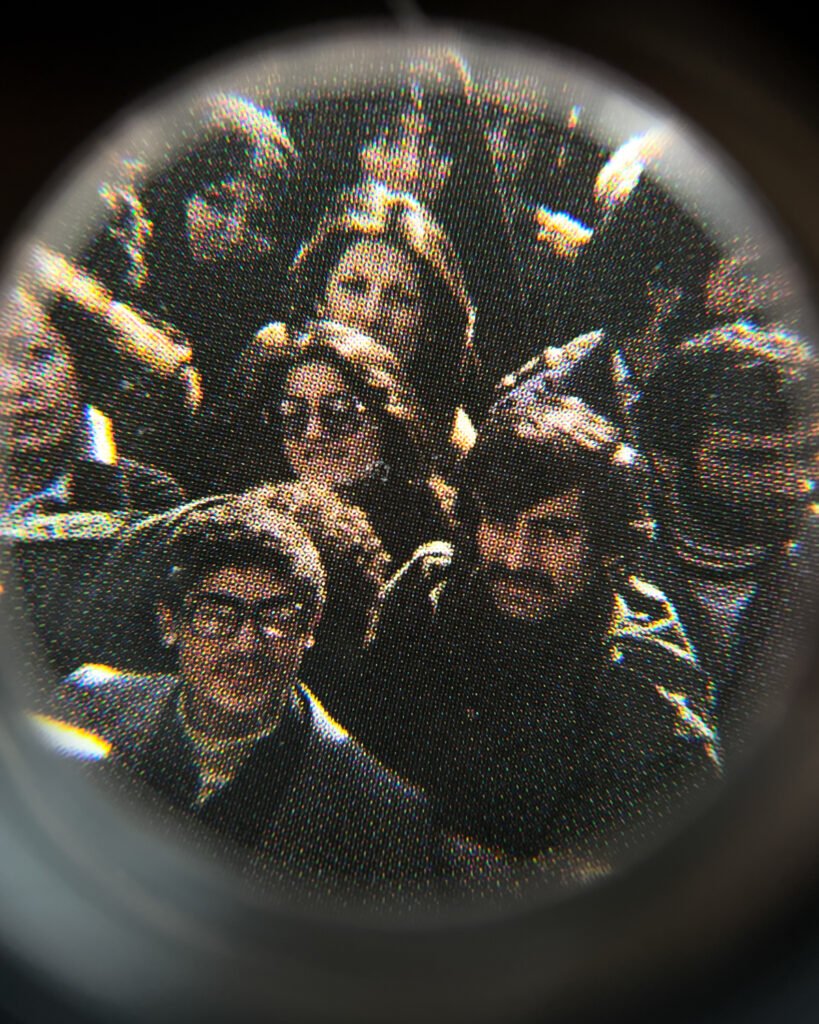
Untitled, Eyes Dazzle As They Search for the Truth, Amin Yousefi.
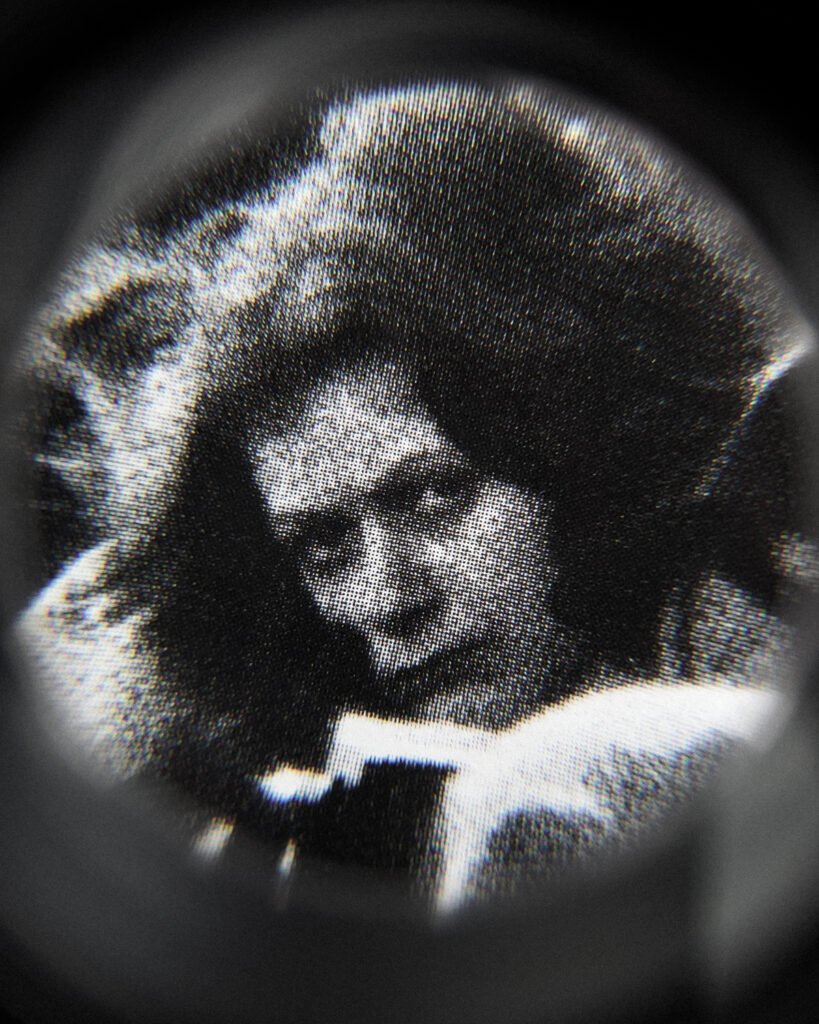
Untitled, Eyes Dazzle As They Search for the Truth, Amin Yousefi.
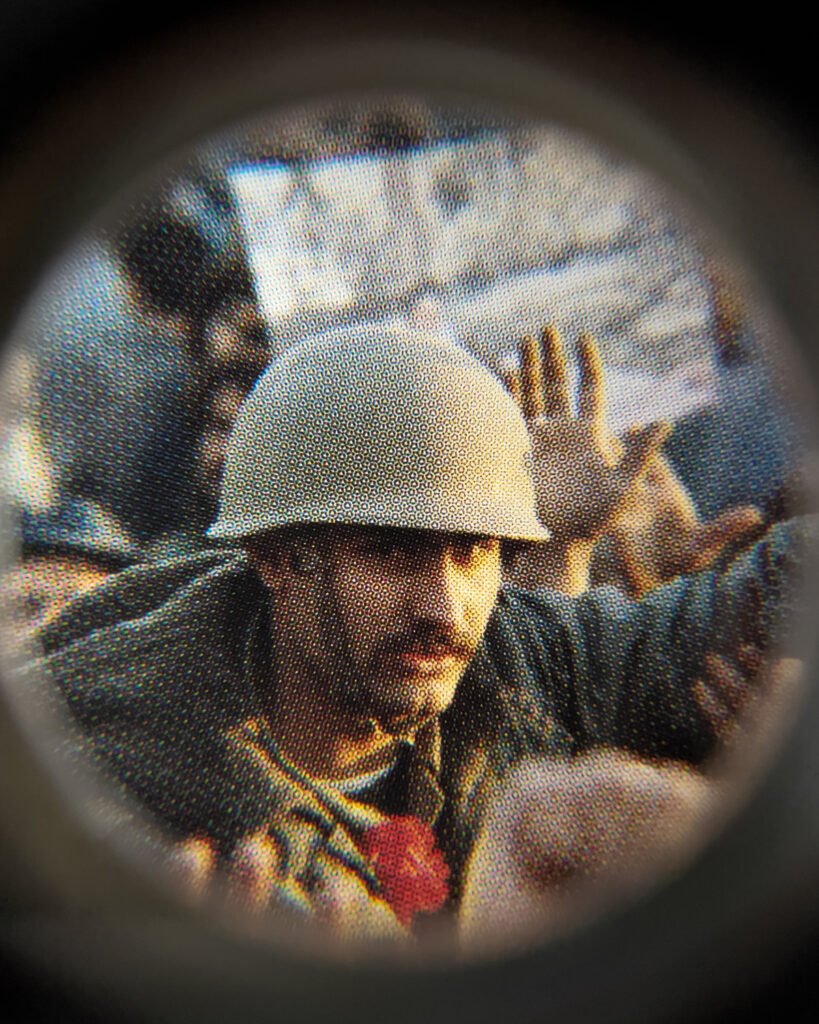
Untitled, Eyes Dazzle As They Search for the Truth, Amin Yousefi.
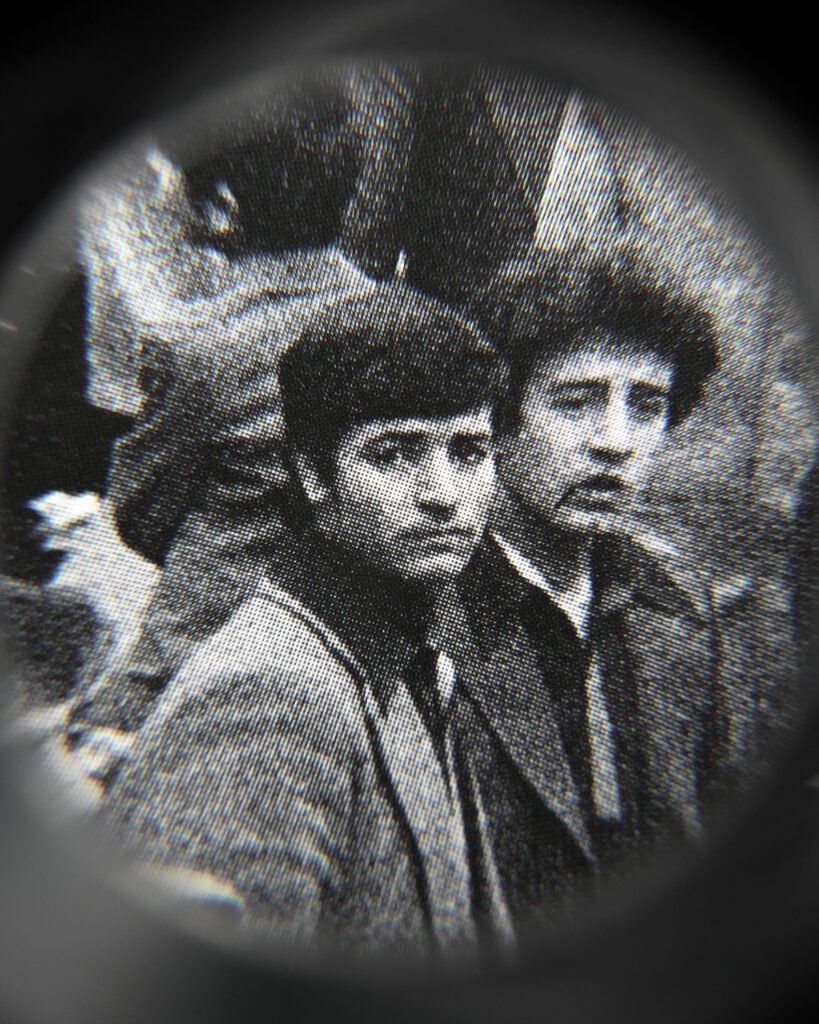
Untitled, Eyes Dazzle As They Search for the Truth, Amin Yousefi.
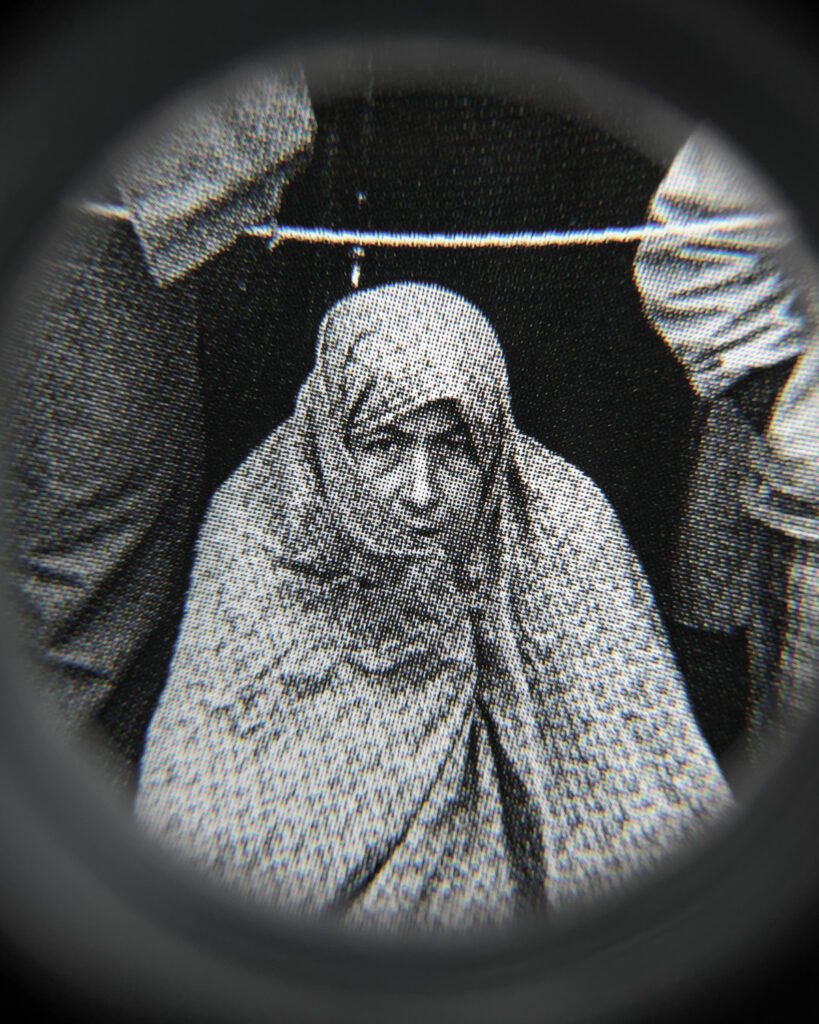
Untitled, Eyes Dazzle As They Search for the Truth, Amin Yousefi.
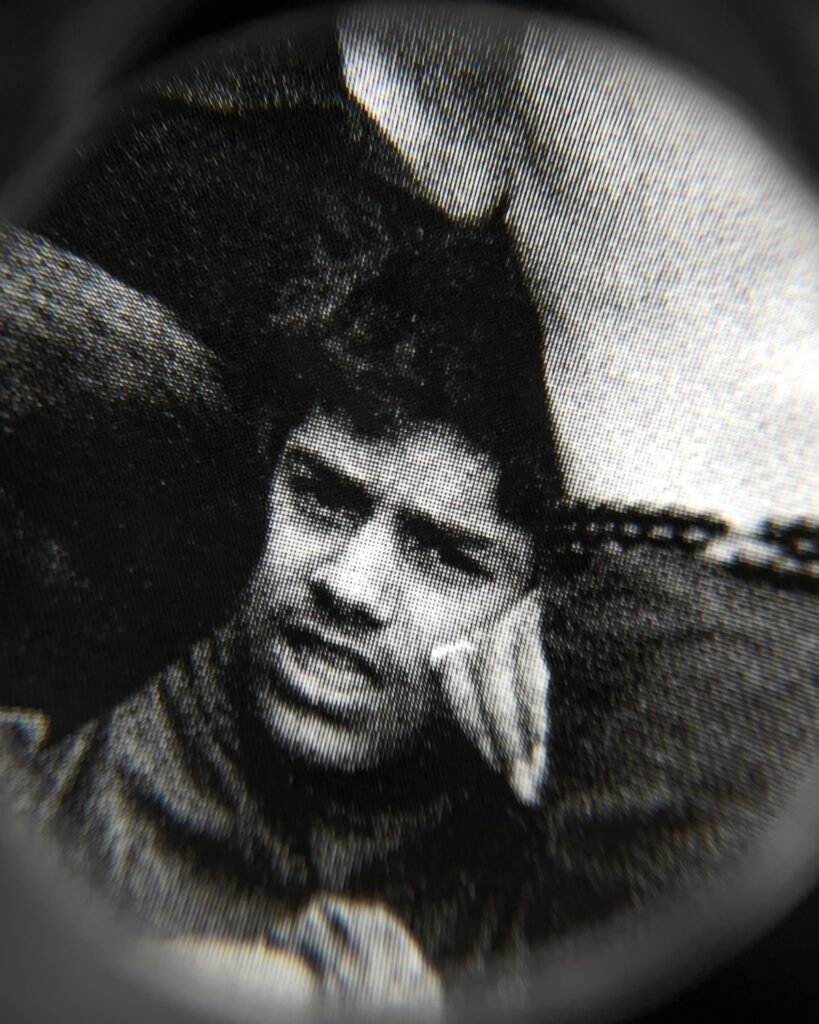
Untitled, Eyes Dazzle As They Search for the Truth, Amin Yousefi.
Within this practice, “rephotography” assumes a particularly significant function. To photograph a photograph is to introduce a new present into an image that already belongs to the past. The new exposure does not erase the previous one; it makes that previous exposure perceptible as a layer. What we see is no longer simply the photograph of 1979, but a contemporary photograph of that photograph, together with all the mediations separating it from the original event. It is a temporal structure resembling a palimpsest: each image contains traces of previous images while simultaneously preparing itself for future reactivation. Yousefi’s practice does not eliminate historical distance; it makes that distance material.
David Campany has observed how the images in the project seem to oscillate between magnifying glass, optical device, and possible gunsight, introducing a tension between observation and surveillance.⁶ This ambiguity matters because it reminds us that documentary photography is never merely a window onto the world. It is also a technology of selection, control, and classification. To photograph a crowd is to decide where to stand, what to include, and what to leave outside the frame. Yet the camera inevitably records what escapes these decisions as well. Yousefi works precisely upon this disobedience of the image. The original photograph selected a crowd; the contemporary photograph selects a face; but that face was already there, silently insisting against the original hierarchy of the image.
His practice therefore possesses a political dimension without becoming politically illustrative. It does not attempt to correct the history of the Iranian Revolution, nor to replace an official narrative with an alternative one. Instead, it introduces a small instability into an image that appeared to have already been stabilised. If history tends to transform events into ordered sequences, photography retains a certain resistance to that order: bodies, gestures, gazes, and details continue to exist outside the narrative that has made them meaningful. The archive is therefore also the site of discarded possibilities. What collective memory selects does not necessarily coincide with what the image contains.
This is precisely where Eyes Dazzle as They Search for the Truth acquires its broader cultural resonance. The book is not only about Iran, nor is it only about a particular mode of photographic appropriation. It concerns the way contemporary societies construct their relationship with the past through images that appear increasingly available and, at the same time, increasingly difficult to interrogate. We live surrounded by photographic archives, yet the proliferation of images does not necessarily produce more memory. It can instead produce a form of oblivion through saturation. Against this condition, Yousefi’s gesture is almost ascetic: not to add another image to the multitude, but to remain with an existing image long enough for it to begin speaking again.
Perhaps this is what it means, in the title, to search for truth. Not to uncover a hidden truth within these photographs, but to recognise that an image does not stop producing questions once its historical context is known. The eyes of the demonstrators do not reveal what they were thinking; they do not tell us what future they imagined; they cannot testify on their own behalf. Yet precisely because they remain mute, they continue to function as images. Their force is not informational but temporal: they confront us with a present that was still open to them and has already become history for us.
In this sense, Eyes Dazzle as They Search for the Truth is neither simply a book about the Iranian Revolution nor simply a book about photography. It is a book about the difficulty of inhabiting a present that always arrives afterwards. Its gesture consists in reopening, within images that have already been historicised, a fraction of the future that has been erased by the very fact that we now know the past. Yousefi does not return to his subjects what they have lost; he returns, as far as possible, the indeterminacy they possessed before becoming history. Looking at these faces today, we are therefore forced, for a moment, into the same impossible position: to know what happened while simultaneously looking at an image in which none of it had happened yet.
Photography continues to function precisely because it cannot completely close the time it records. Every image preserves something of the moment before the future becomes the past. It is within this small temporal fissure, more than in the lens, the halftone, or the act of magnification, that Amin Yousefi’s work finds its necessity.
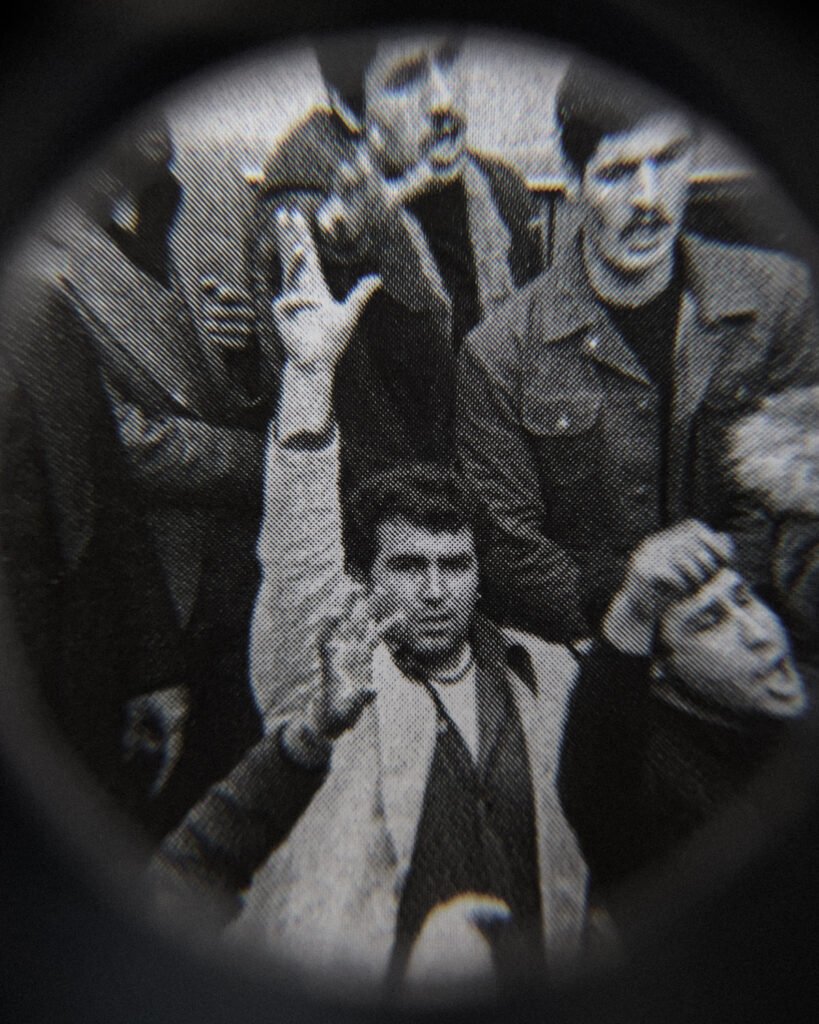
Untitled, Eyes Dazzle As They Search for the Truth, Amin Yousefi.
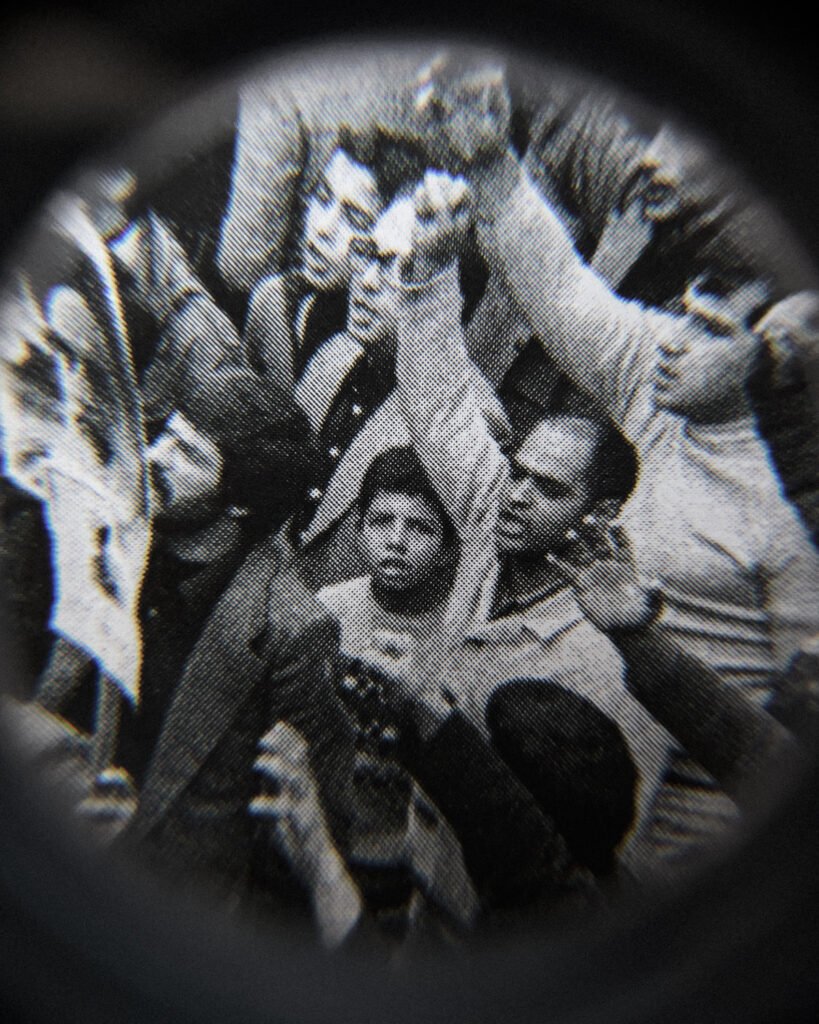
Untitled, Eyes Dazzle As They Search for the Truth, Amin Yousefi.
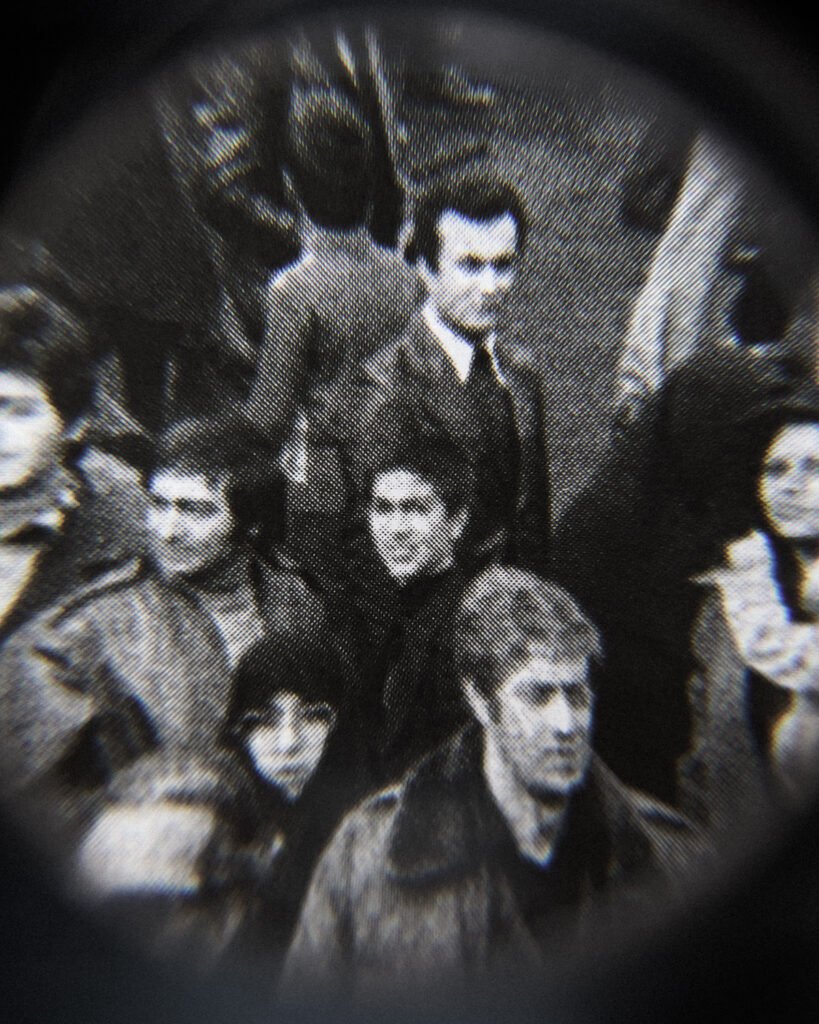
Untitled, Eyes Dazzle As They Search for the Truth, Amin Yousefi.
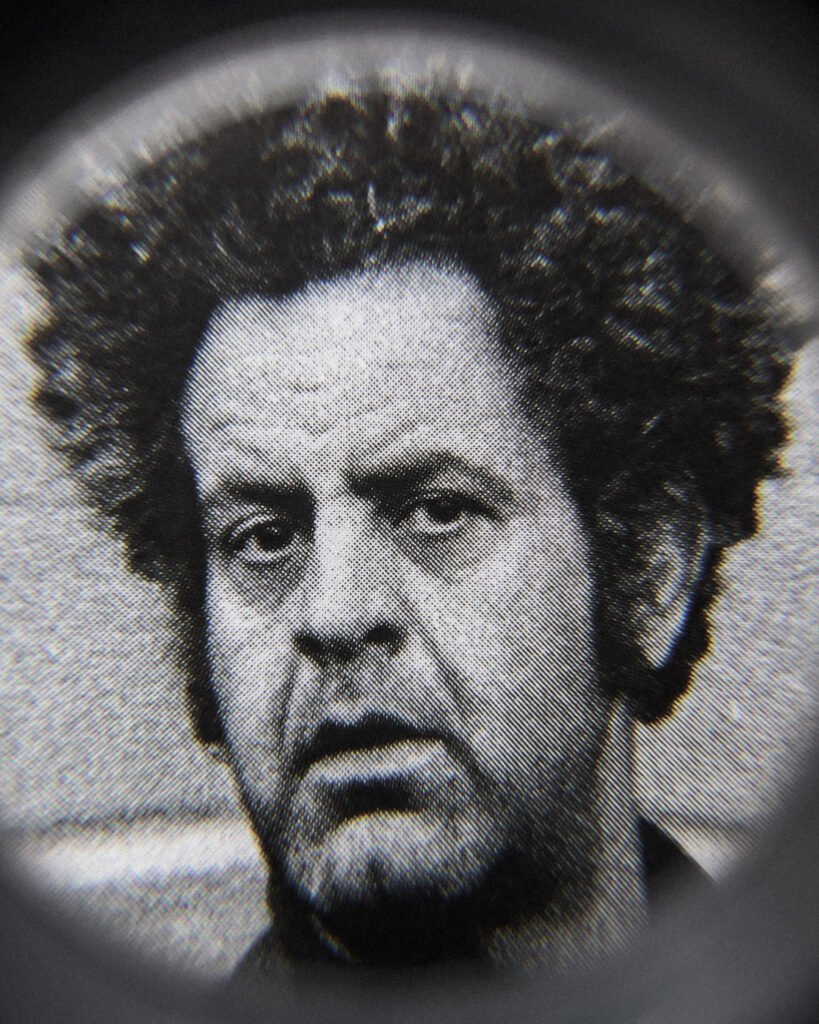
Untitled, Eyes Dazzle As They Search for the Truth, Amin Yousefi.
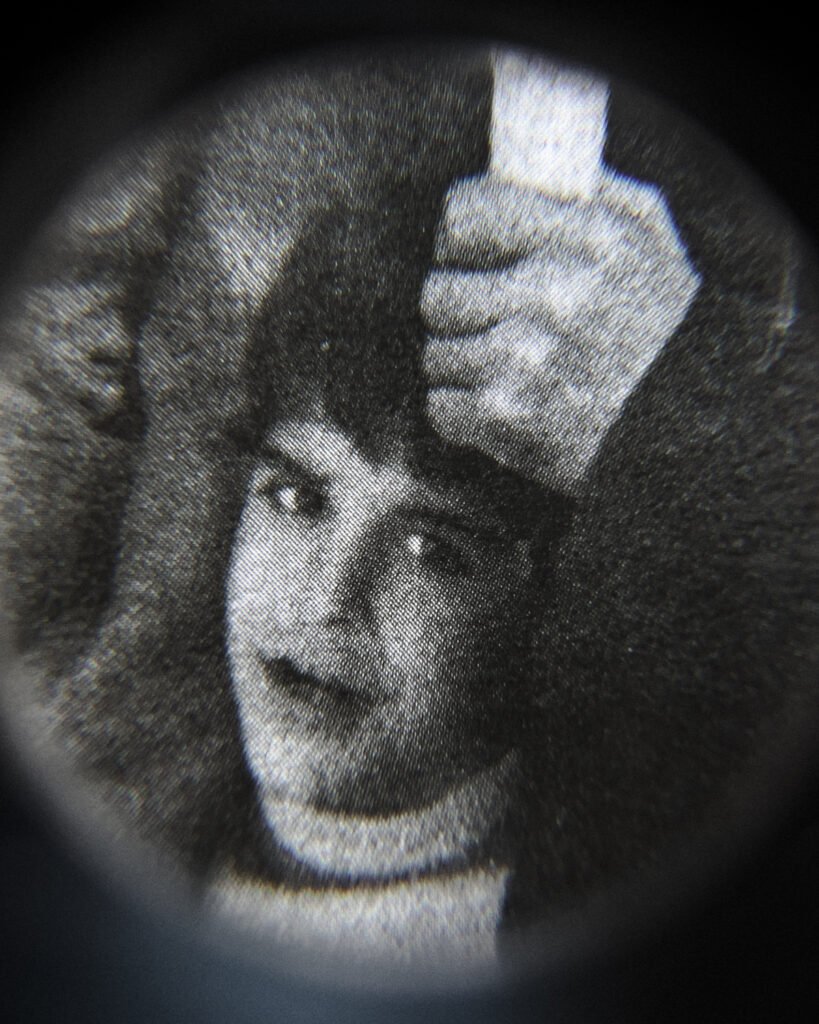
Untitled, Eyes Dazzle As They Search for the Truth, Amin Yousefi.
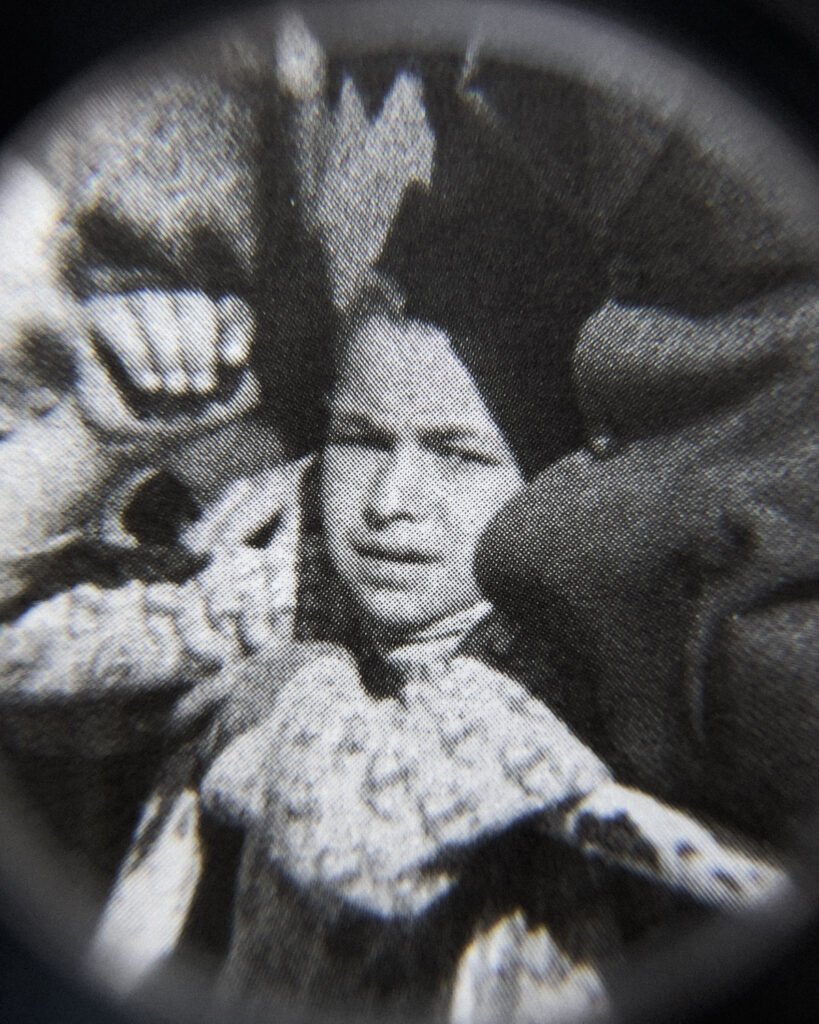
Untitled, Eyes Dazzle As They Search for the Truth, Amin Yousefi.
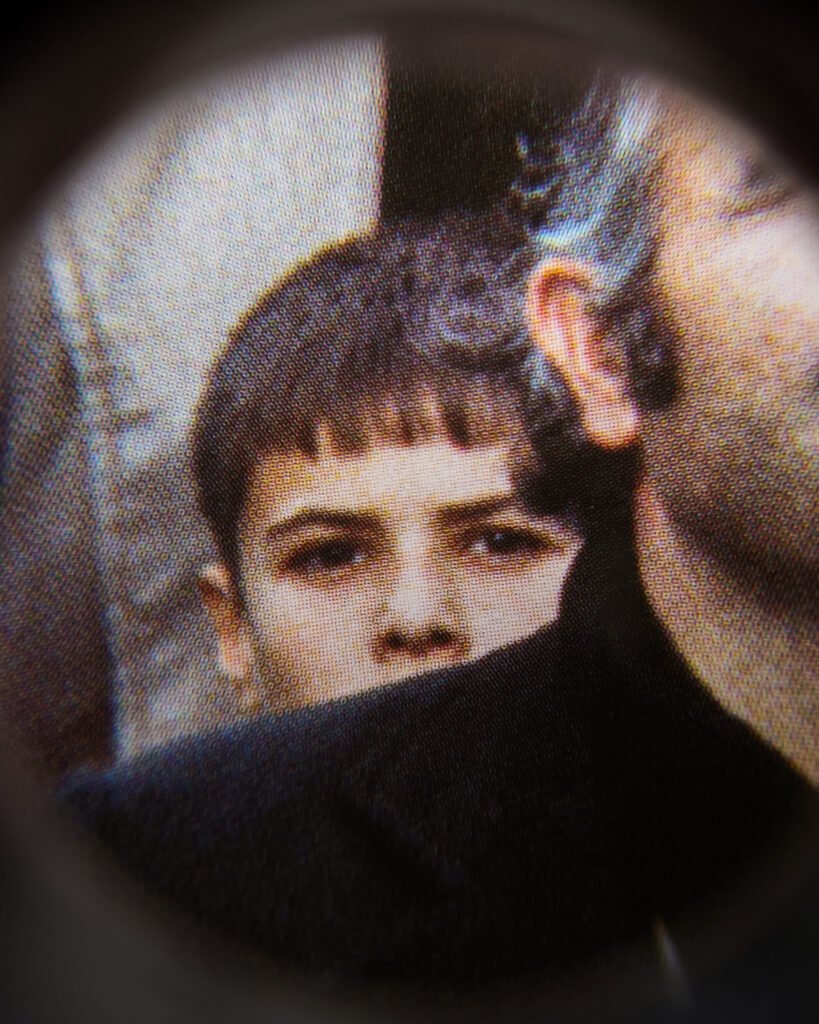
Untitled, Eyes Dazzle As They Search for the Truth, Amin Yousefi.
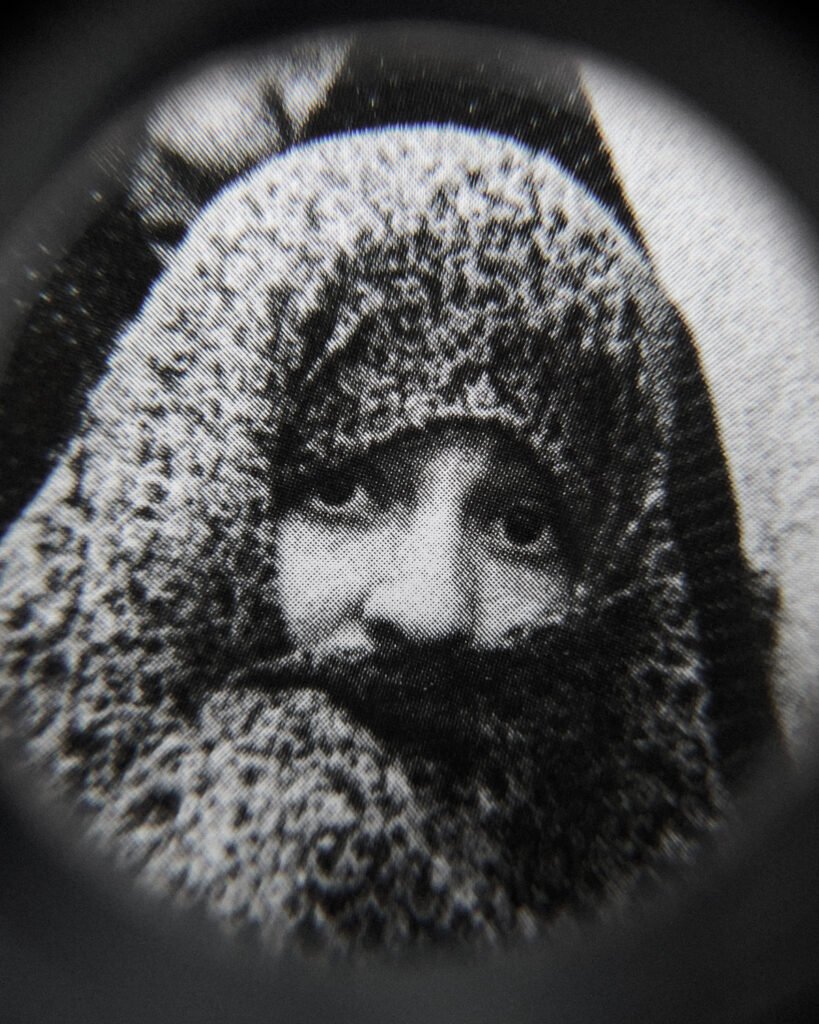
Untitled, Eyes Dazzle As They Search for the Truth, Amin Yousefi.
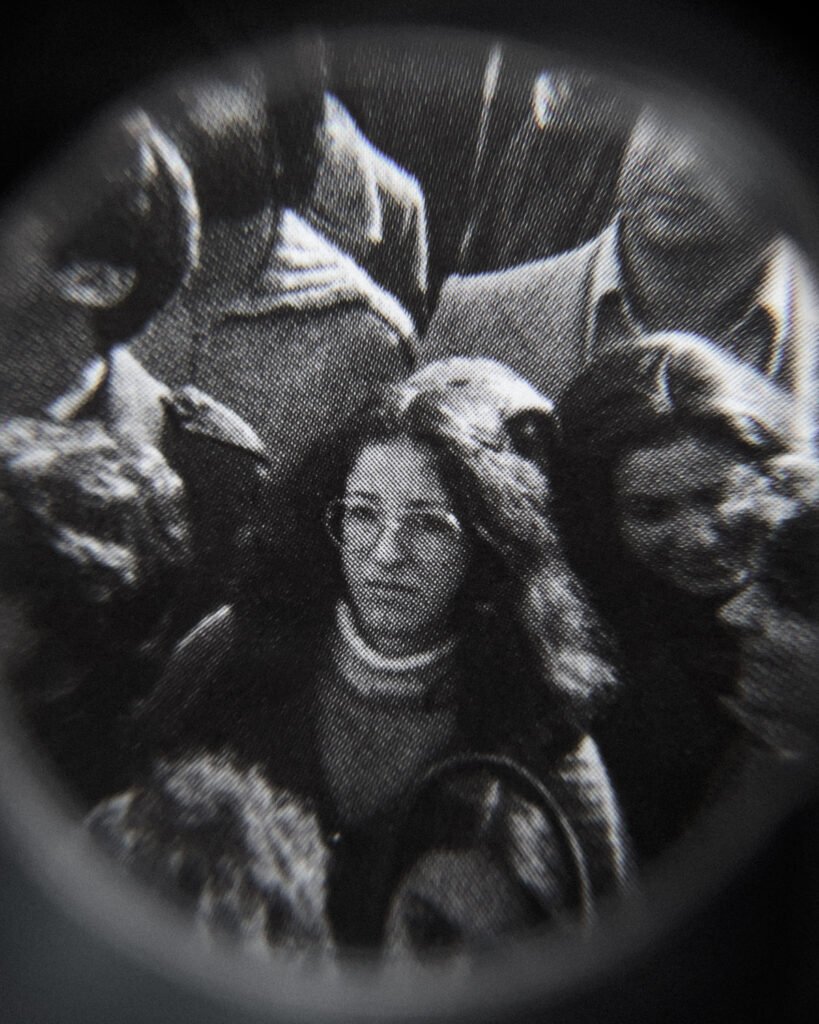
Untitled, Eyes Dazzle As They Search for the Truth, Amin Yousefi.
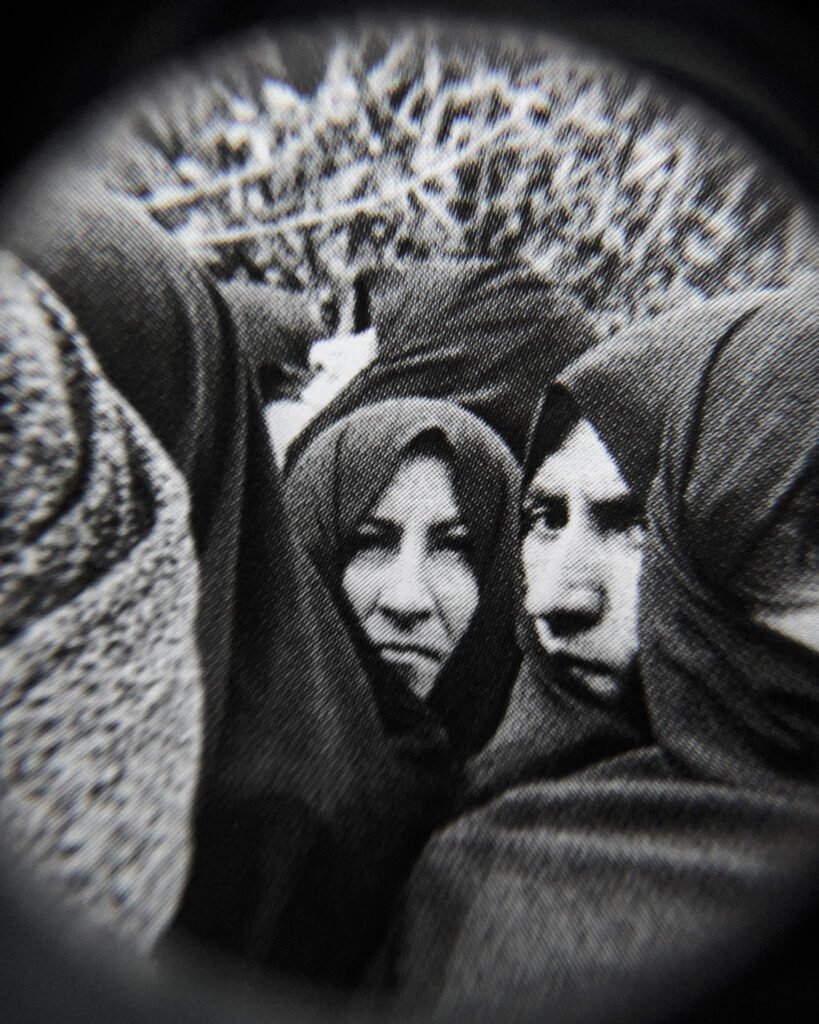
Untitled, Eyes Dazzle As They Search for the Truth, Amin Yousefi.
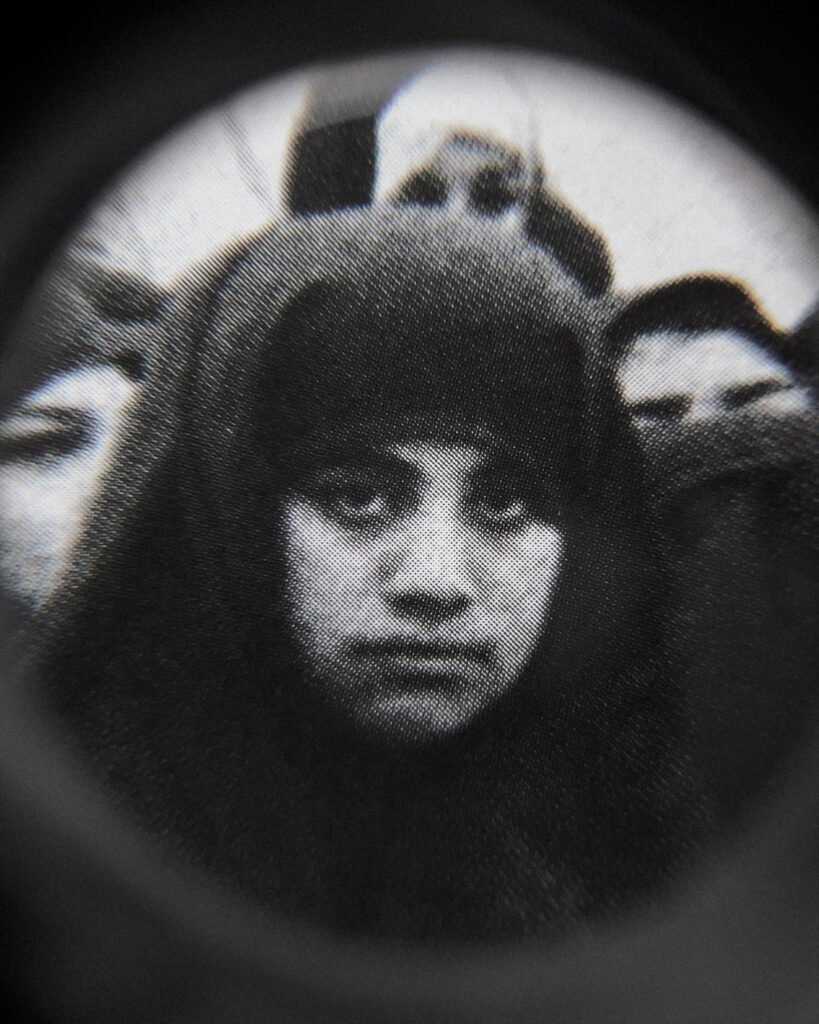
Untitled, Eyes Dazzle As They Search for the Truth, Amin Yousefi.
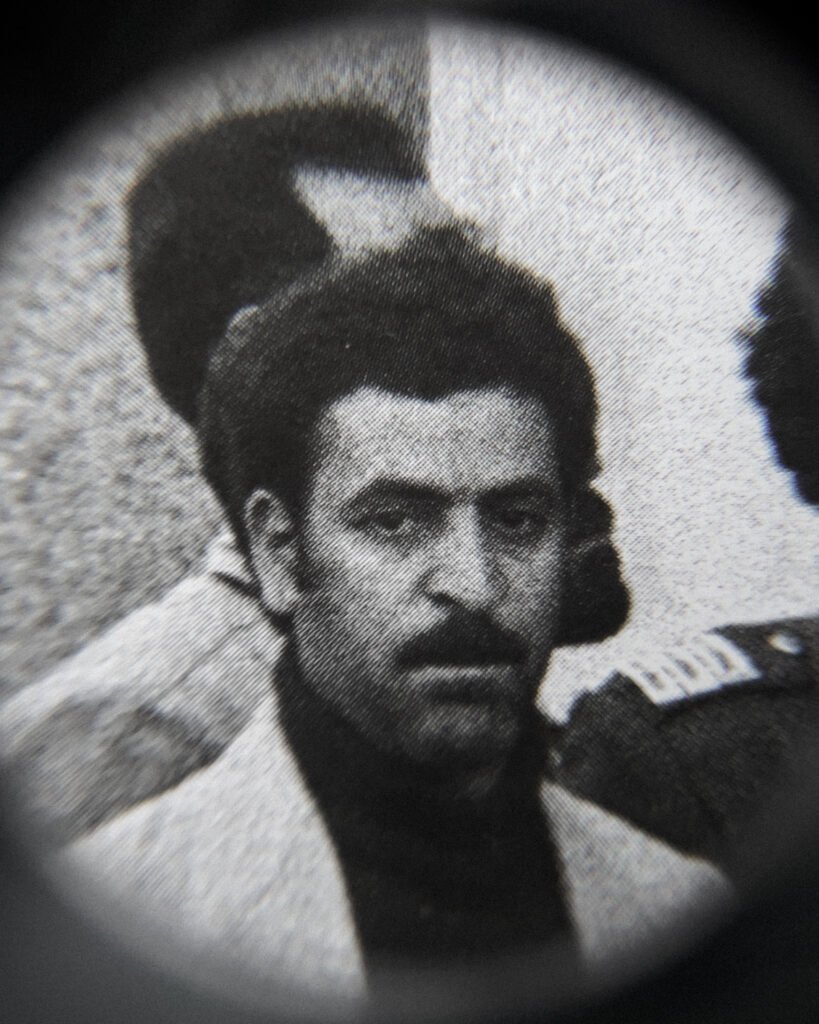
Untitled, Eyes Dazzle As They Search for the Truth, Amin Yousefi.
Notes
- Roland Barthes, Camera Lucida: Reflections on Photography, trans. Richard Howard, Hill and Wang, New York, 1981, p. 76.
- Walter Benjamin, “A Little History of Photography,” 1931, in Selected Writings, vol. 2, 1927–1934, ed. Michael W. Jennings, Howard Eiland and Gary Smith, Harvard University Press, Cambridge, MA, 1999, pp. 507–530. Benjamin’s notion of the “optical unconscious” concerns photography’s capacity to reveal aspects of reality inaccessible to ordinary perception.
- Mark Fisher, Ghosts of My Life: Writings on Depression, Hauntology and Lost Futures, Zero Books, Winchester–Washington, 2014, pp. 16–42. Fisher uses the concept of “lost futures” to describe historical and cultural possibilities that once appeared imminent or available but have subsequently been excluded from the horizon of the present.
- Amin Yousefi, Eyes Dazzle as They Search for the Truth, Luhz Press, London, 2026.
- Susan Sontag, On Photography, Farrar, Straus and Giroux, New York, 1977, p. 5.
- David Campany, “Amin Yousefi: Eyes Dazzle as They Search for the Truth,” Foam Magazine, no. 65, 2024.
Bibliography
Barthes, Roland. Camera Lucida: Reflections on Photography. Translated by Richard Howard. New York: Hill and Wang, 1981.
Benjamin, Walter. “A Little History of Photography.” In Selected Writings, vol. 2, 1927–1934. Edited by Michael W. Jennings, Howard Eiland, and Gary Smith. Cambridge, MA: Harvard University Press, 1999.
Burnett, David. 44 Days: Iran and the Remaking of the World. Washington, D.C.: National Geographic/FocalPoint Press, 2009.
Campany, David. “Amin Yousefi: Eyes Dazzle as They Search for the Truth.” Foam Magazine, no. 65, 2024.
Fisher, Mark. Ghosts of My Life: Writings on Depression, Hauntology and Lost Futures. Winchester–Washington: Zero Books, 2014.
Sontag, Susan. On Photography. New York: Farrar, Straus and Giroux, 1977.
Yousefi, Amin. Eyes Dazzle as They Search for the Truth. London: Luhz Press, 2026.
Amin Yousefi, born in 1996 in Abadan, Iran, is an Iranian artist, writer, and curator based in London. Working across photography, archival material, text, moving image, and installation, his practice examines how photographs mediate political events and historical experience. He is particularly interested in the relationships between the photographer, the photographed subject, the viewer, and the institutions through which images are produced, circulated, classified, and preserved.
Yousefi grew up in Abadan, in the southwestern province of Khuzestan, a major centre of Iran’s oil industry and a region profoundly shaped by the Iran-Iraq War and its aftermath. This history informs his wider engagement with photography in relation to conflict, political memory, and the representation of history. His work frequently begins with existing images and documents, which he rephotographs, reconstructs, annotates, sequences, or recontextualises to examine how their meanings and functions change over time. Across his practice, Yousefi is concerned with the authority conventionally assigned to photographs and with moments when that authority becomes unstable. His work considers the photograph as a site of exchange between those who make images, those who appear within them, and those who encounter them later. Questions of gaze, evidence, visibility, surveillance, and historical distance recur throughout his projects, alongside an interest in how photographs move between personal, political, archival, and institutional contexts. Rather than approaching the archive as a fixed account of the past, he examines the processes through which photographs are selected, framed, reproduced, circulated, and made to signify.
These concerns are central to projects including Eyes Dazzle as They Search for the Truth, which revisits photographs of the 1979 Iranian Revolution to examine the reciprocating gaze between photographer and subject, and Defensive Readiness: Revised Edition, which draws on a state-issued Iranian civil defence textbook to consider how institutional images organise and represent the body. Across both projects, Yousefi examines how photographs continue to act beyond the moment of their production, acquiring new meanings through viewing, interpretation, circulation, and reuse.
In 2026, Yousefi received the C/O Berlin Talent Award in the Artist category for Defensive Readiness: Revised Edition. In 2024, he received the Royal Photographic Society Award for Achievement in the Art of Photography and was selected as a Foam Talent. His work has been presented internationally at institutions and platforms including Museum Kunstpalast, Fotografisk Centre, Deutsche Börse Photography Foundation, Foam Museum, Belfast Photo Festival, and Peckham 24. His debut photobook, Eyes Dazzle as They Search for the Truth, featuring an essay by David Campany, was published by Luhz Press in 2026.
Alongside his artistic practice, Yousefi works across curating and writing. He is Assistant Curator at Photoworks and Editor of Photography+. Yousefi holds a Master’s degree in Photography from the University of Westminster. He has delivered lectures and talks at institutions including Université du Québec, Royal College of Art, London College of Communication, and the University of Portsmouth.
Copyright © Amin Yousefi & Luhz Press, all rights reserved
