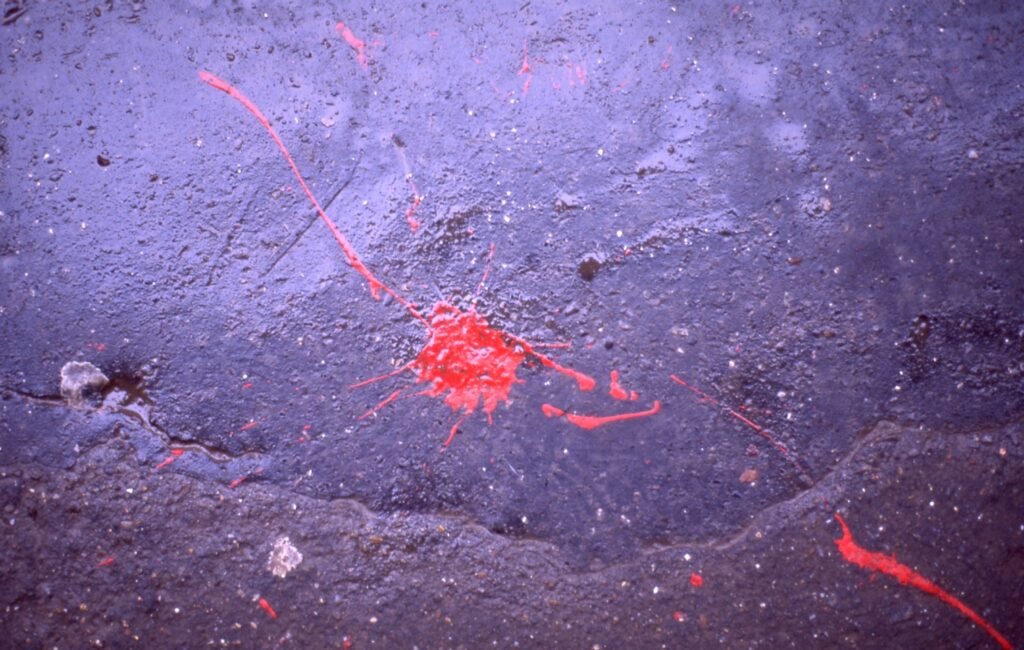
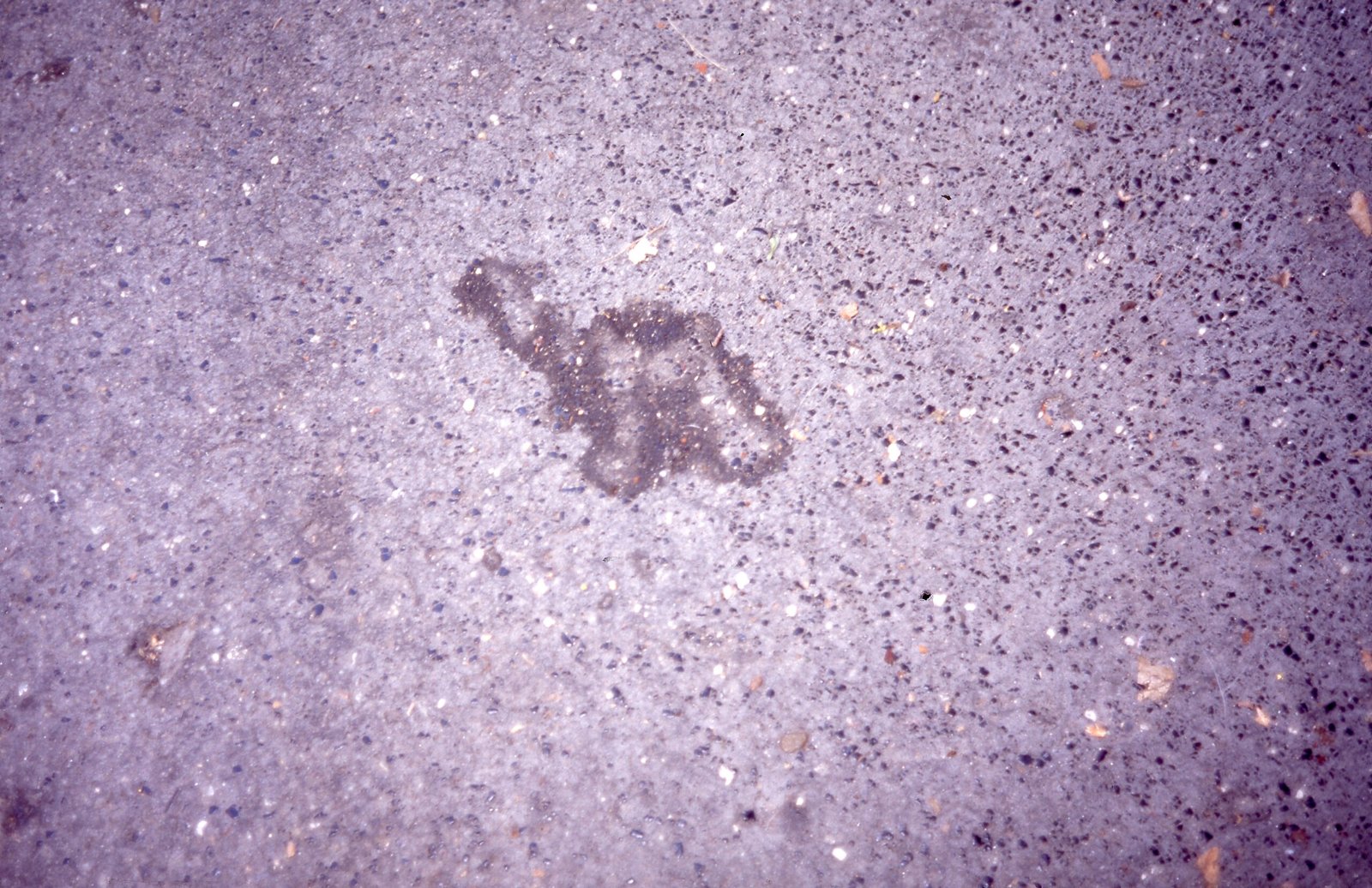
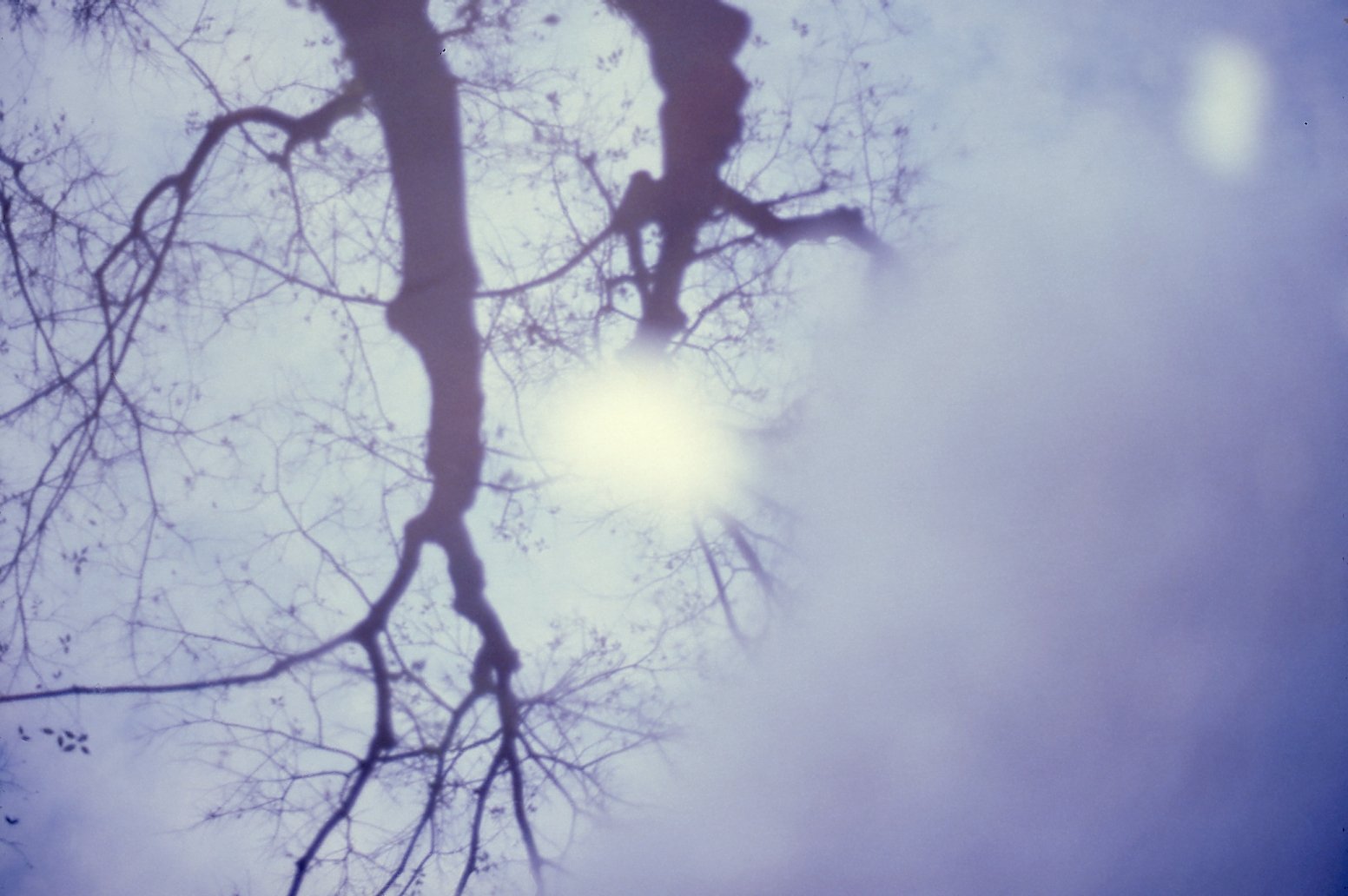
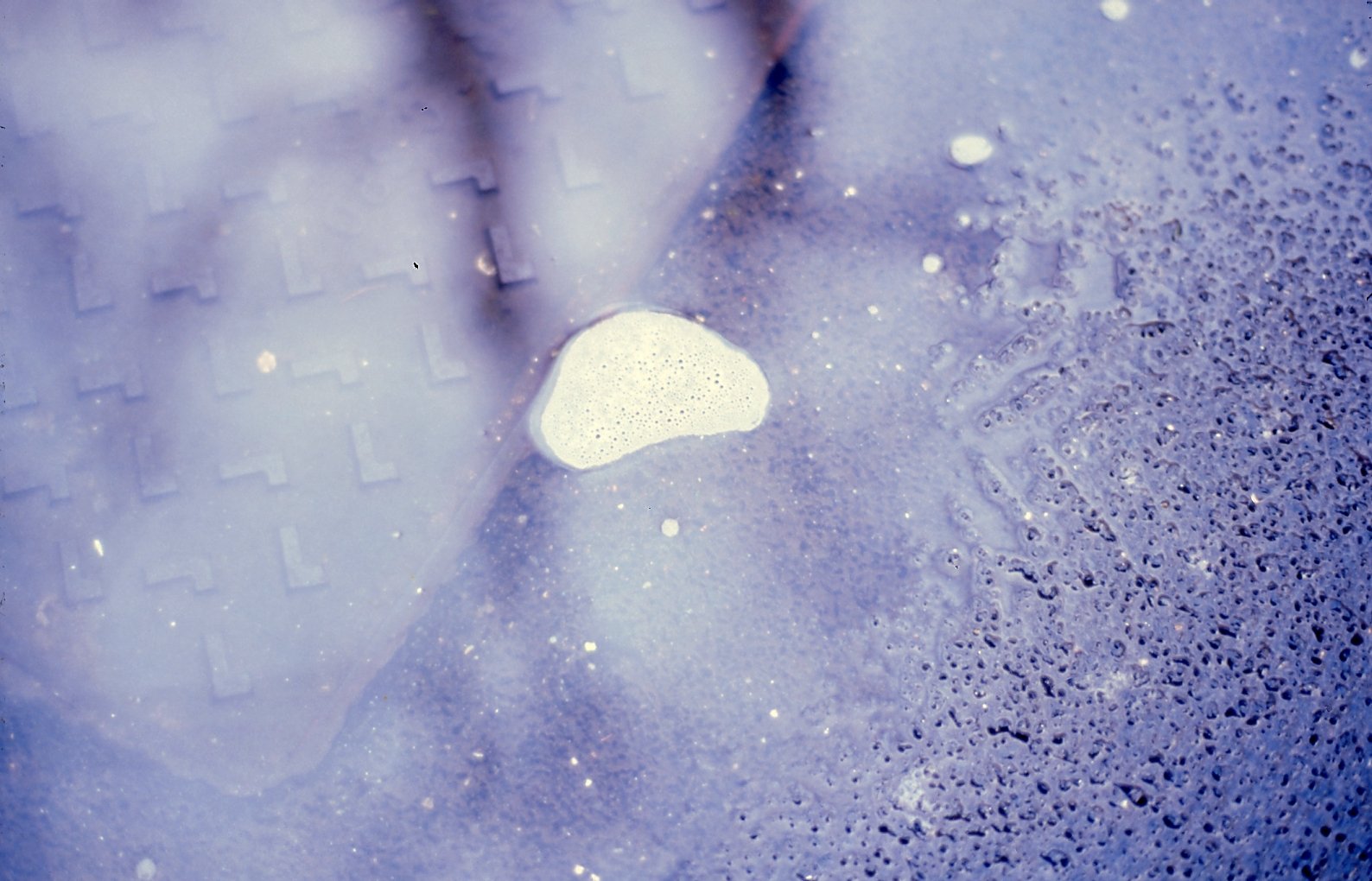
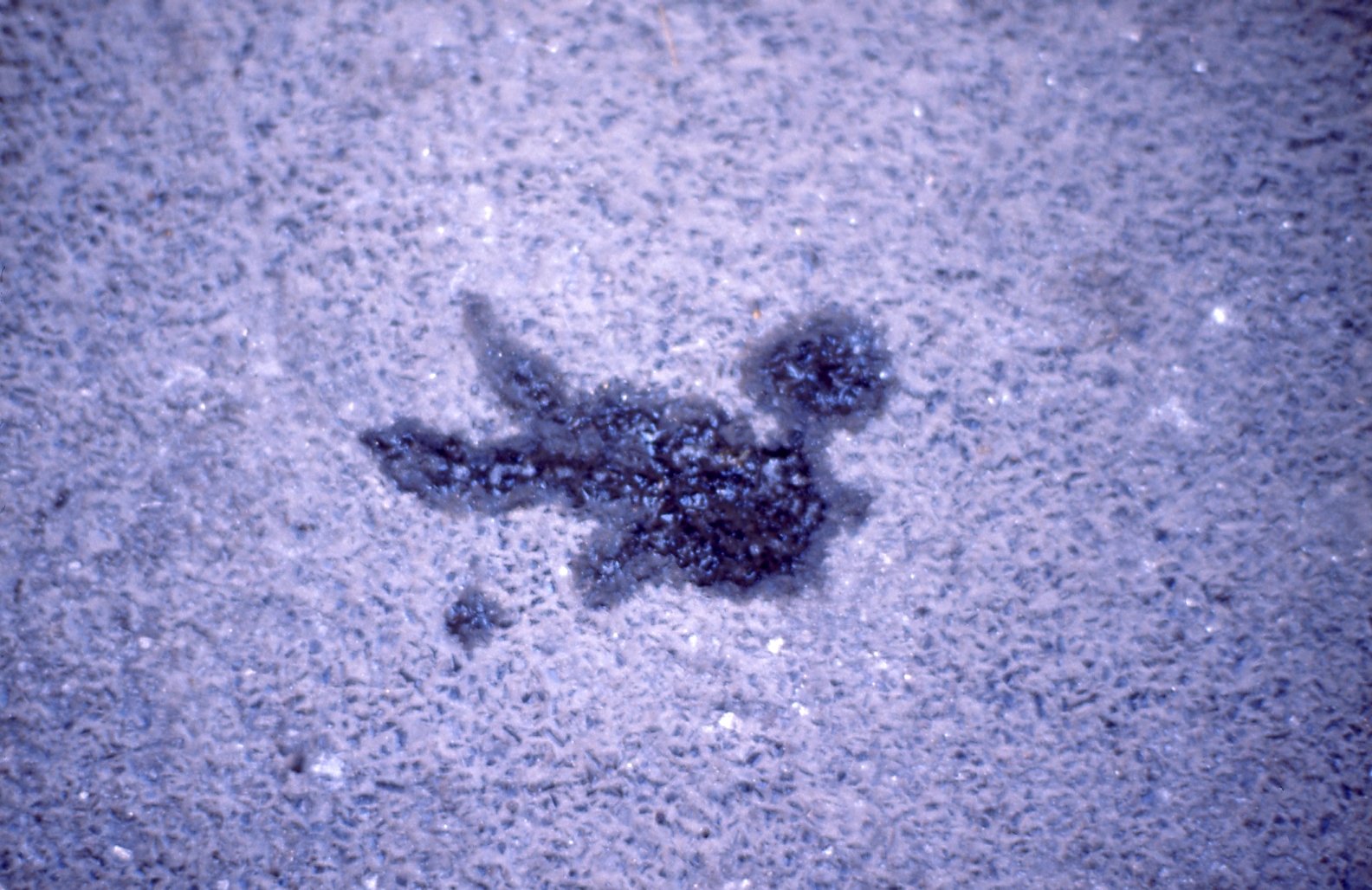
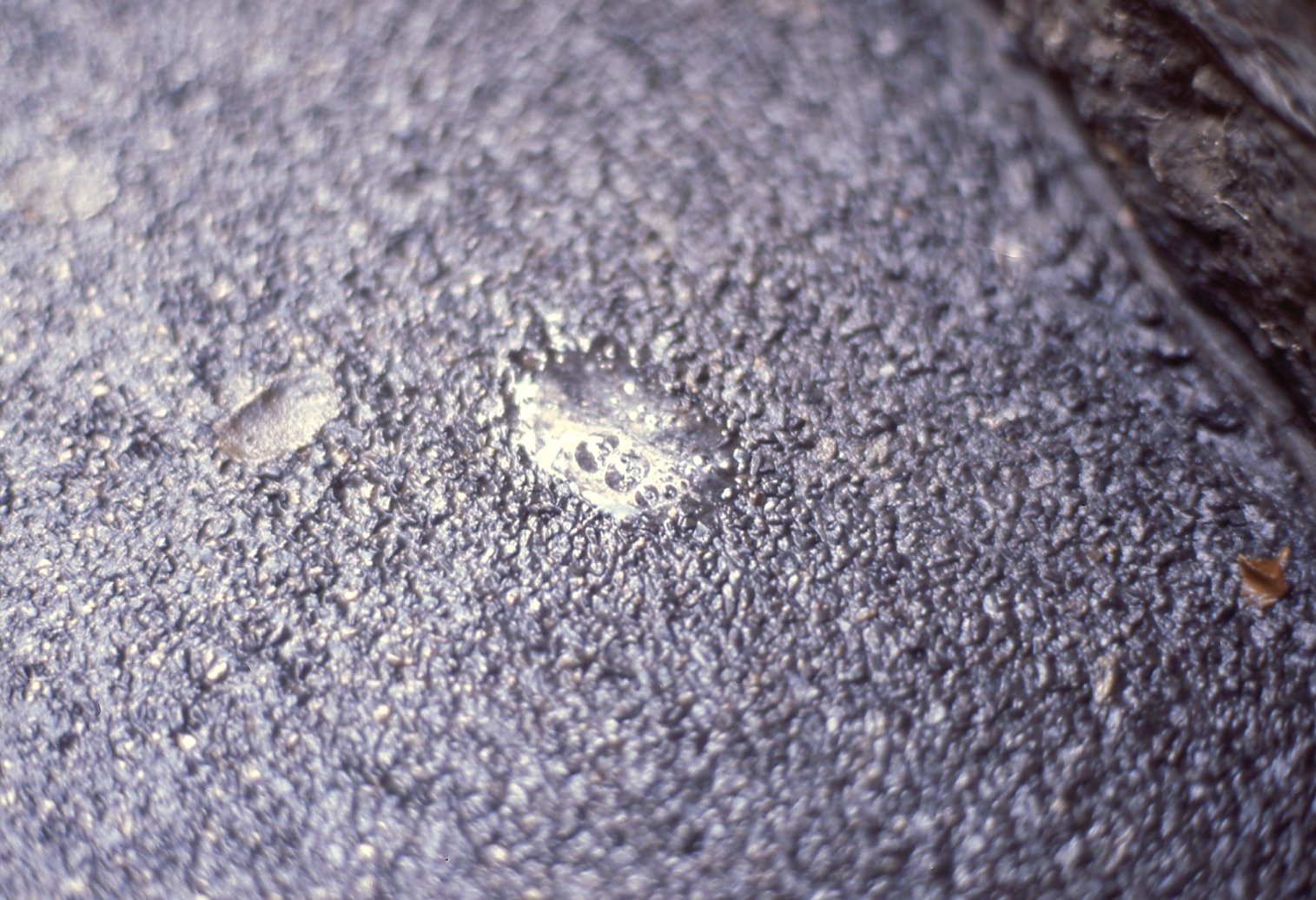
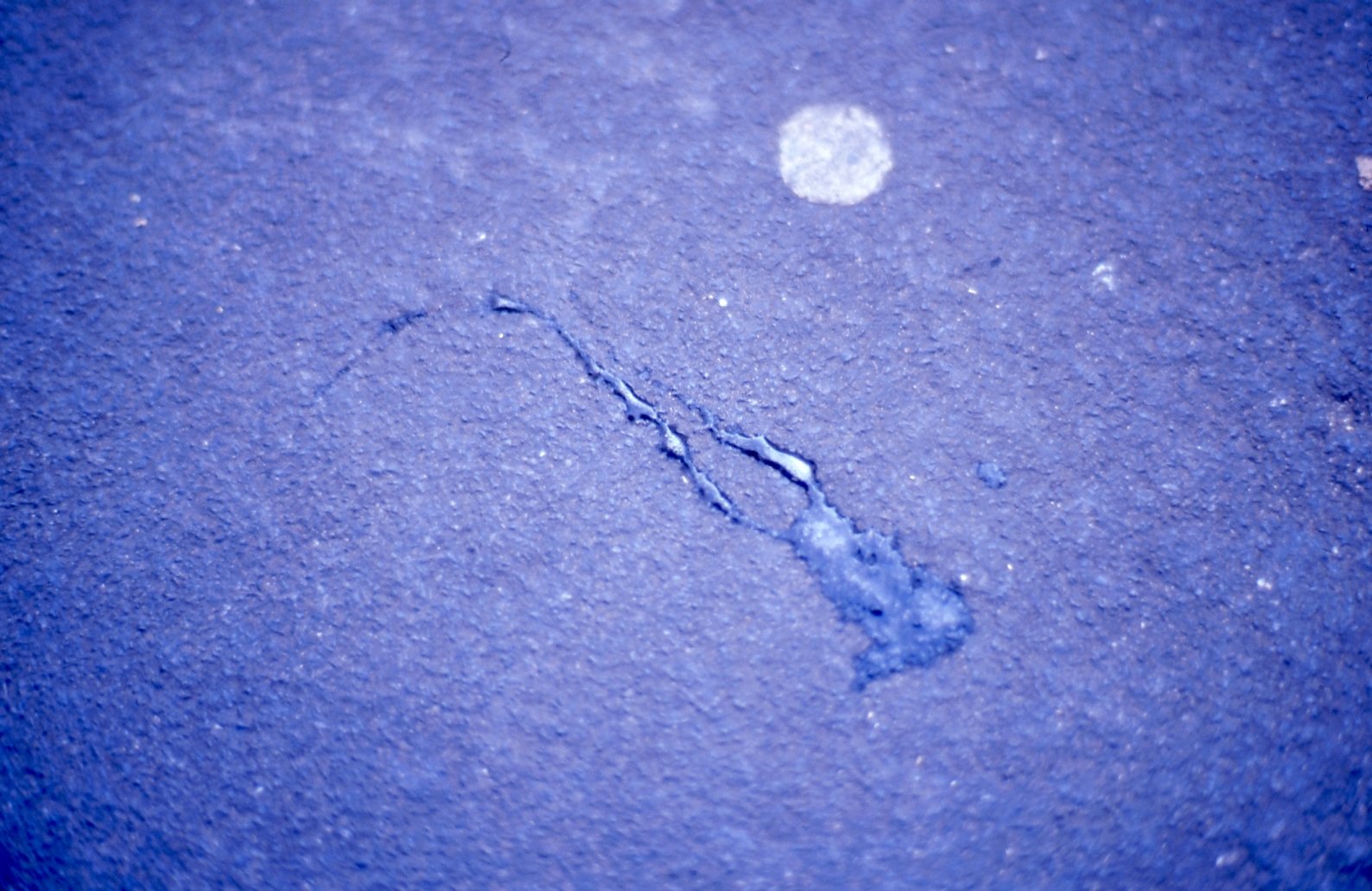
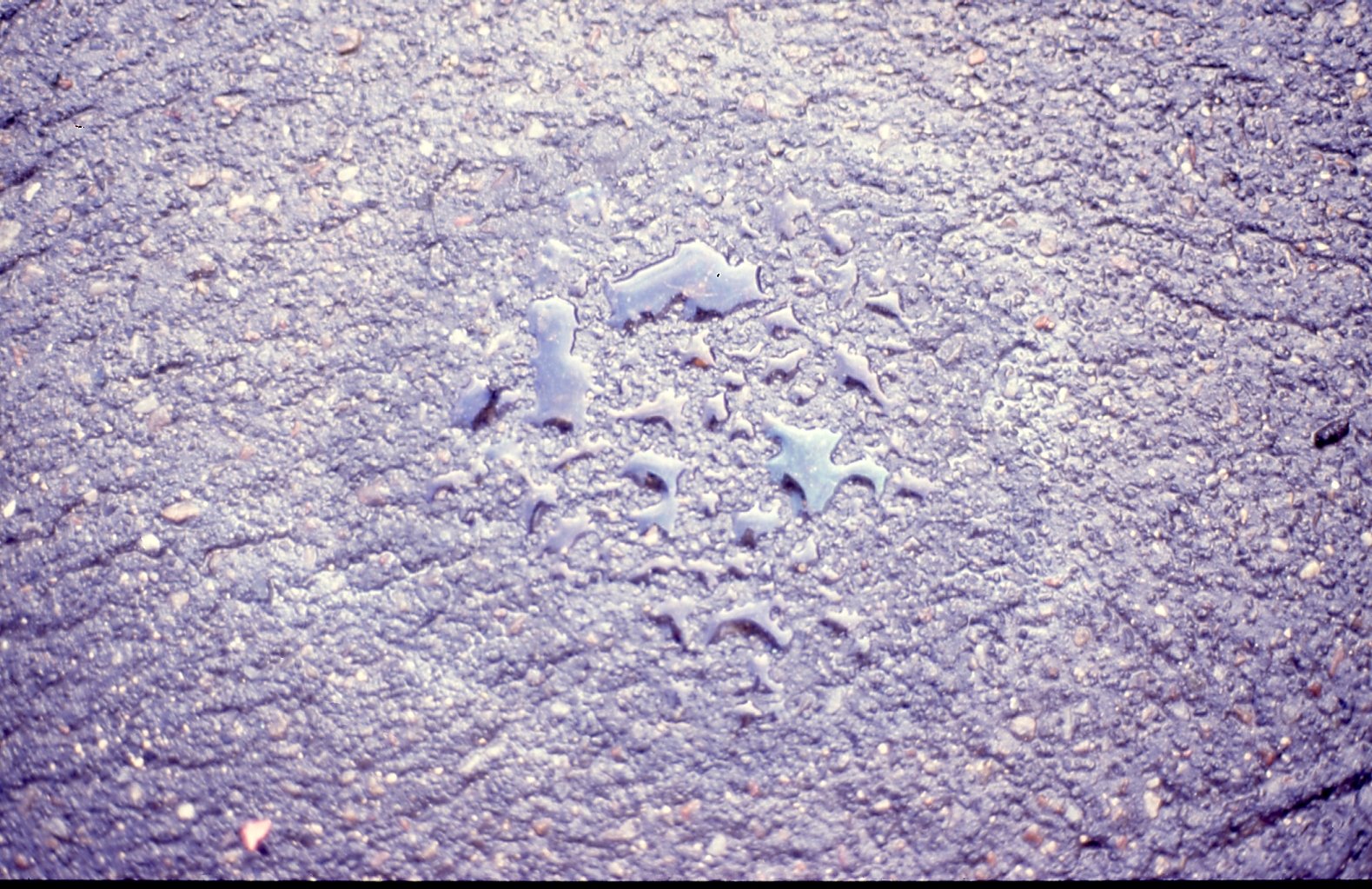
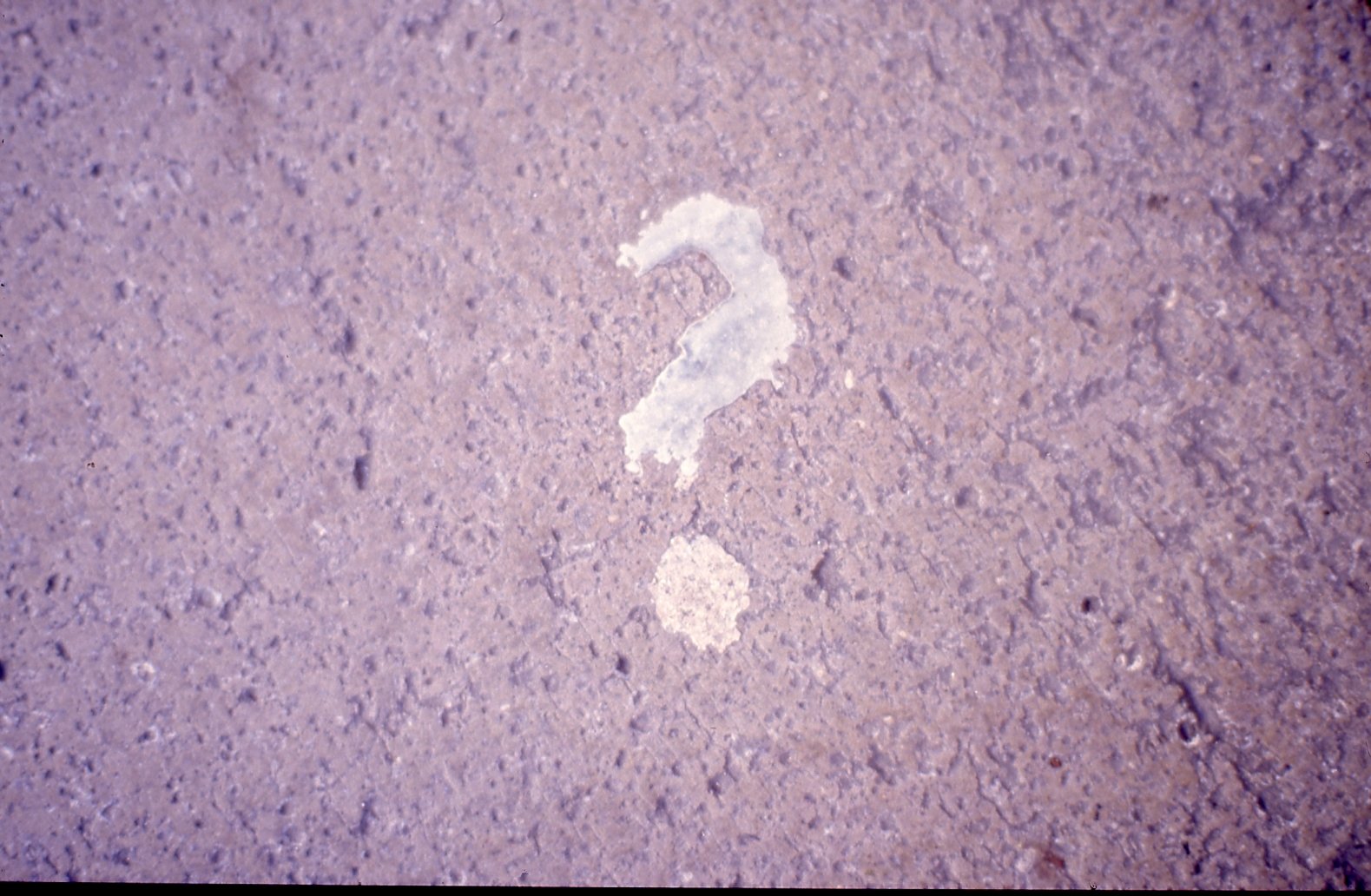
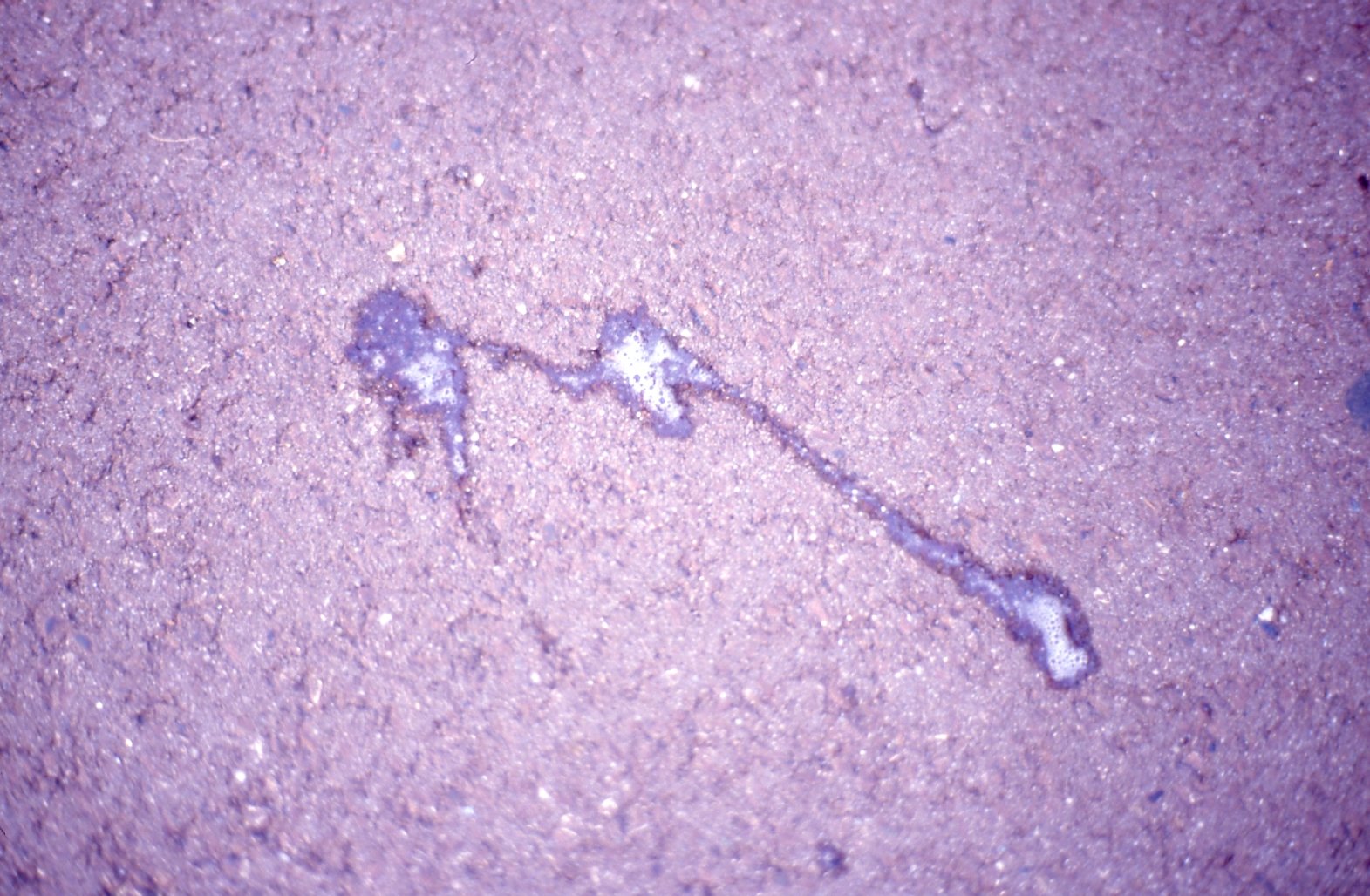
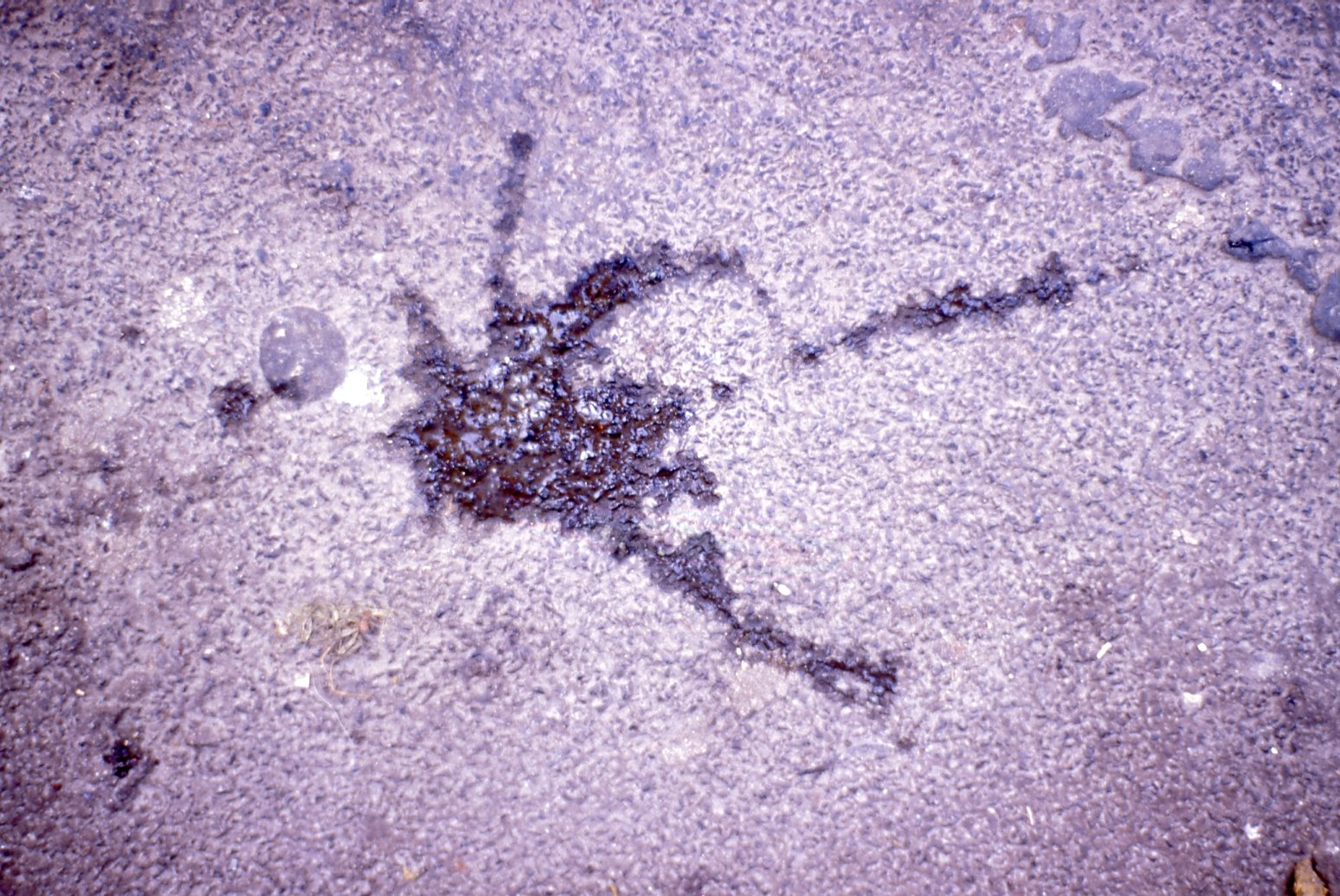
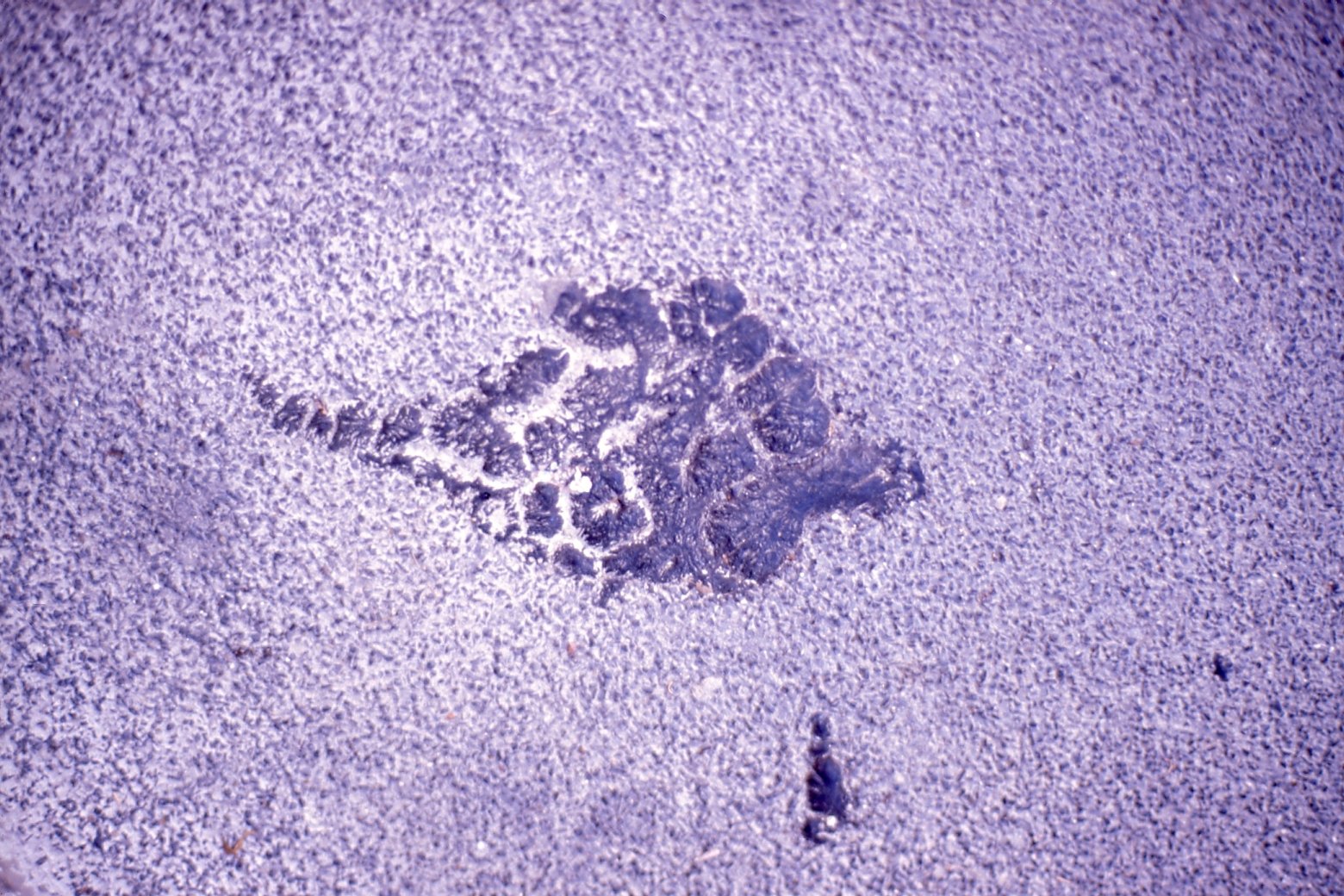
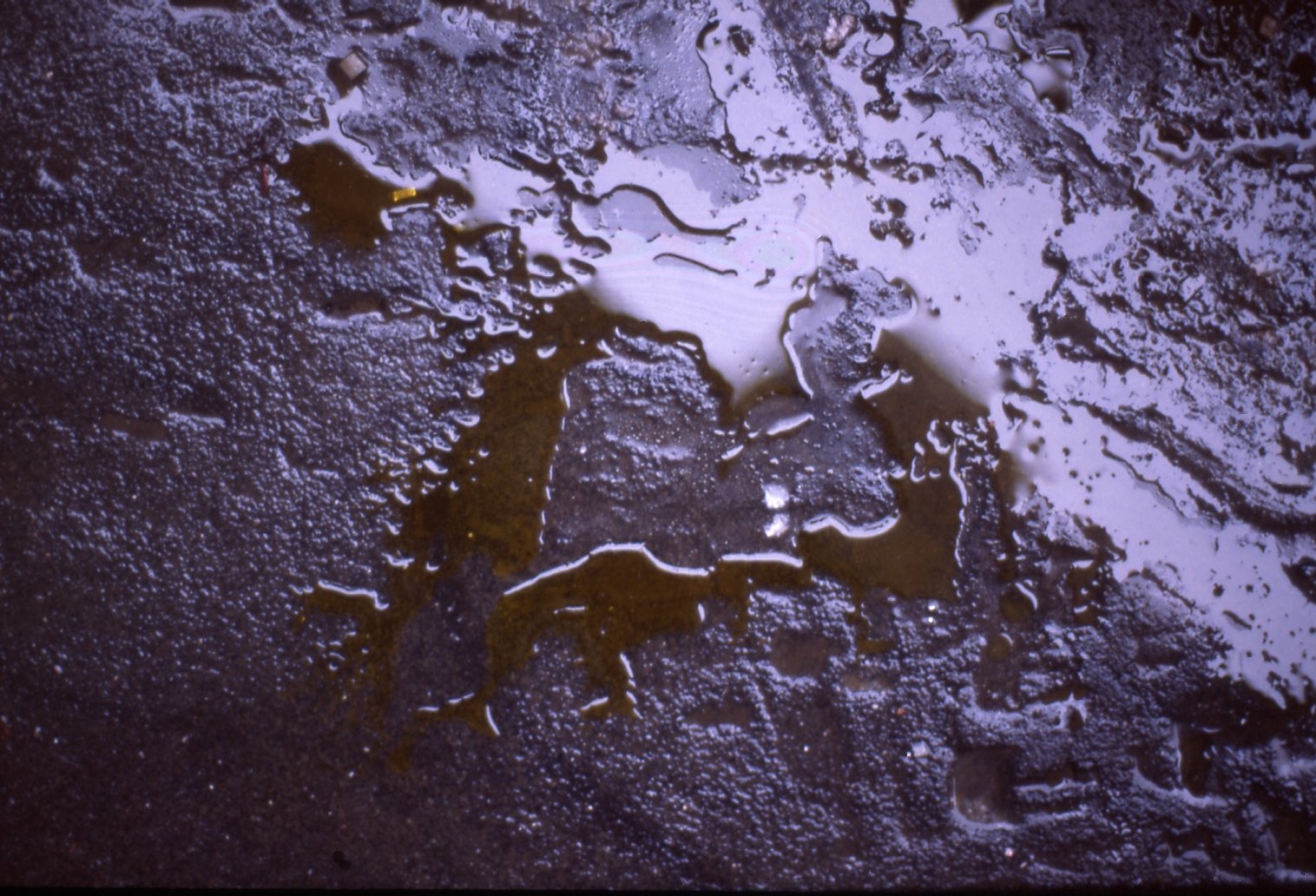
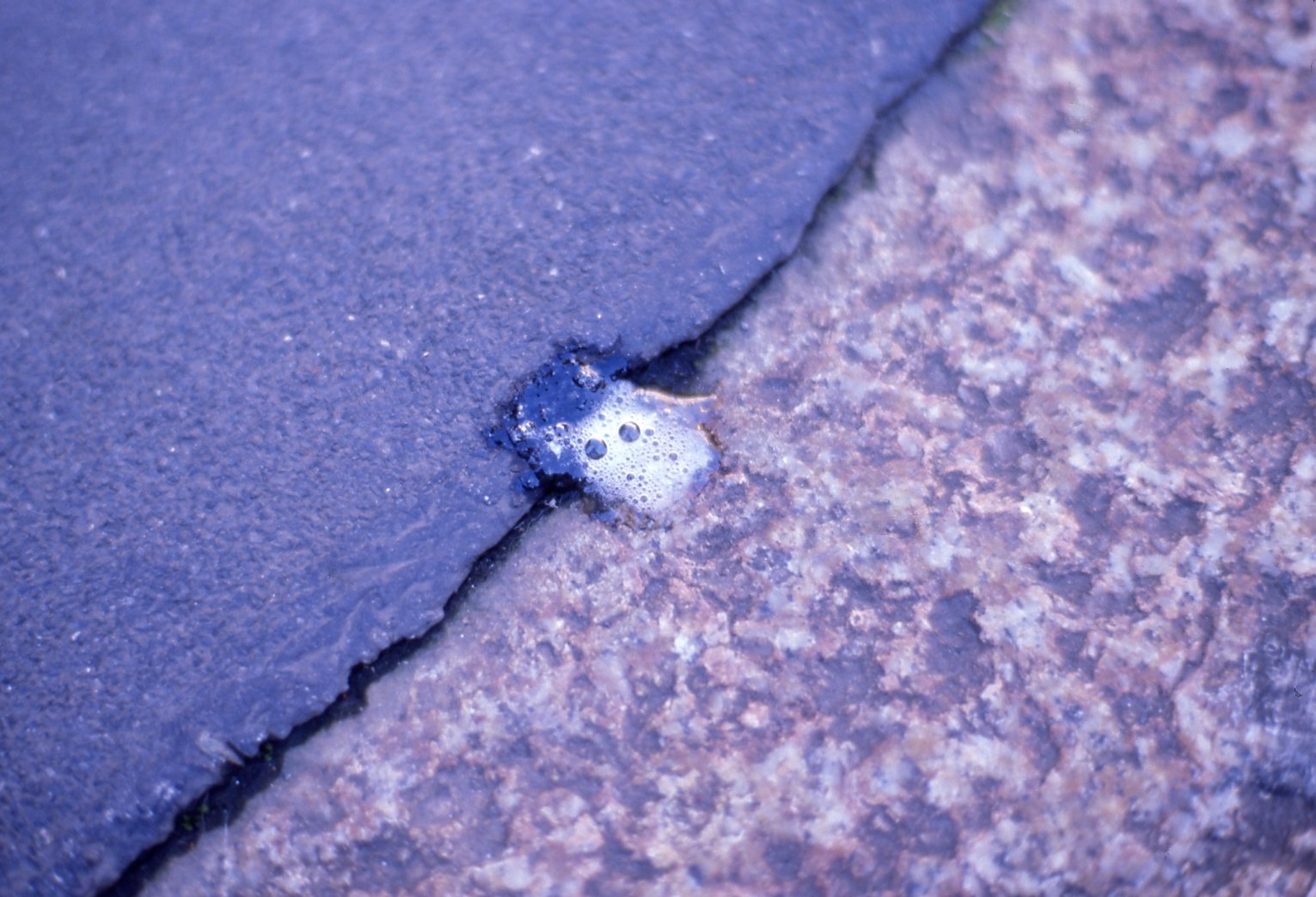
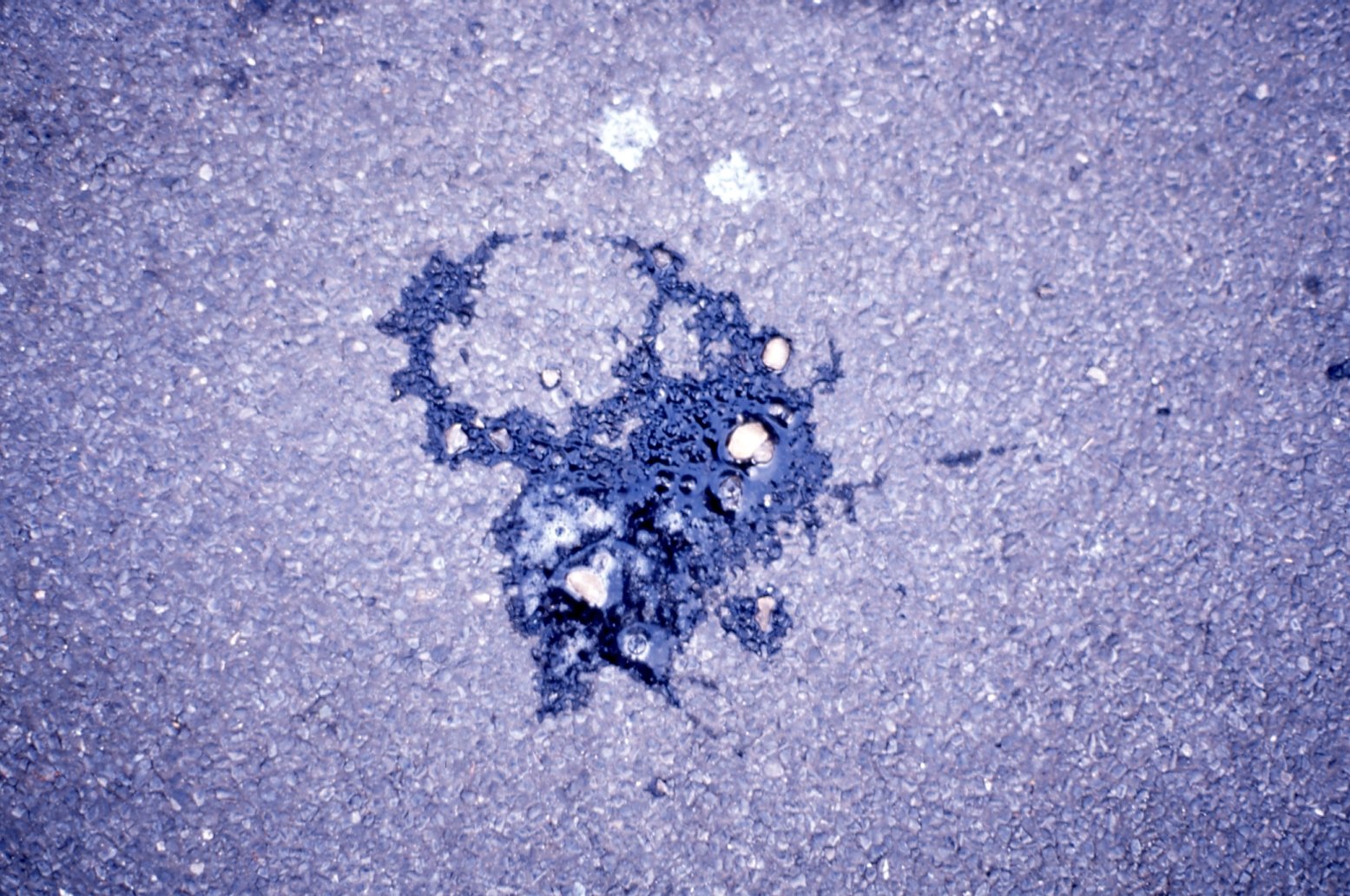
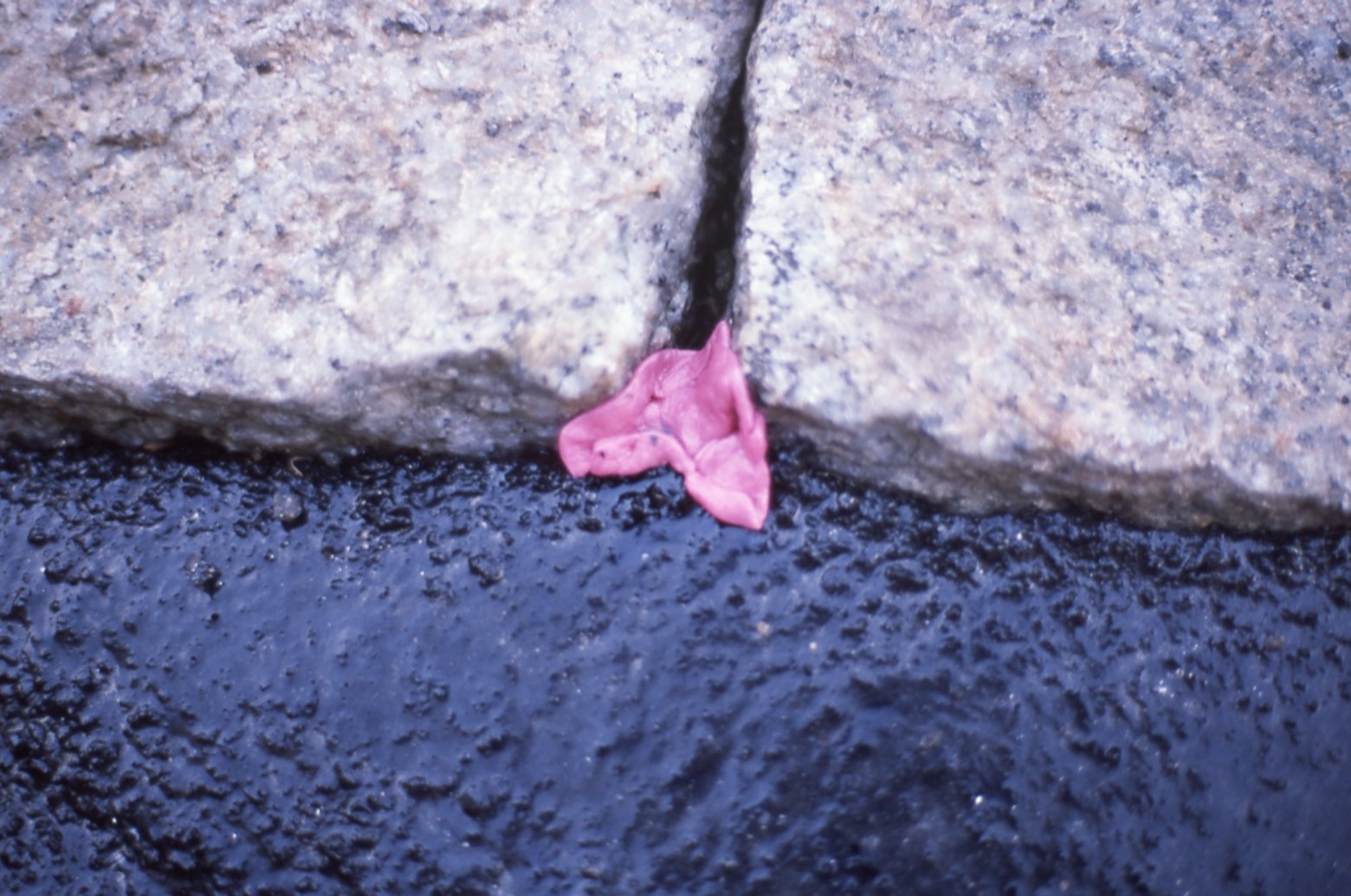
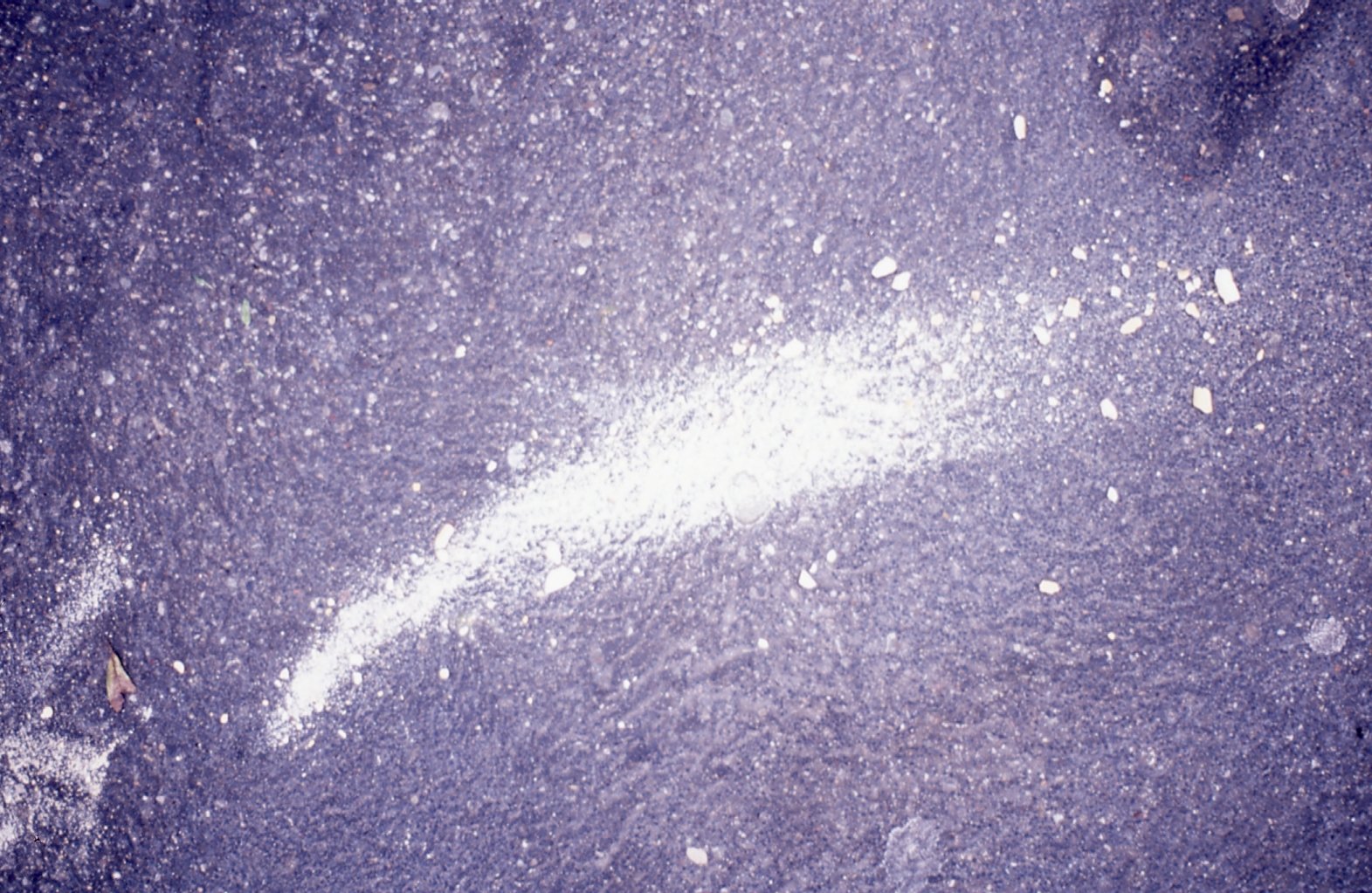
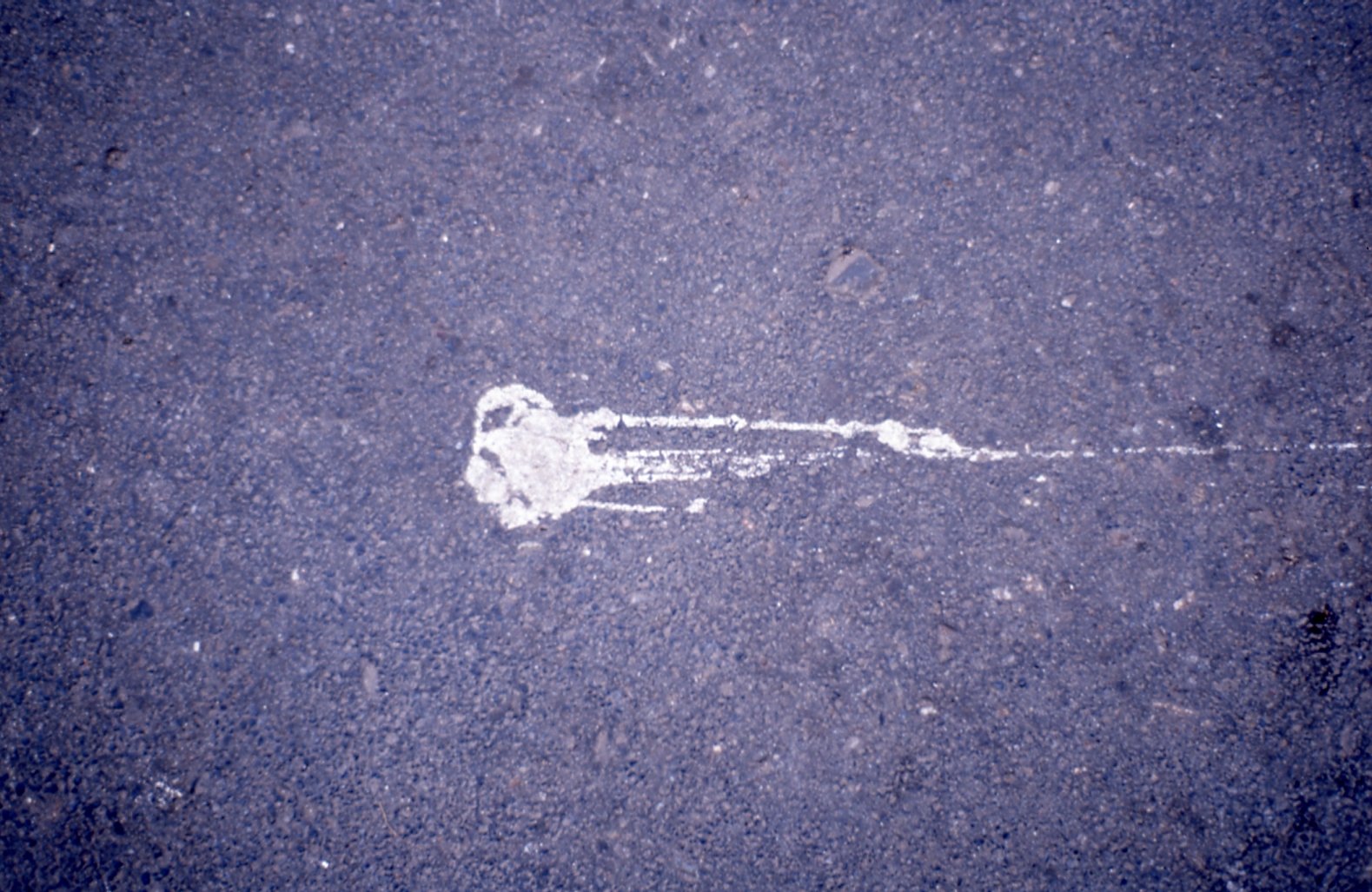
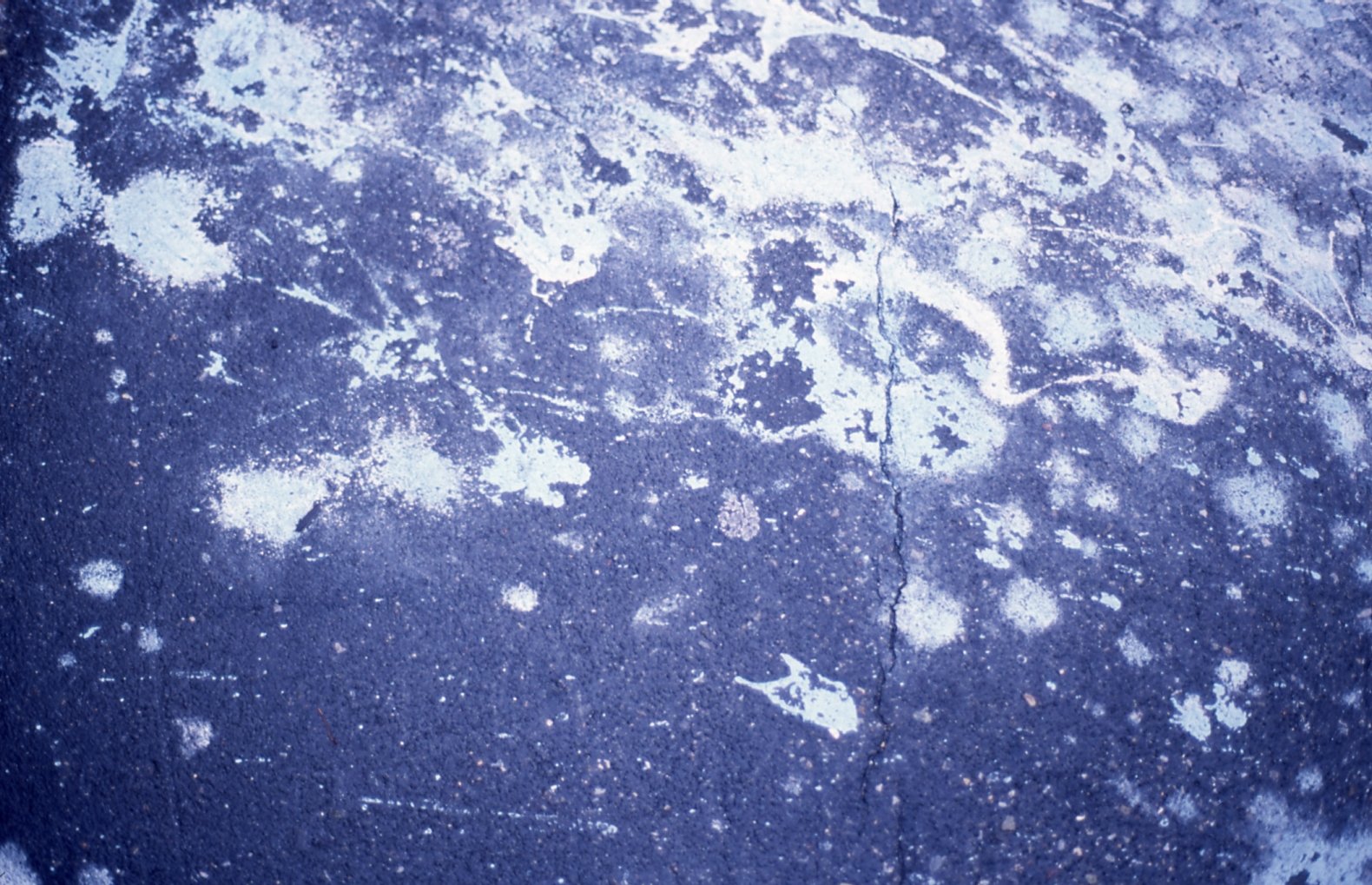
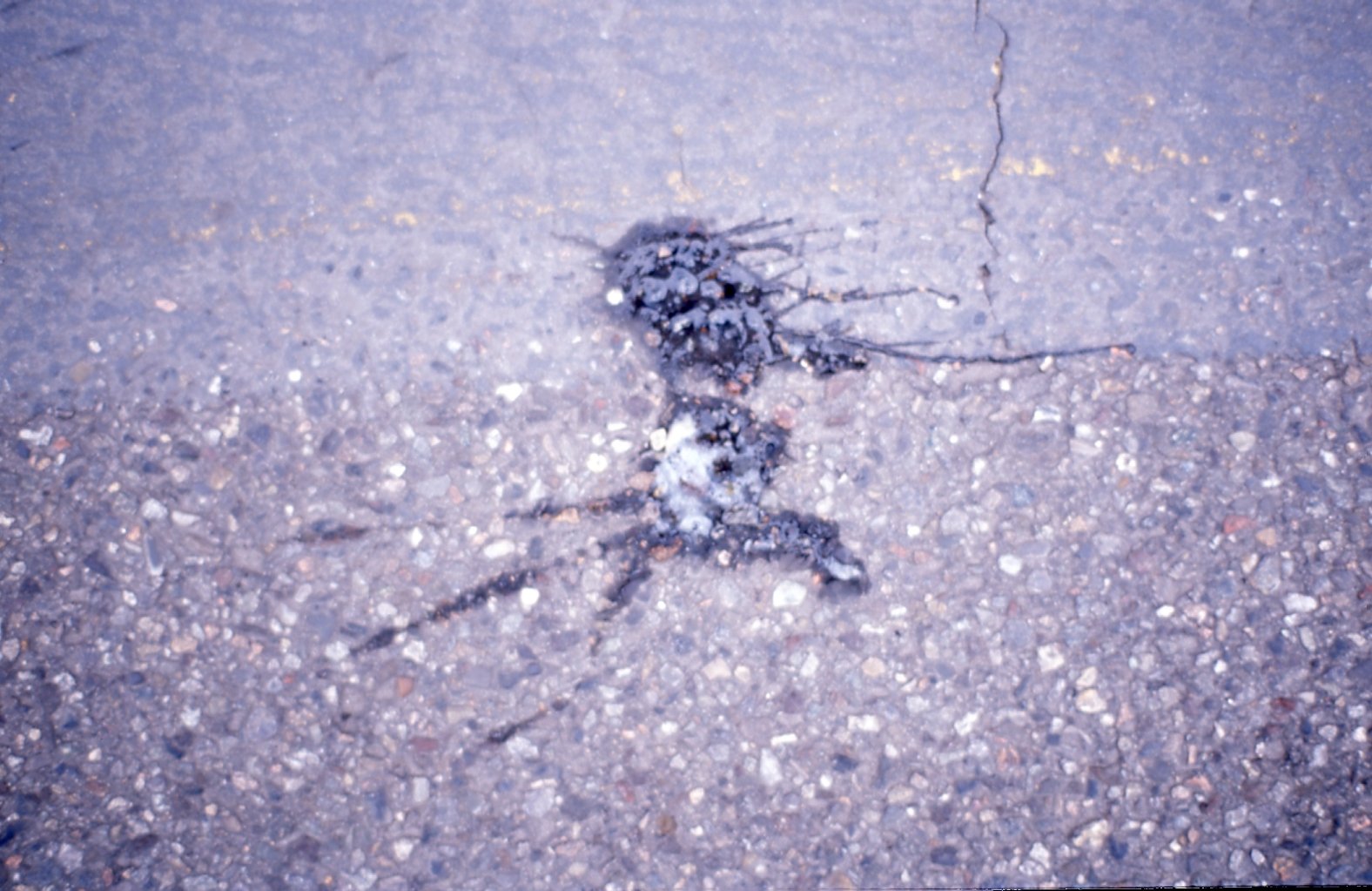
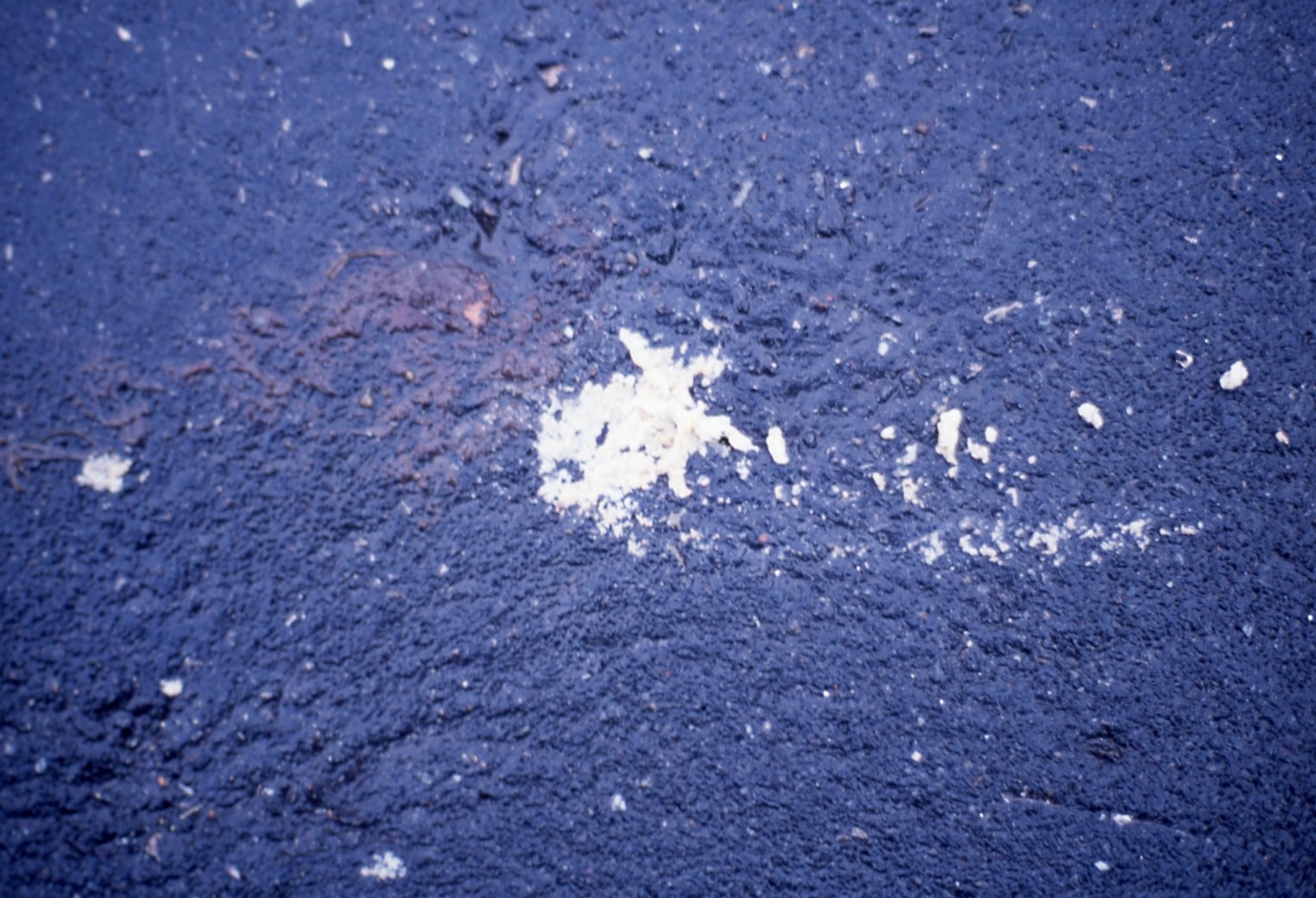
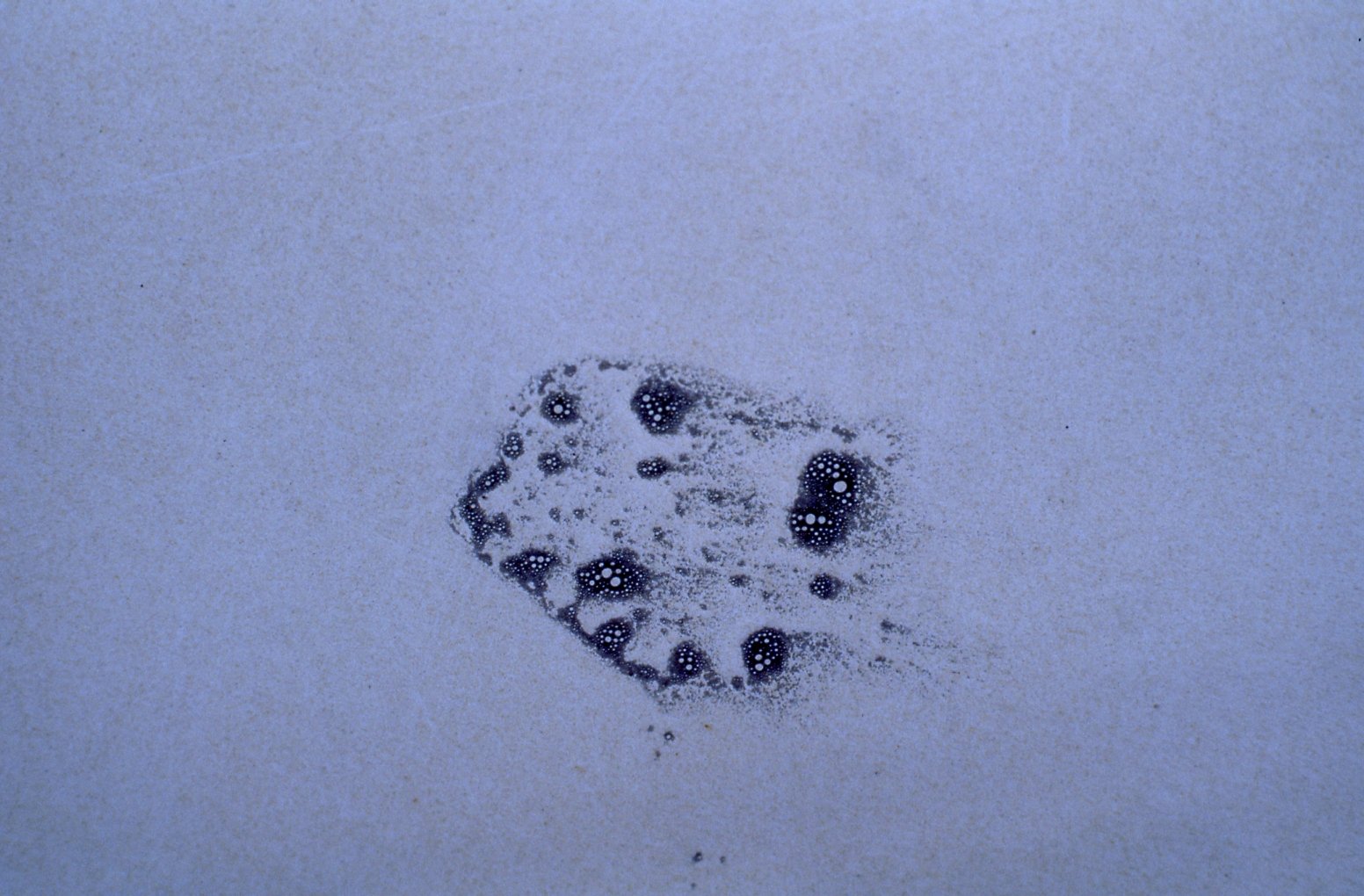
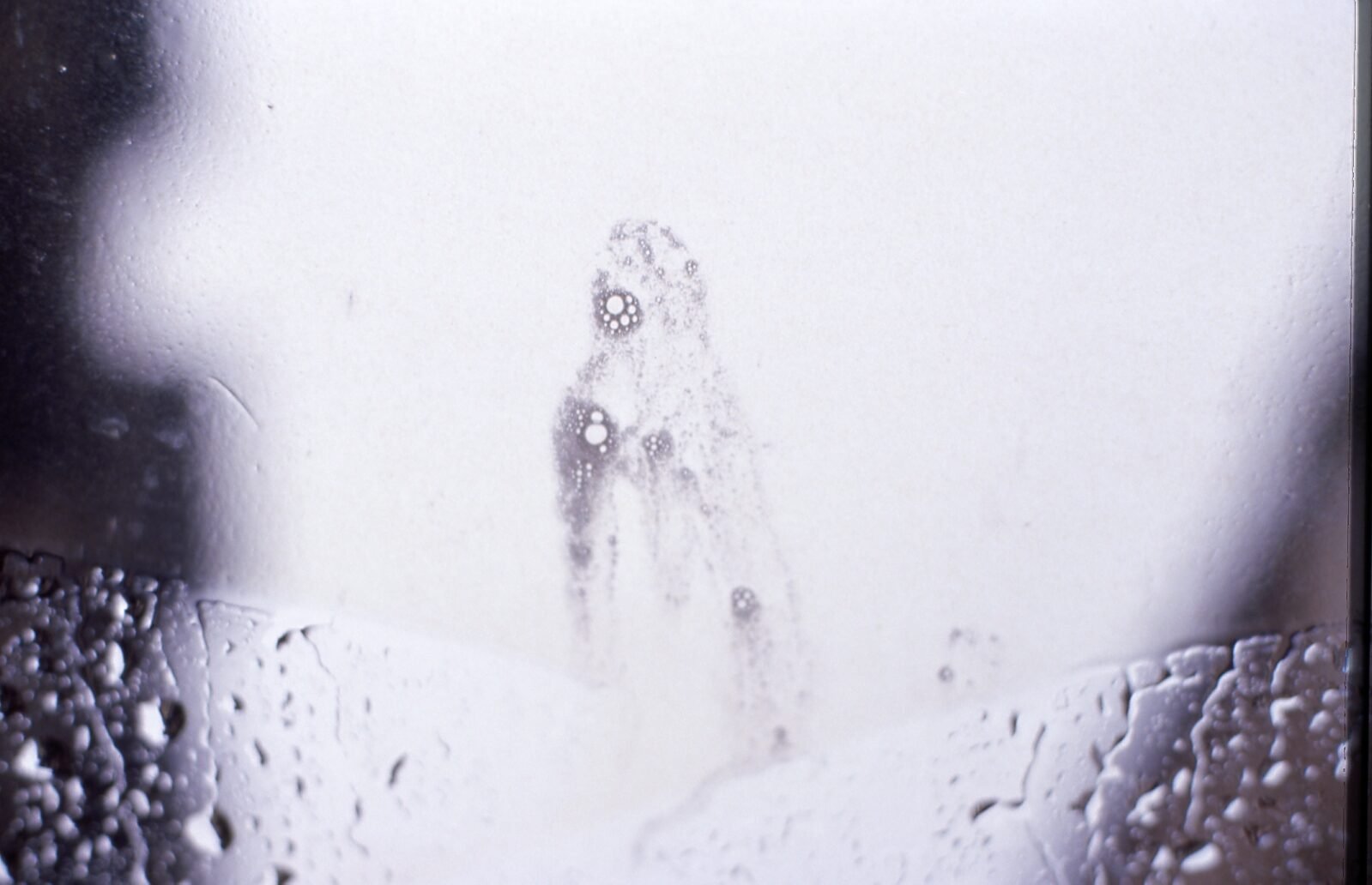
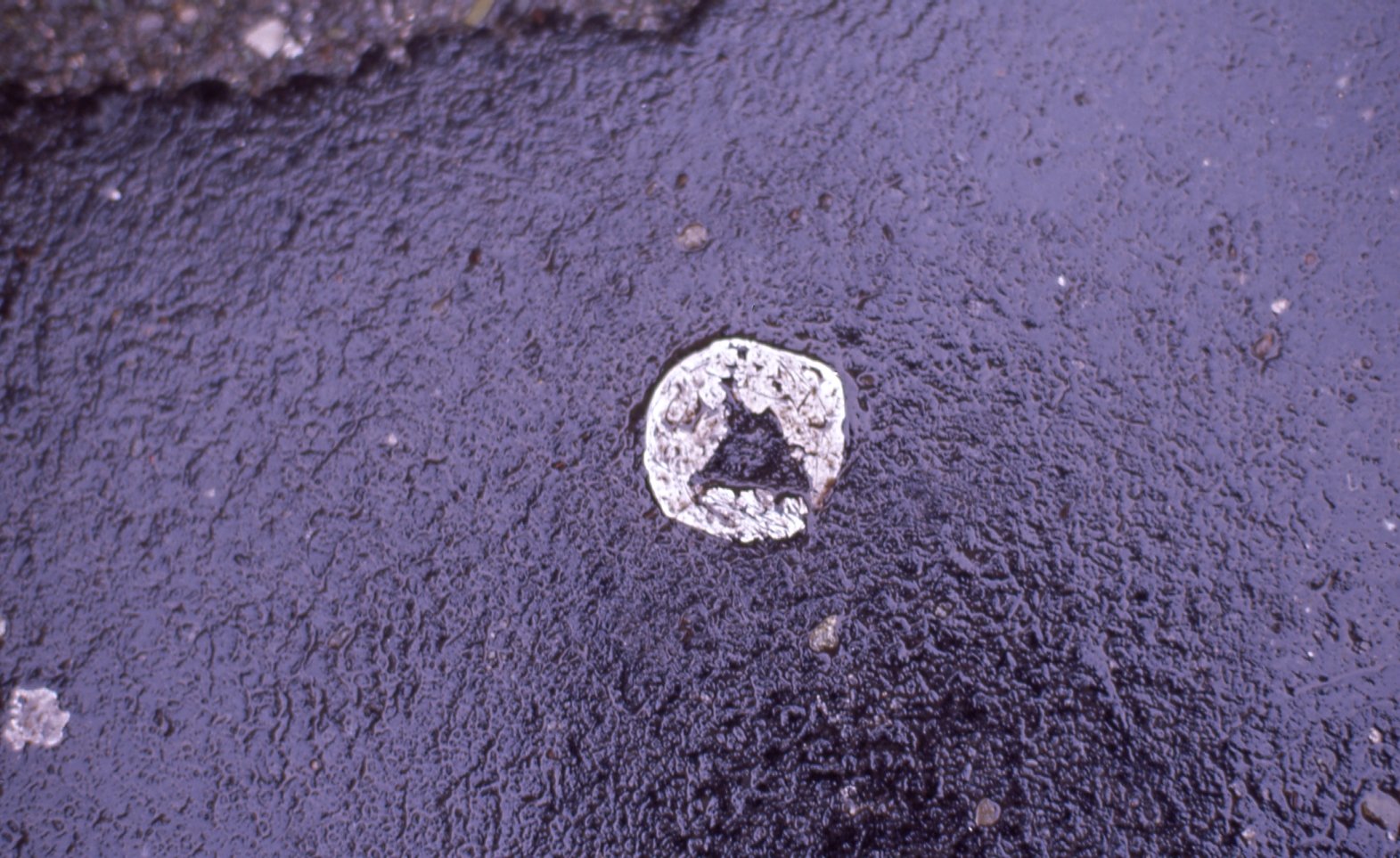
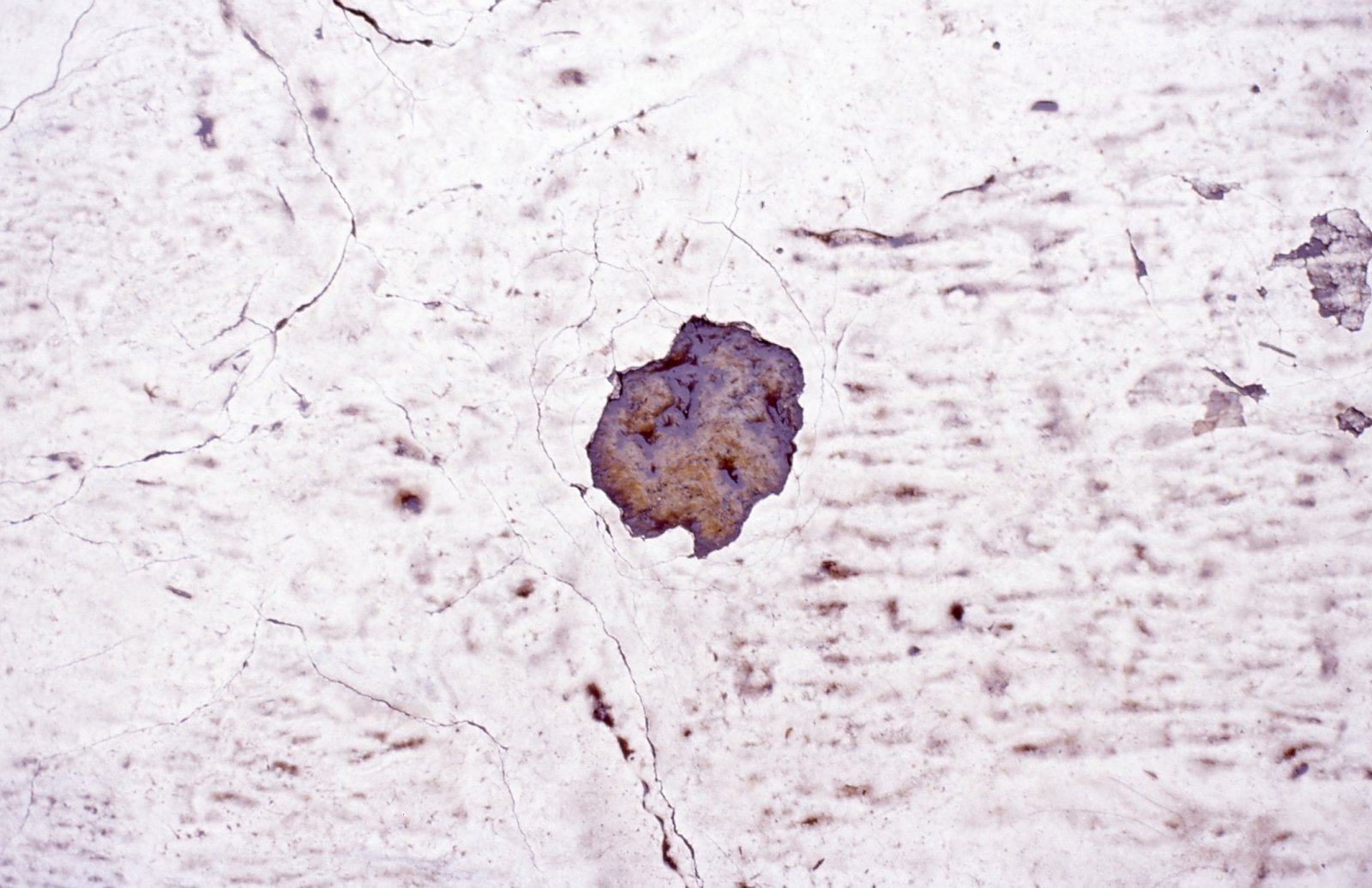
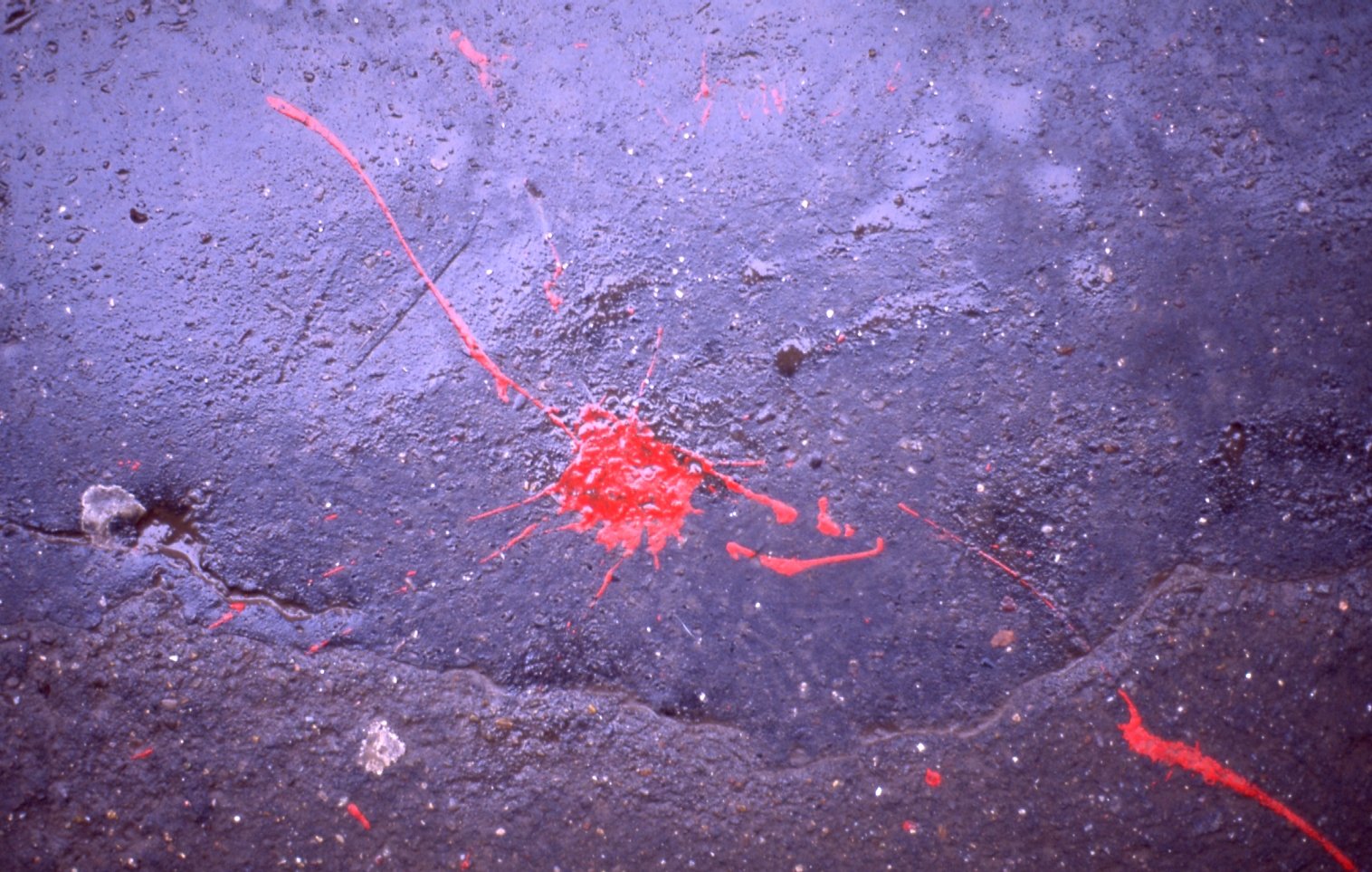
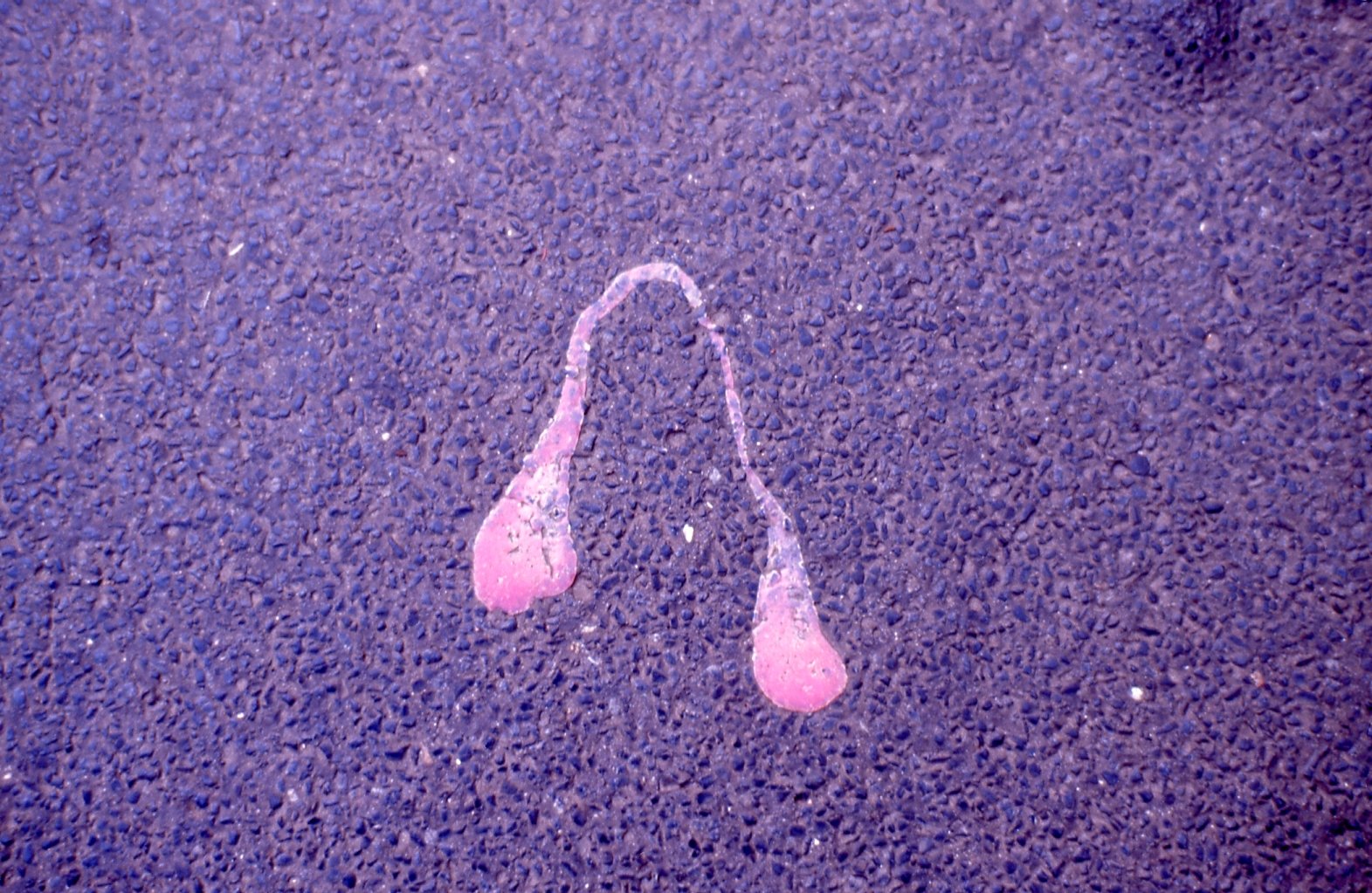
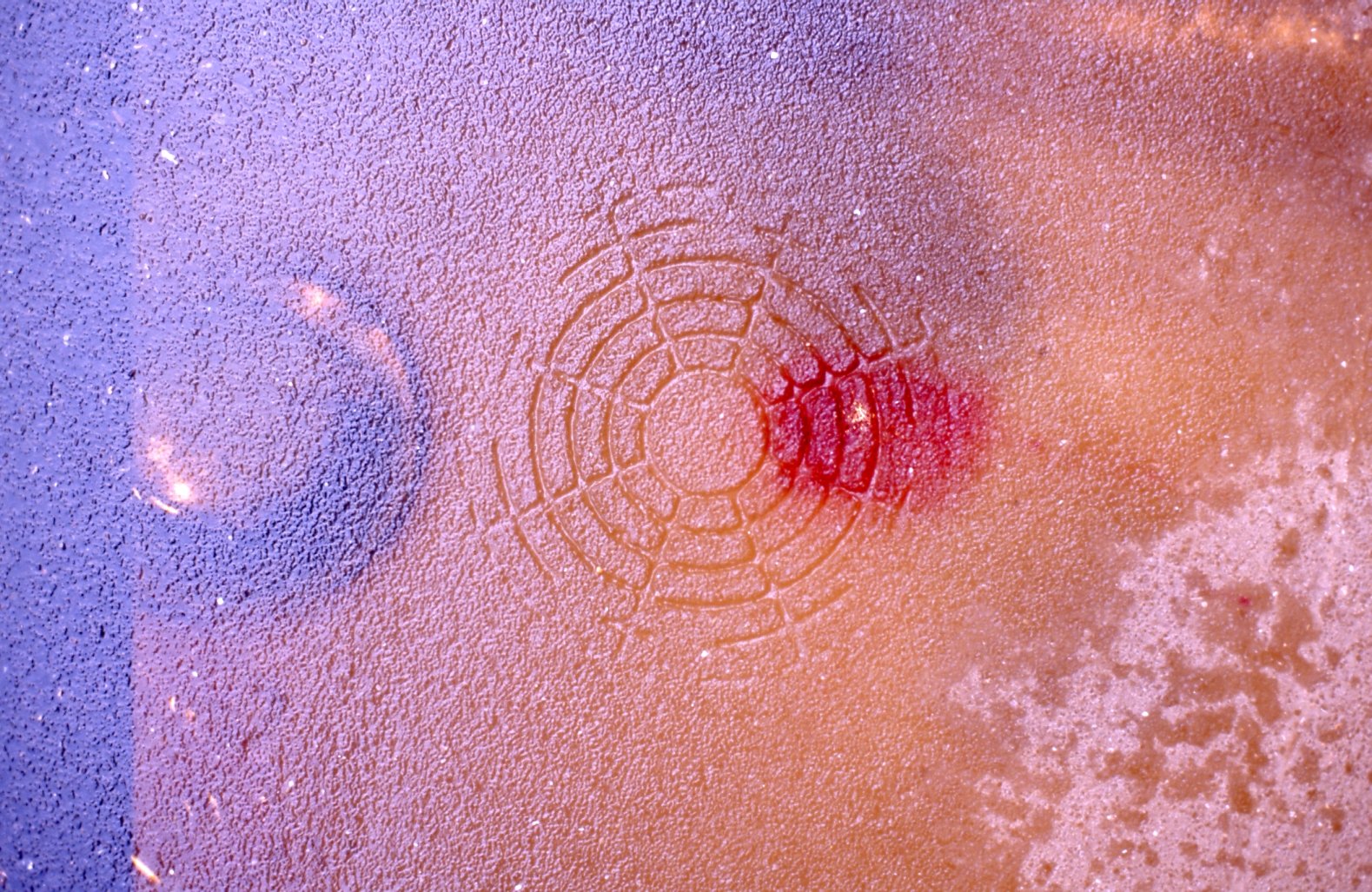
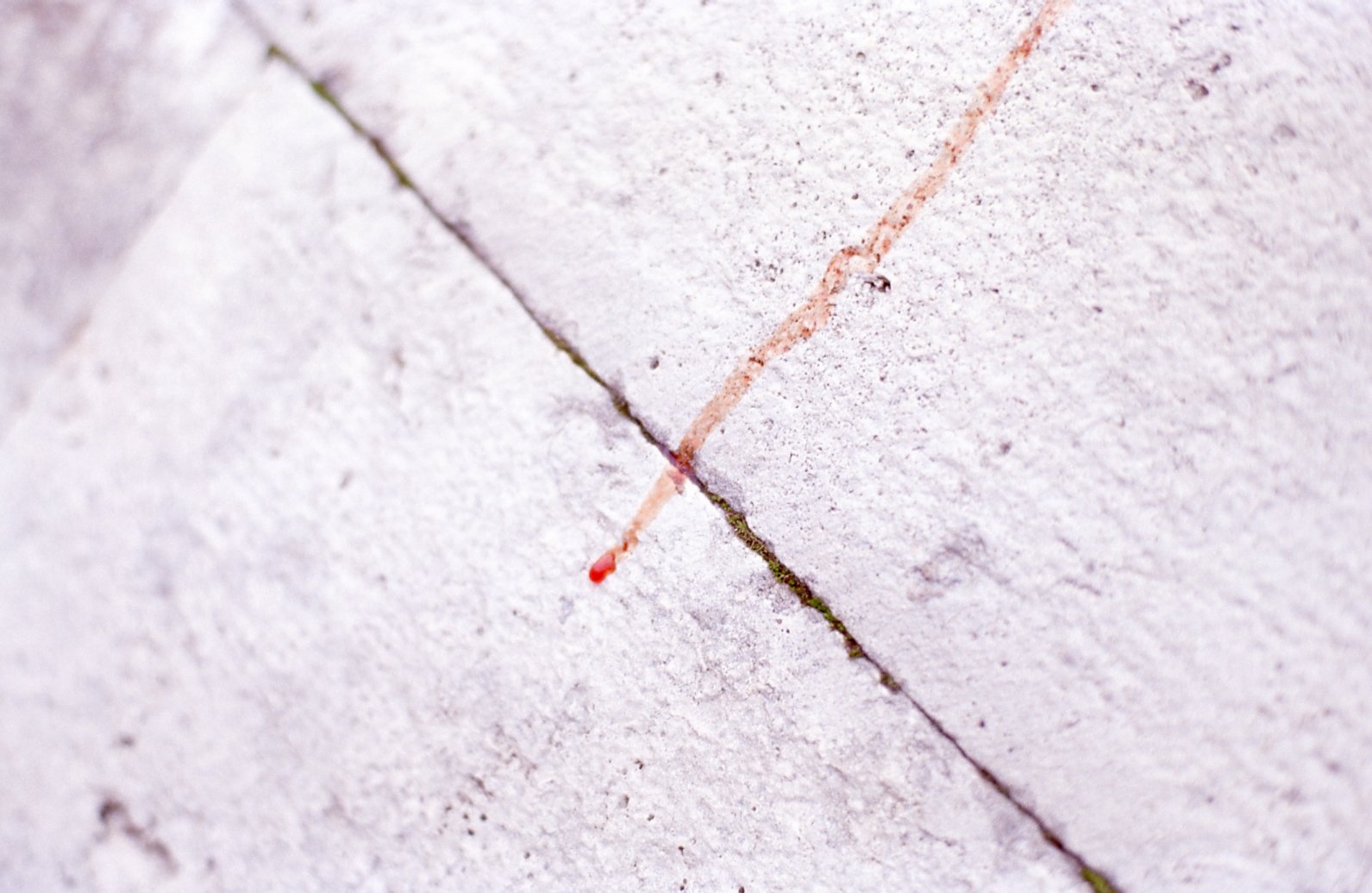
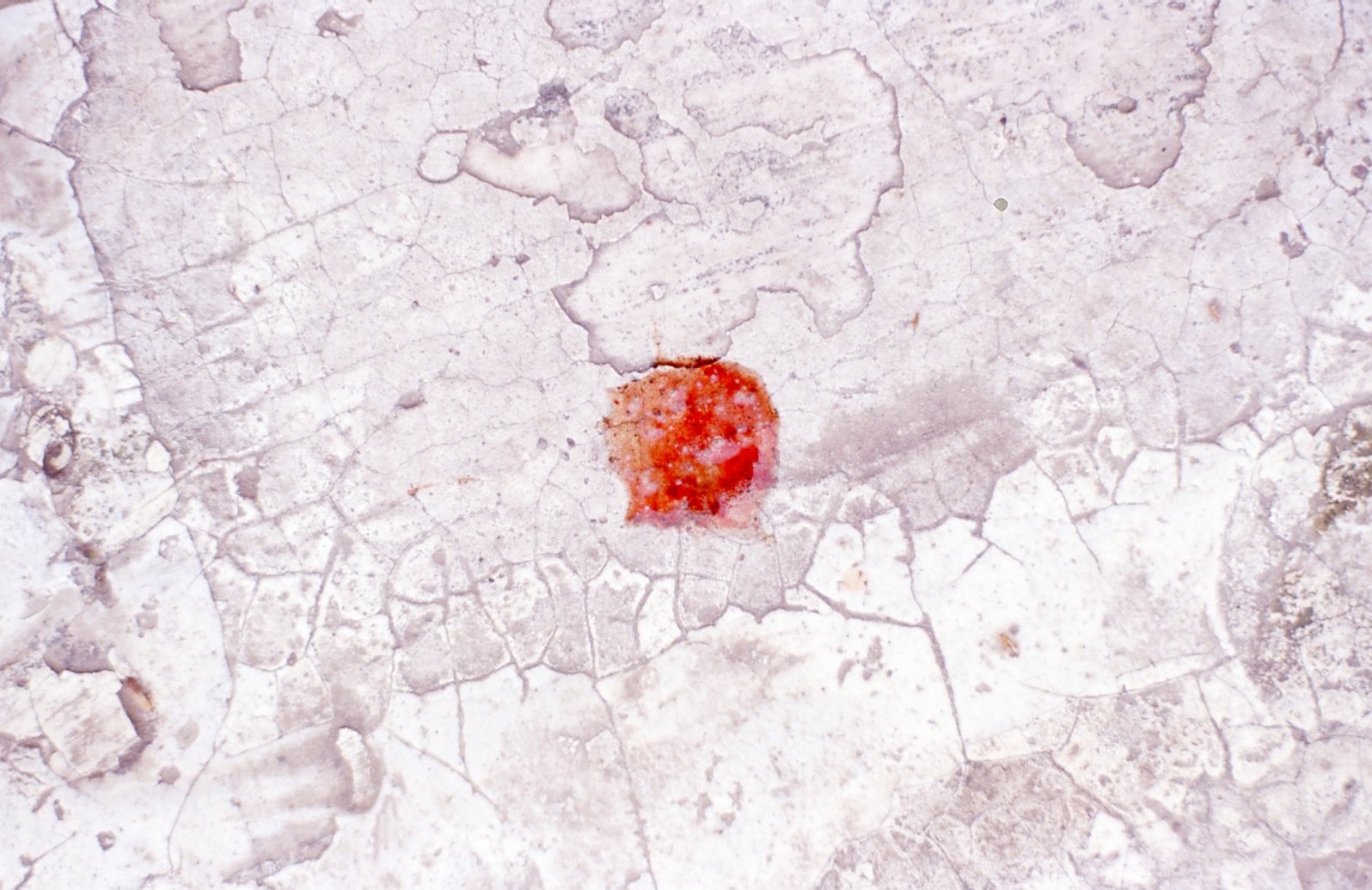
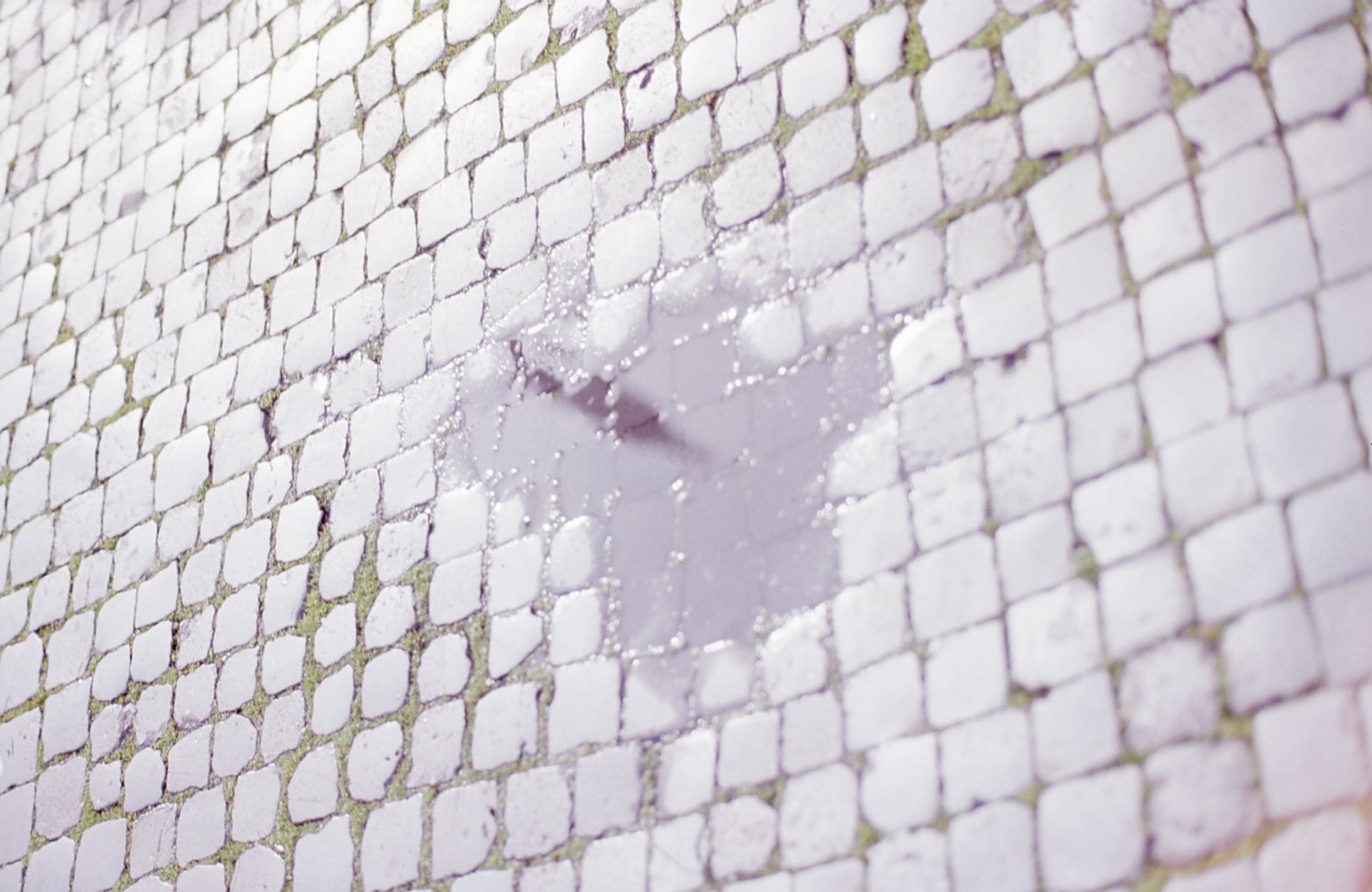
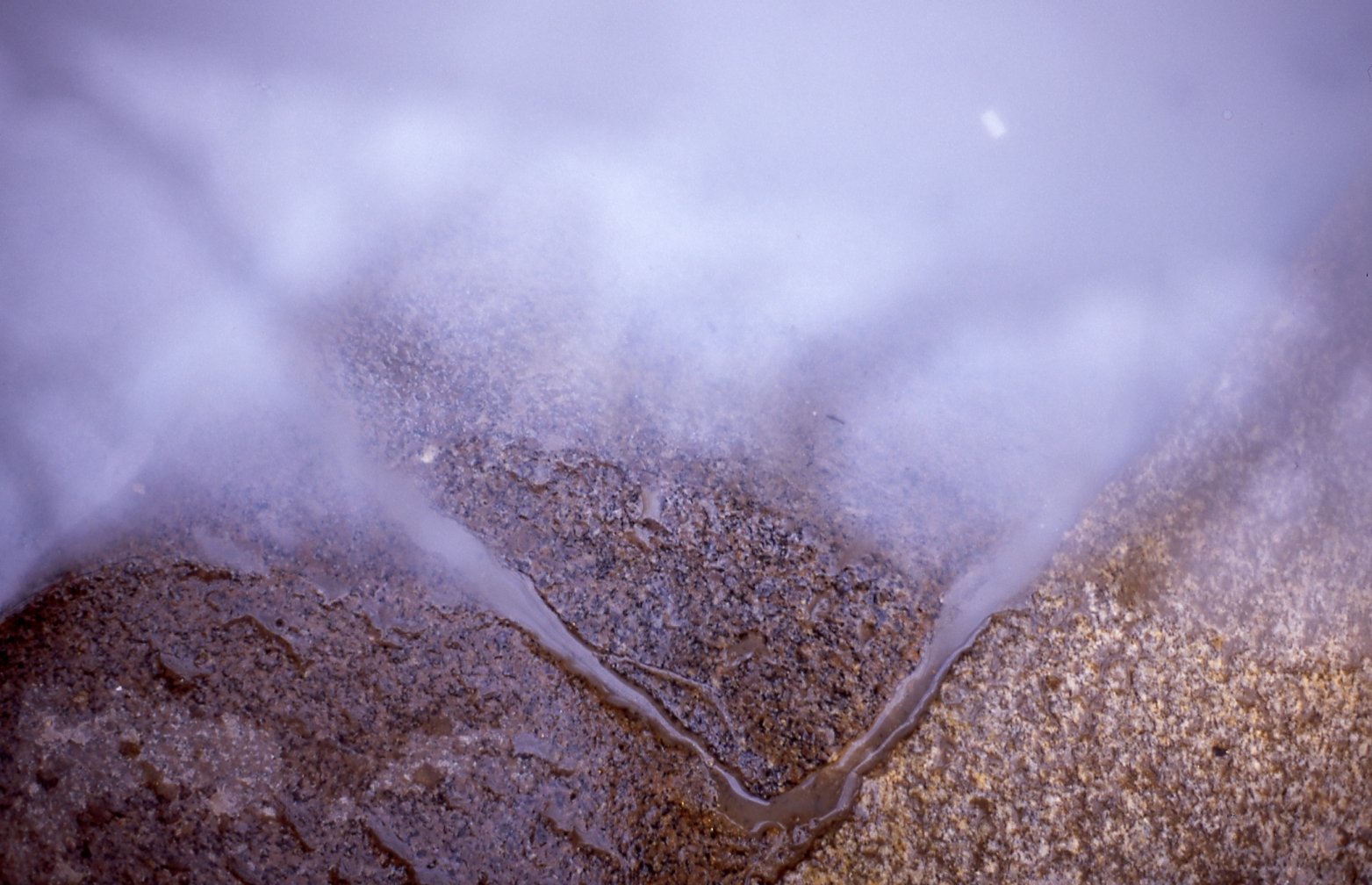
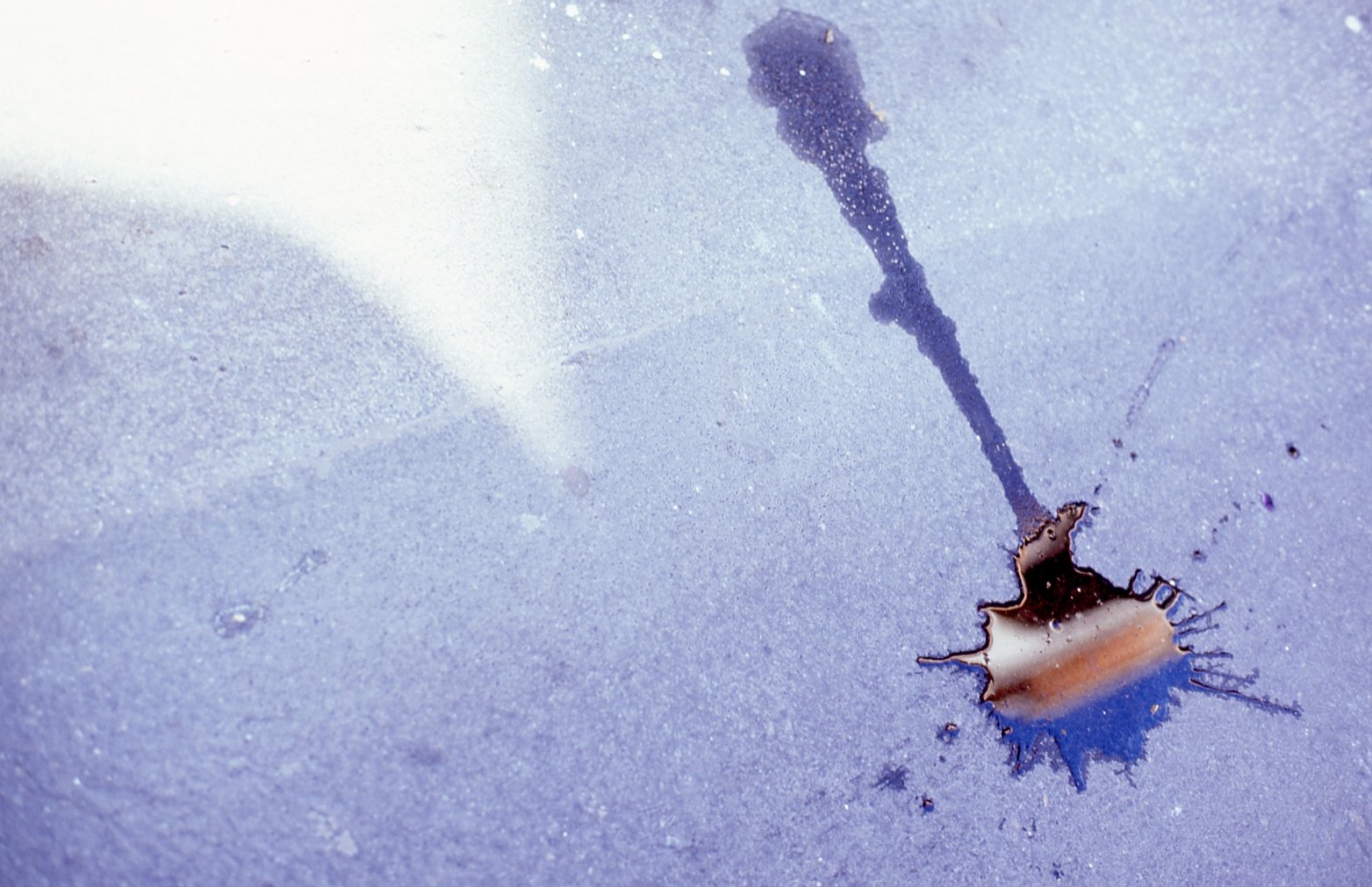
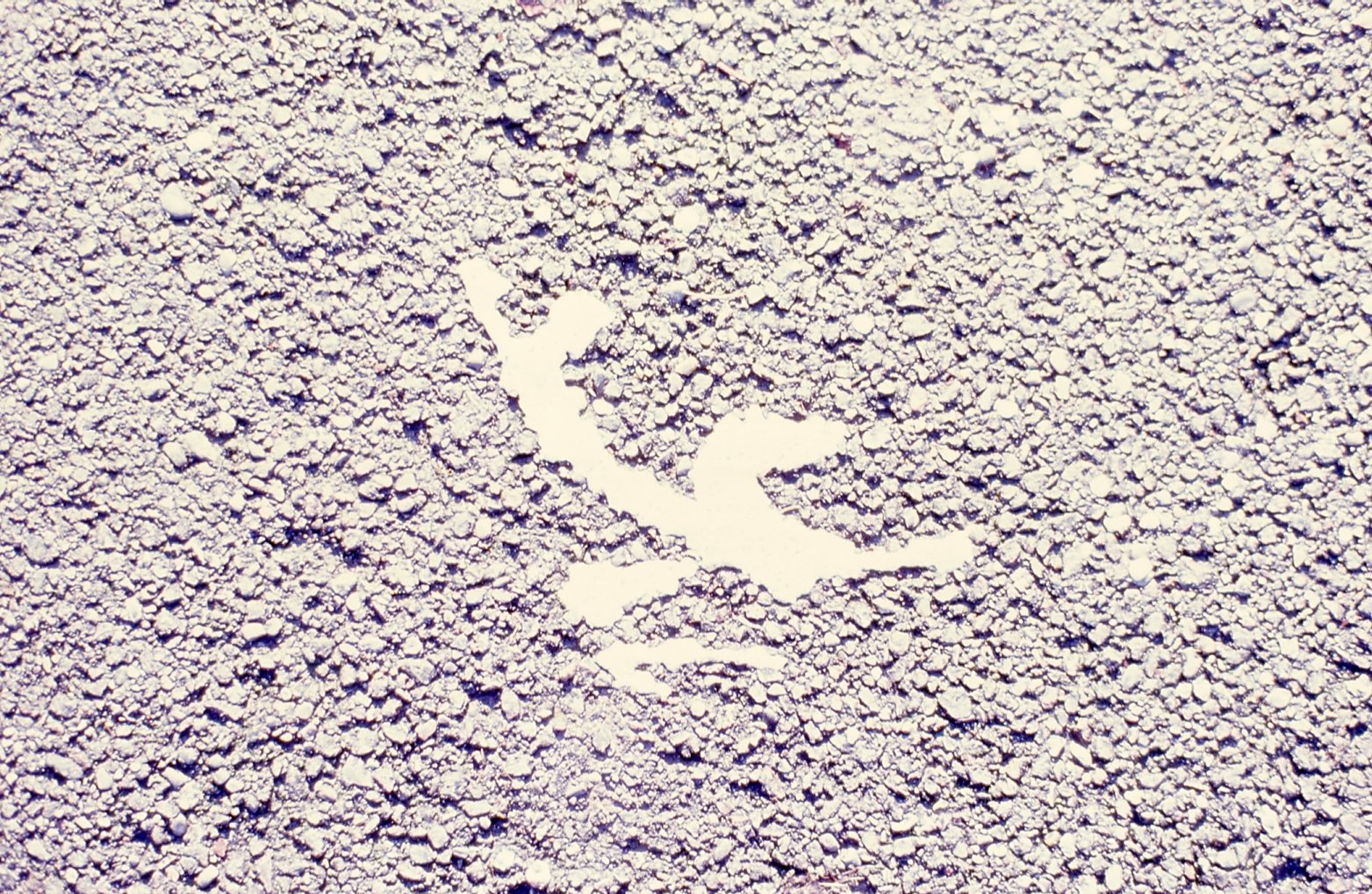
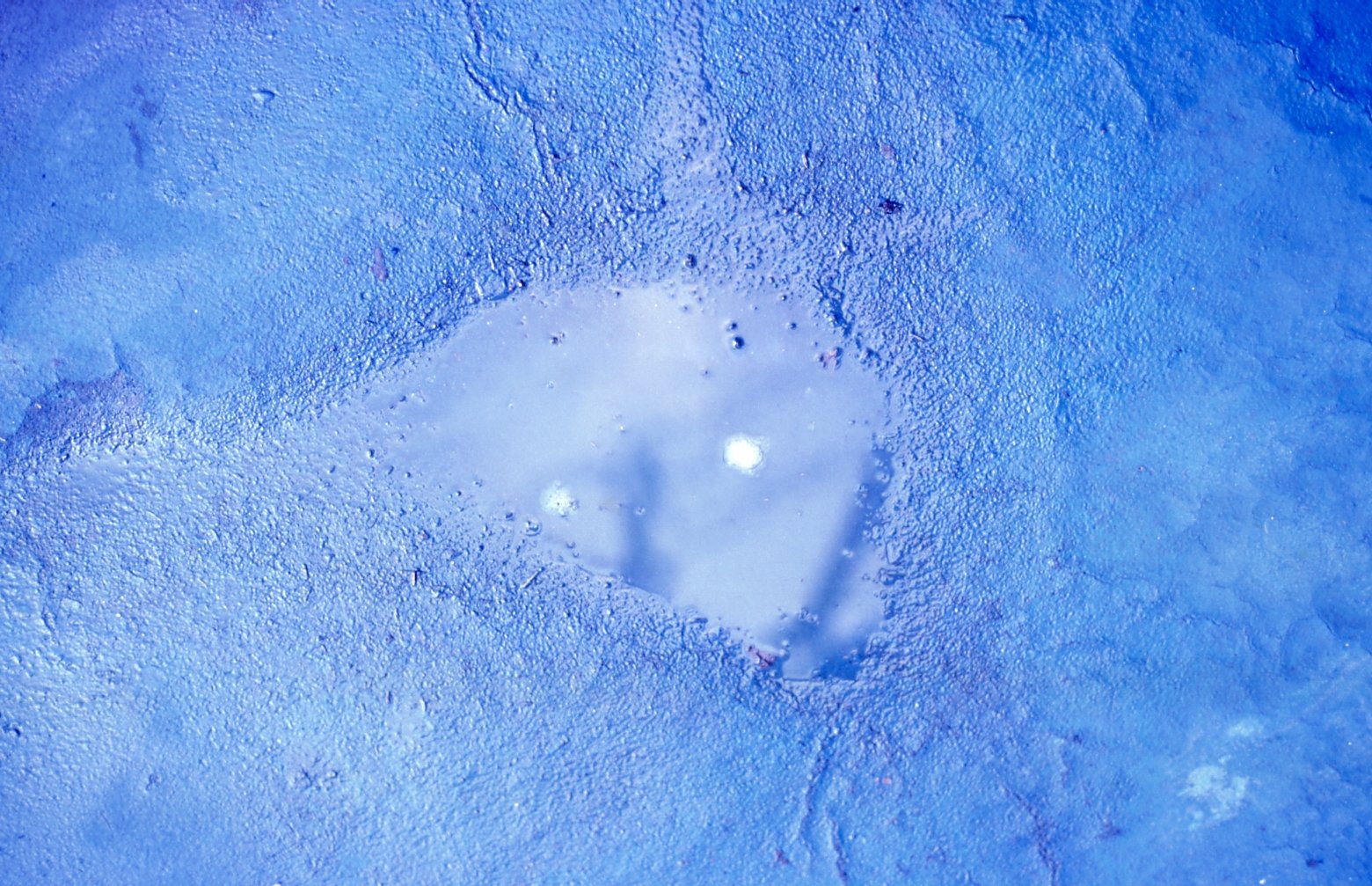
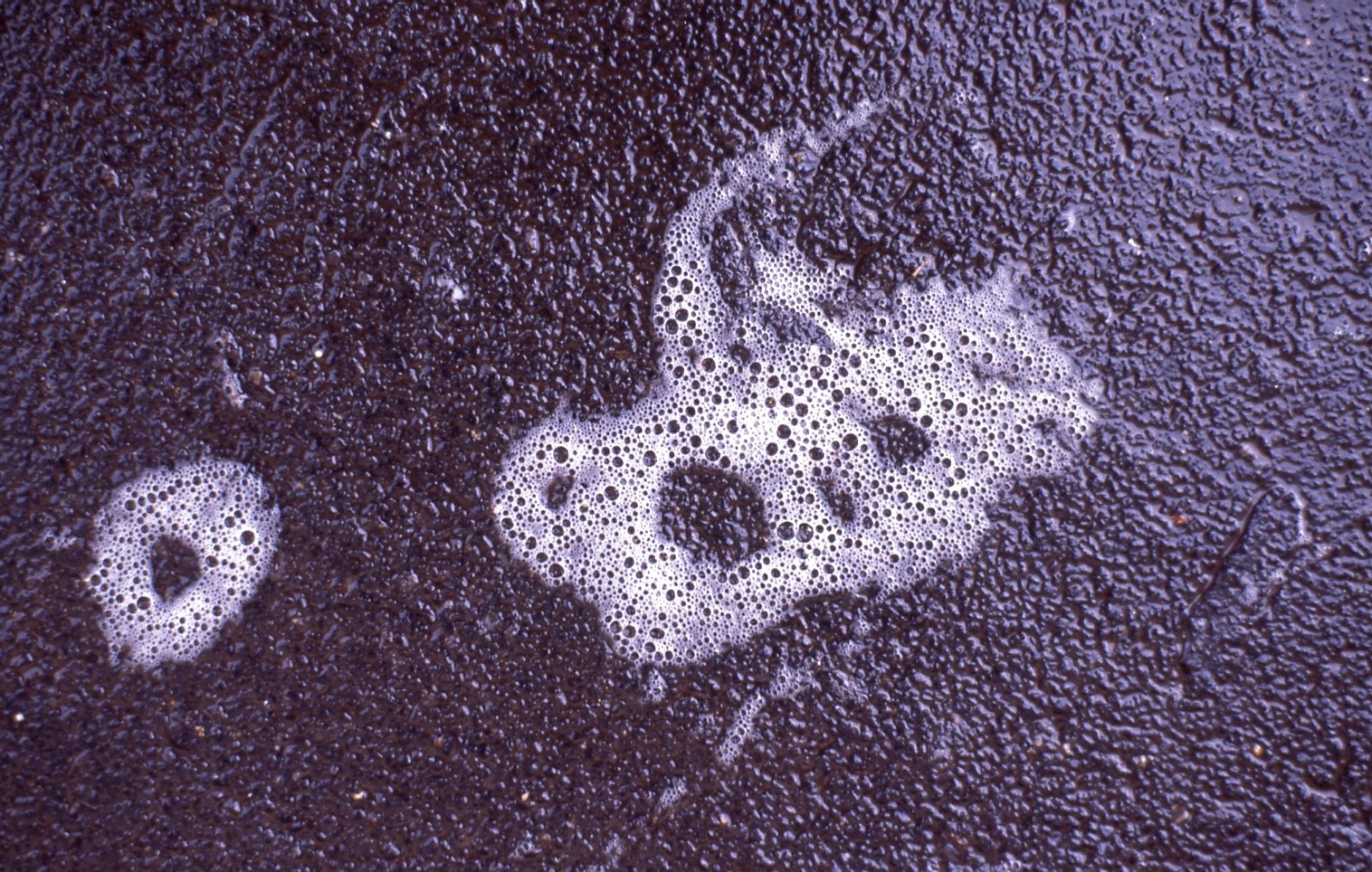
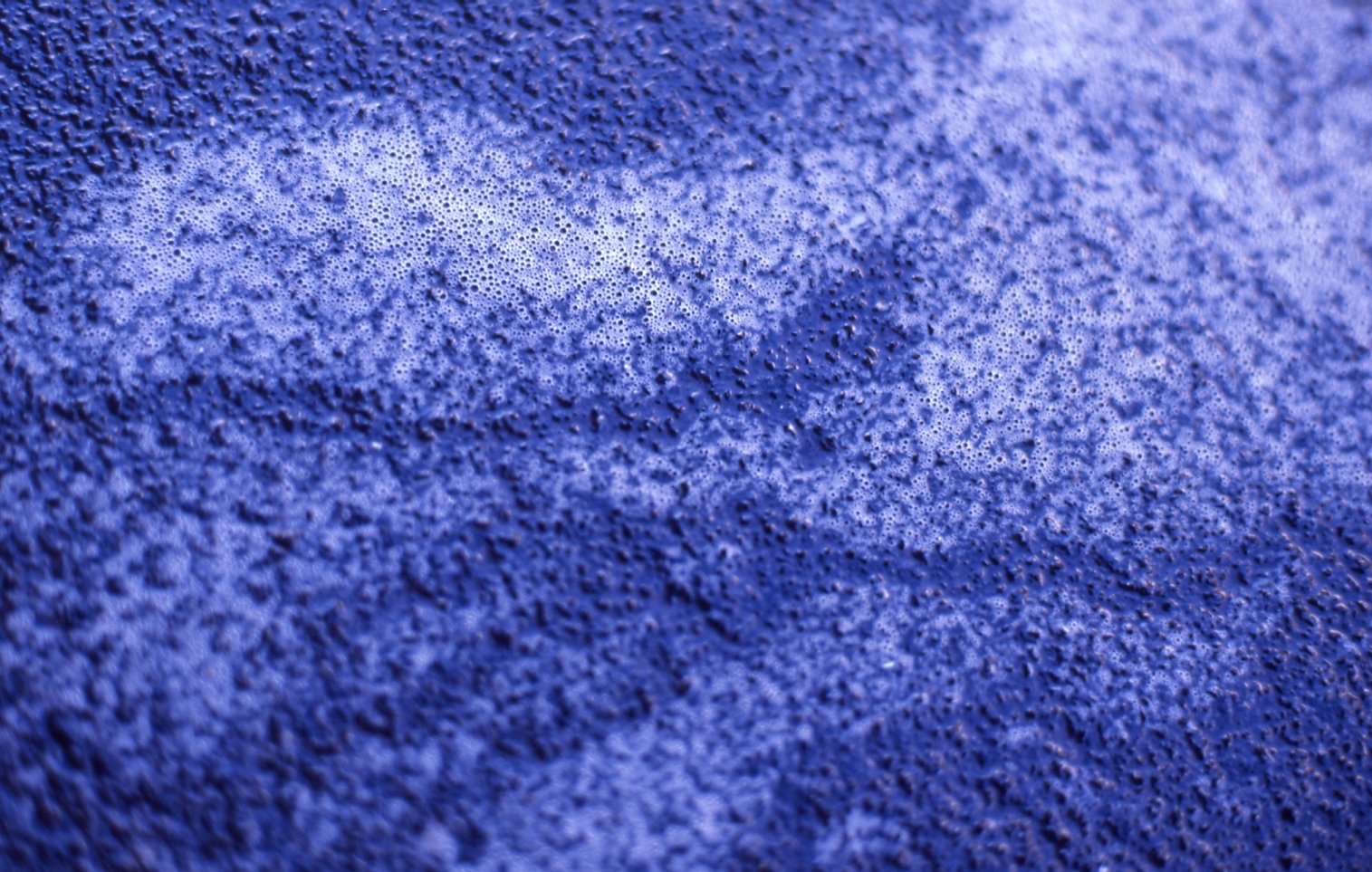
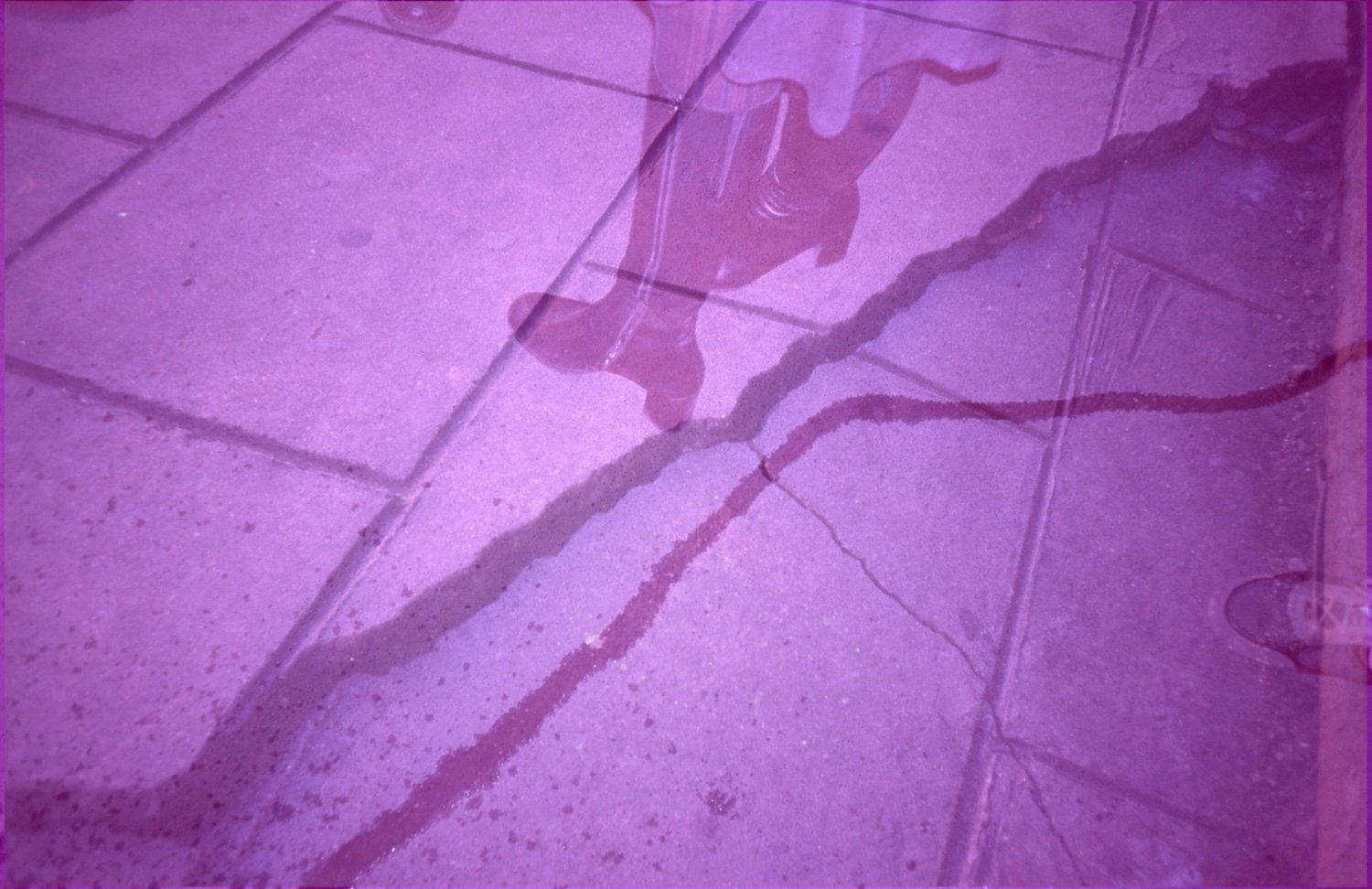
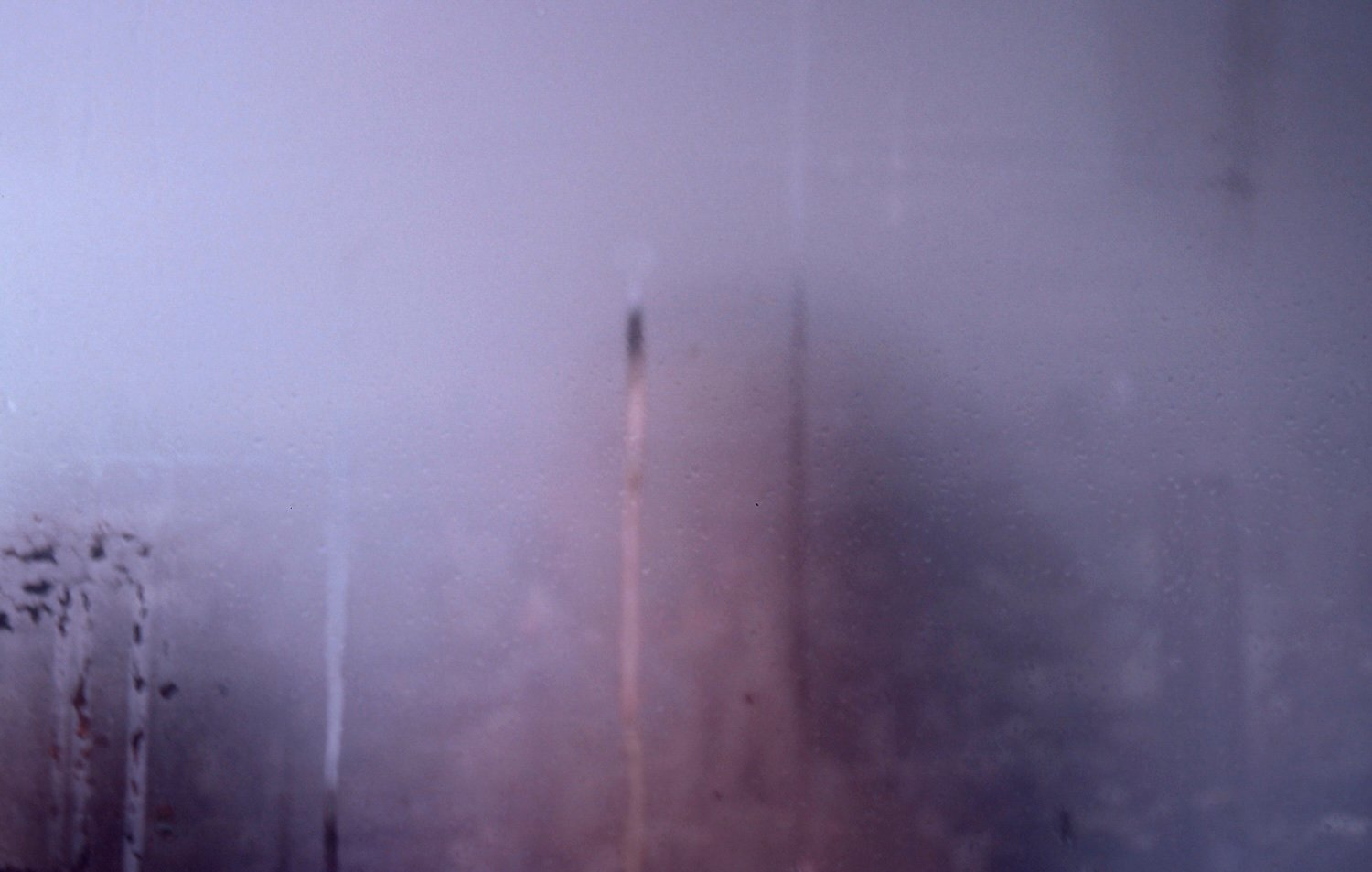
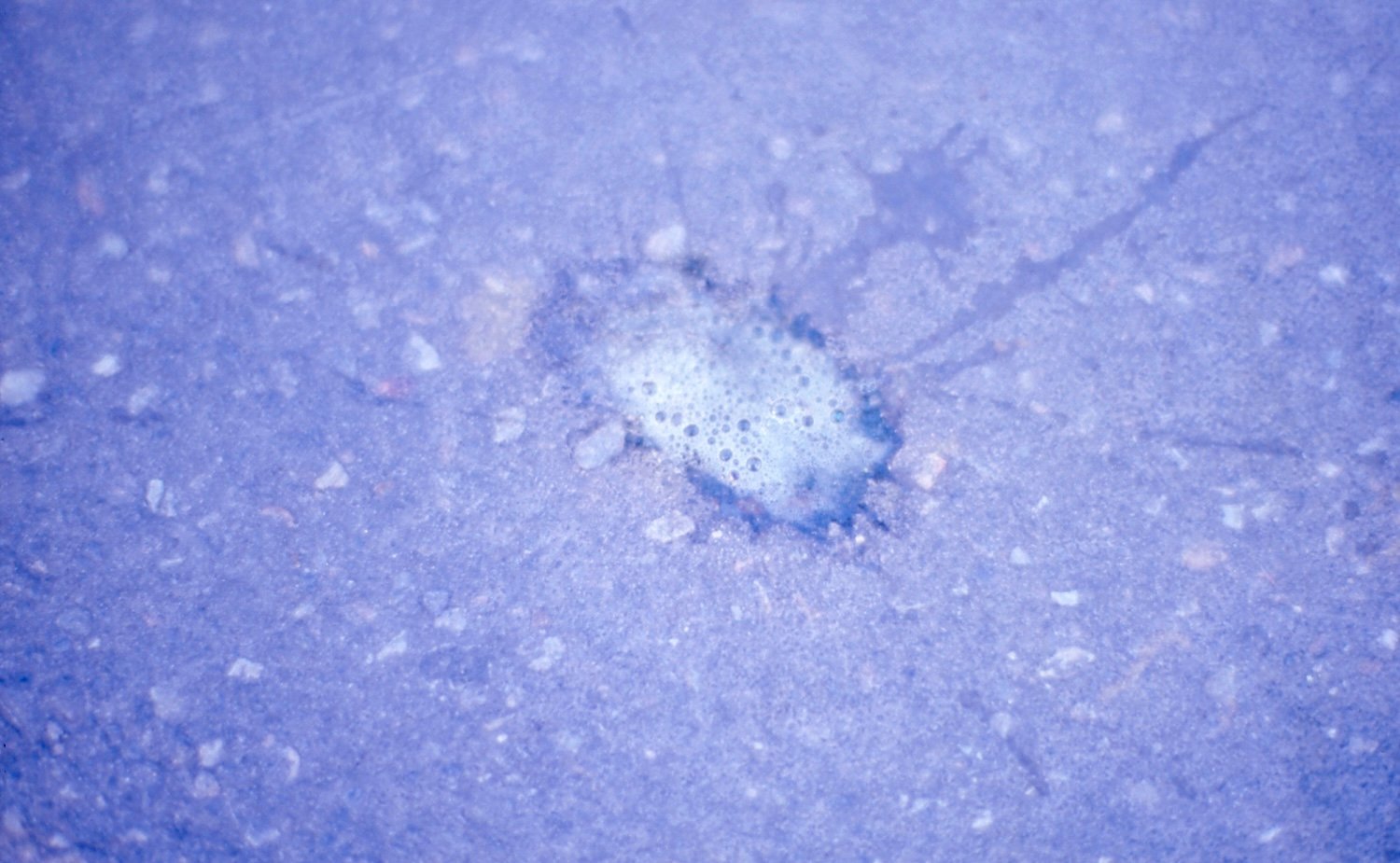
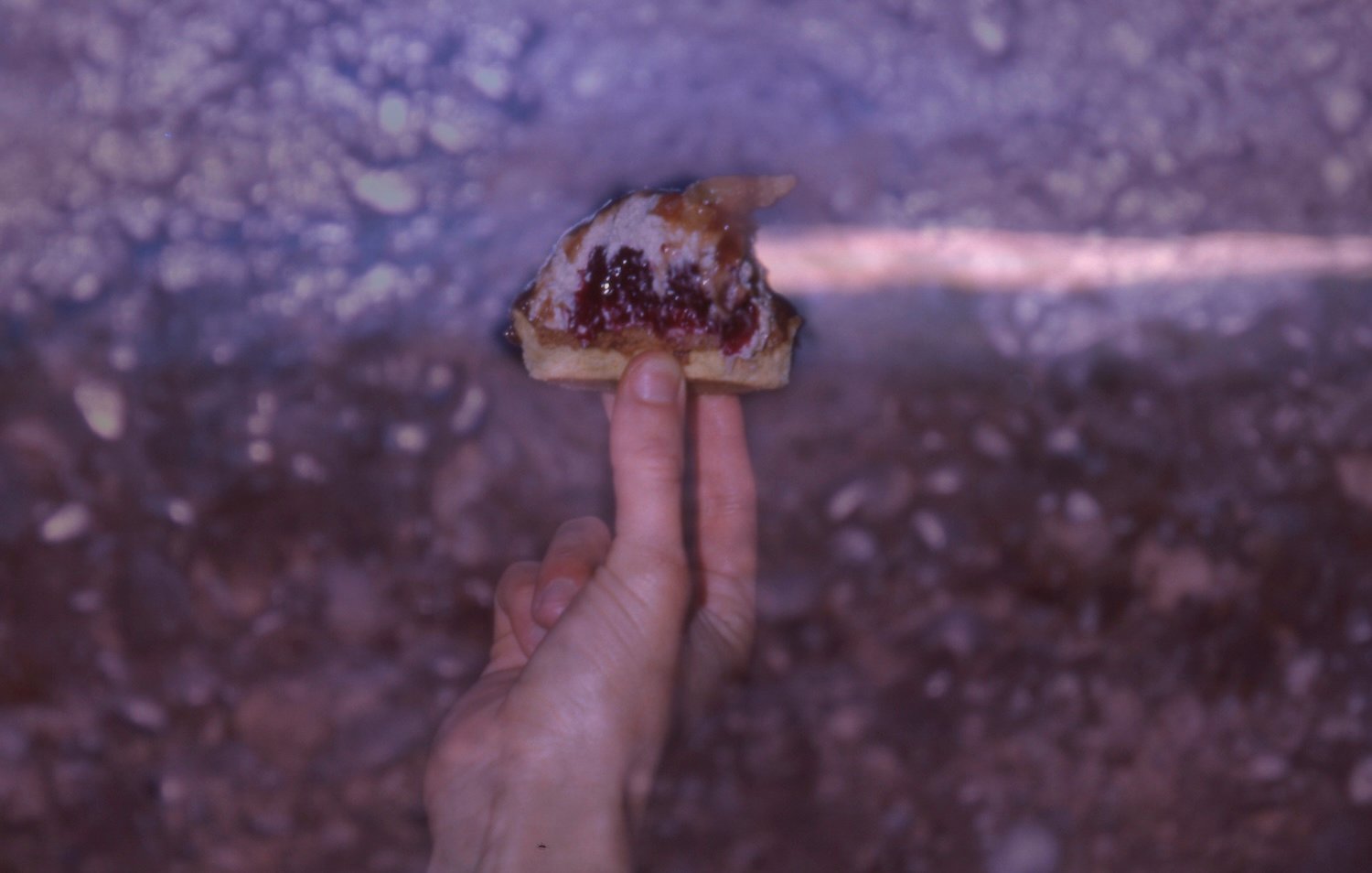
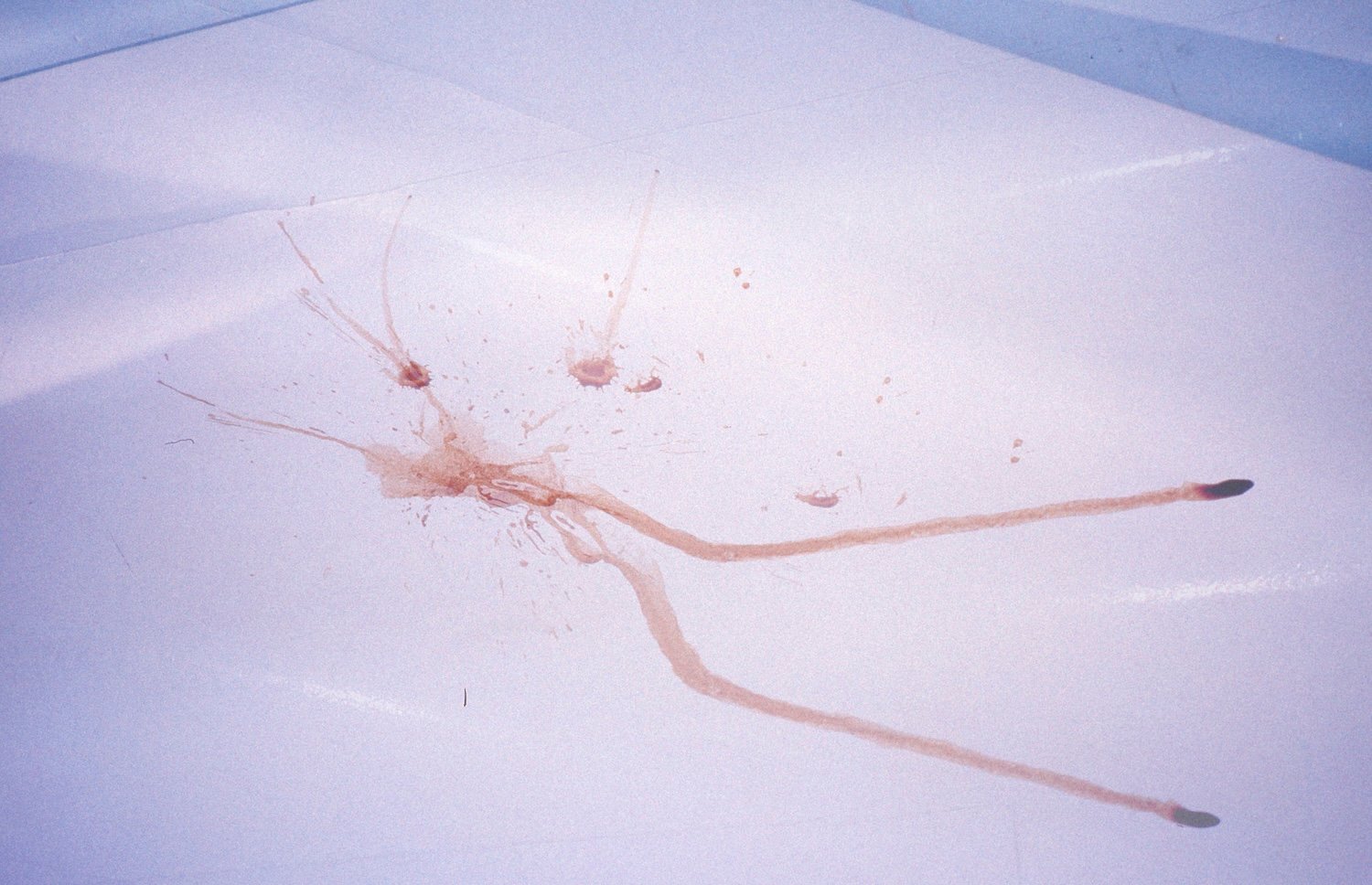
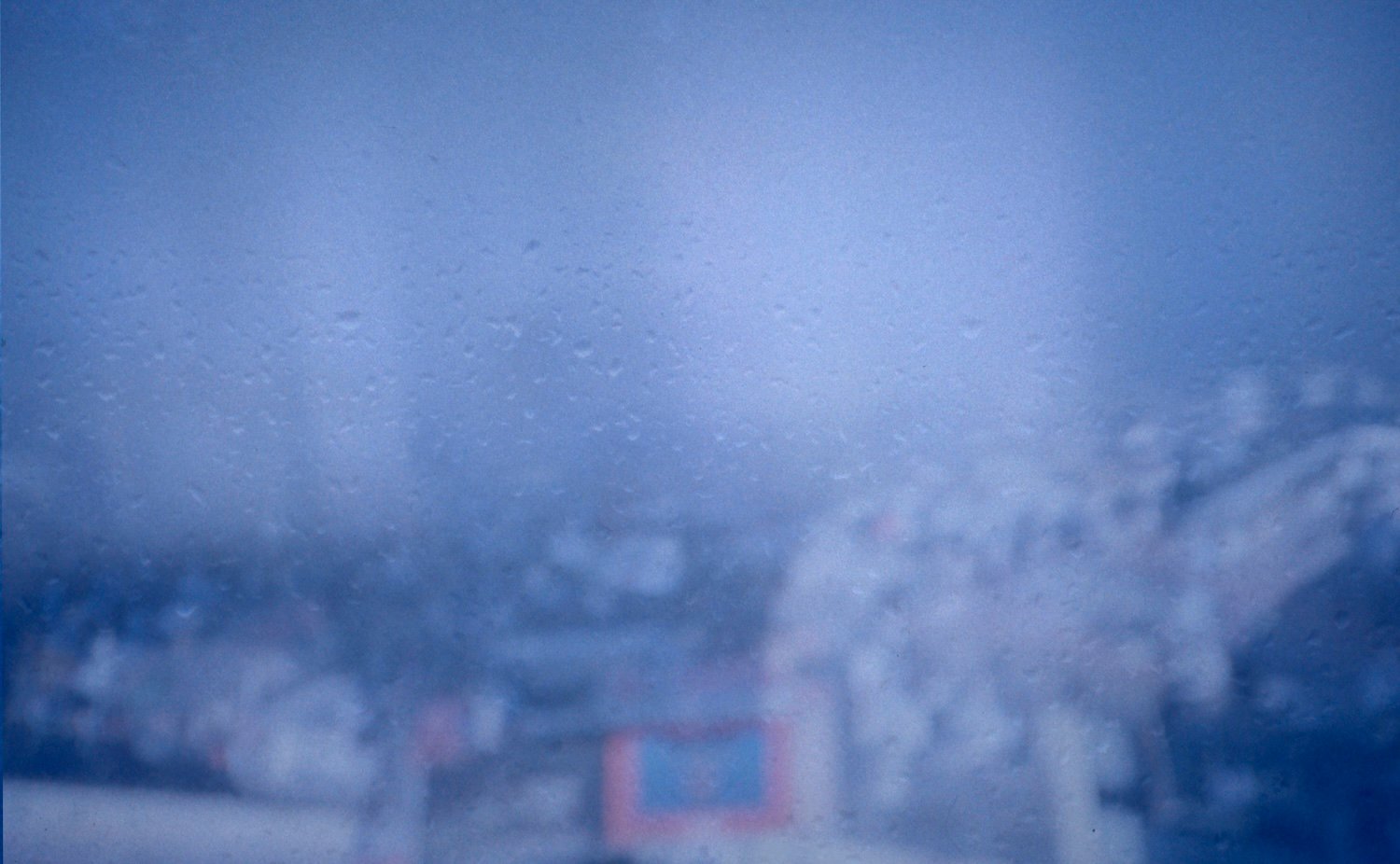
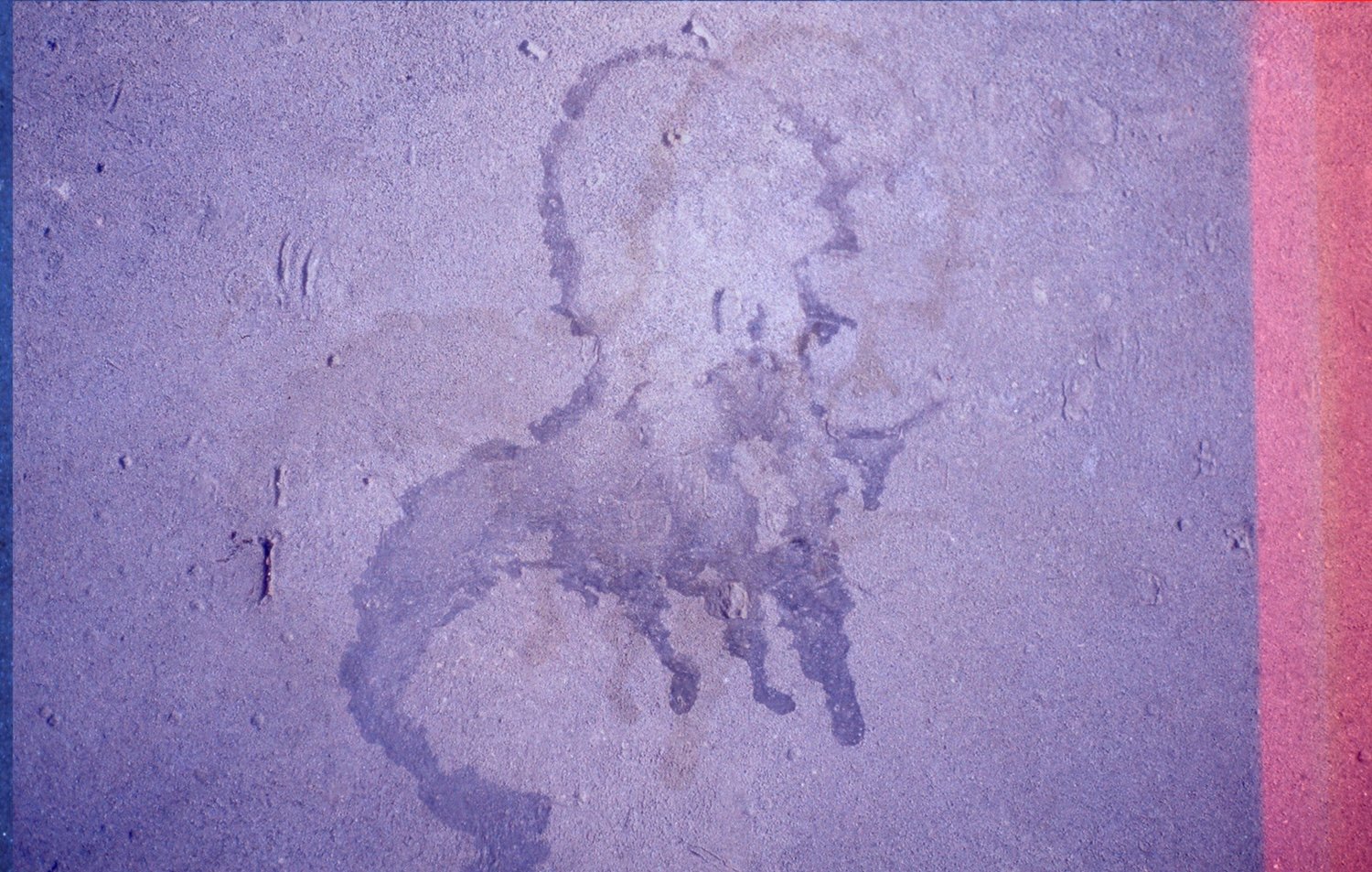
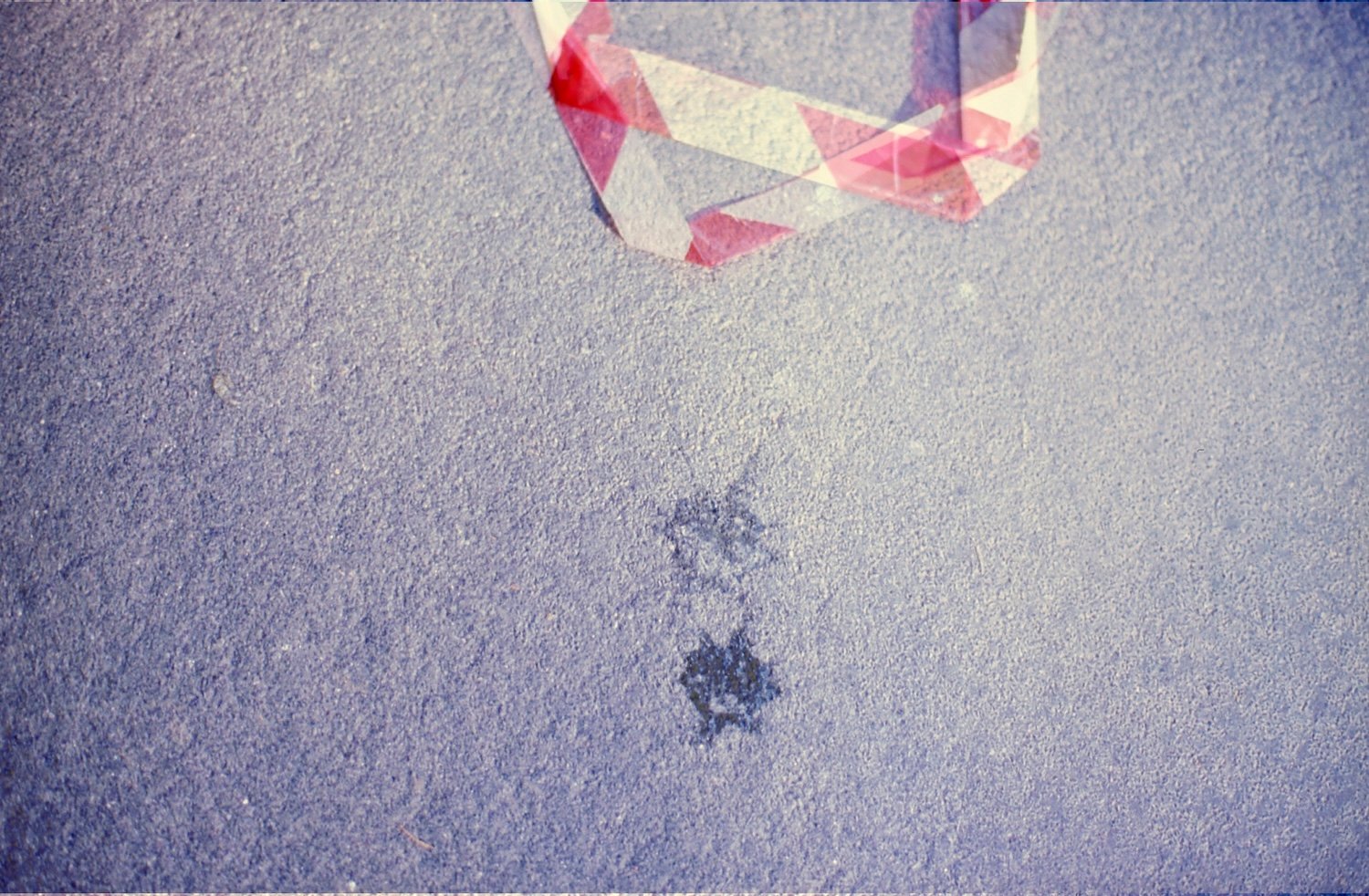
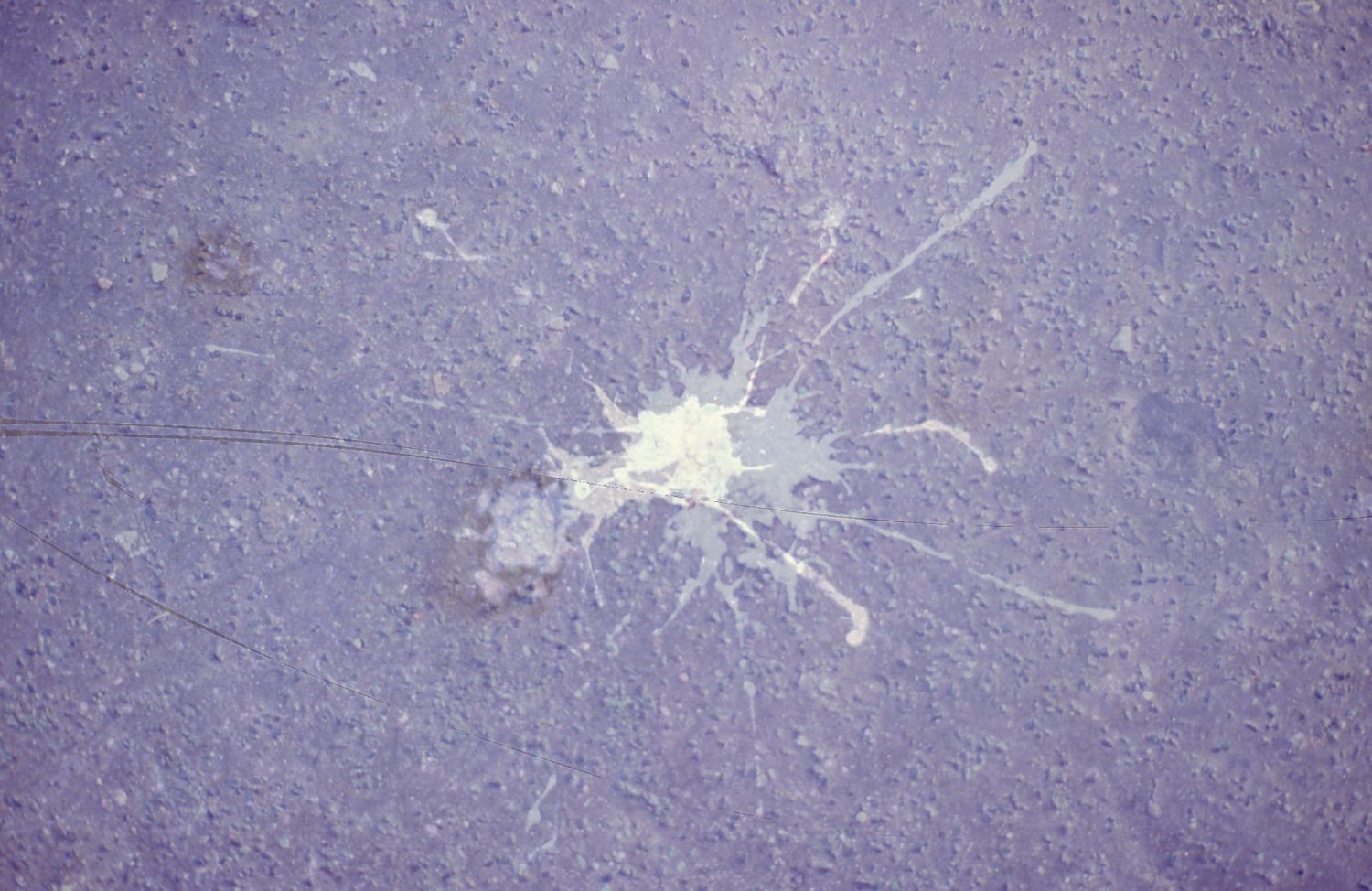
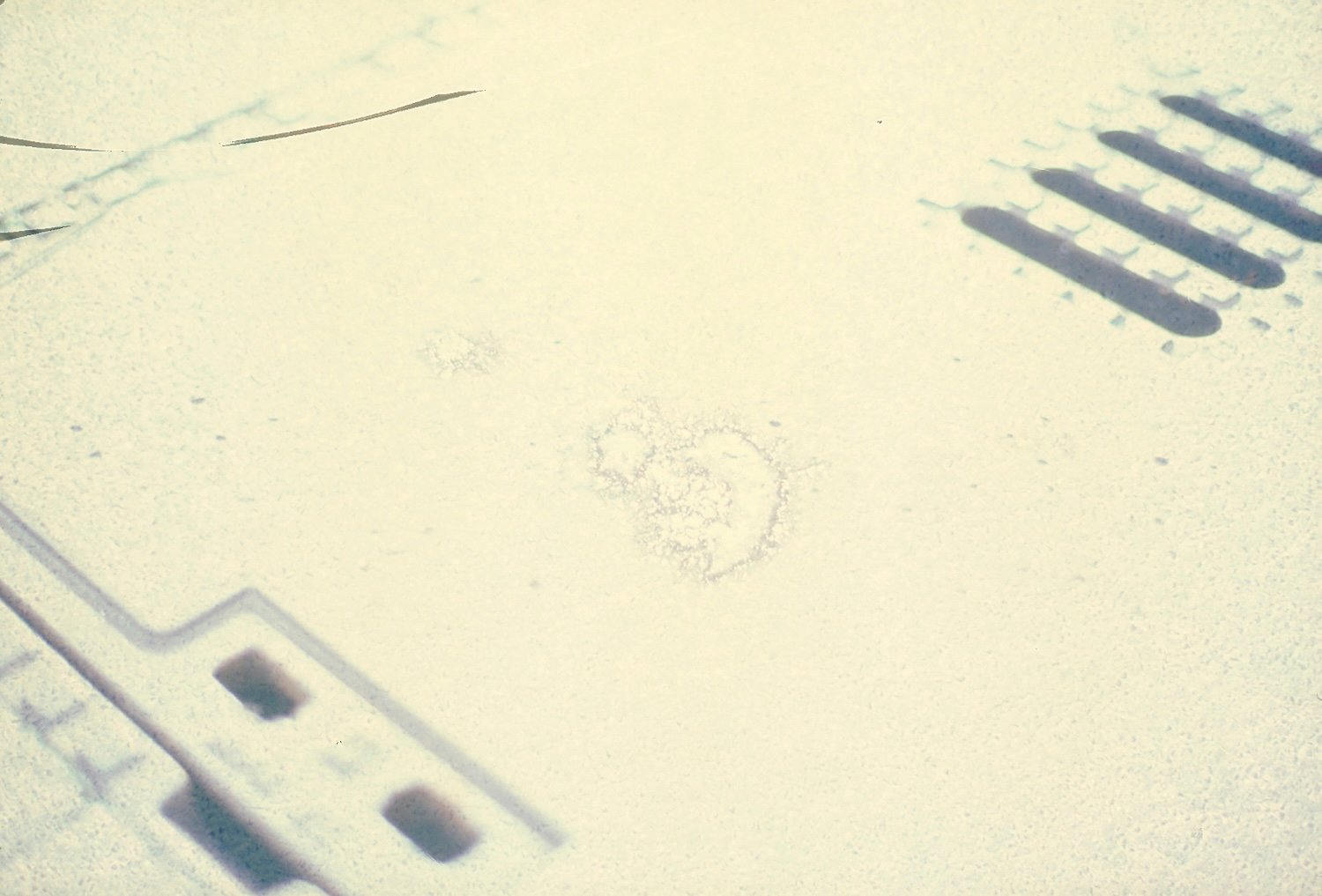
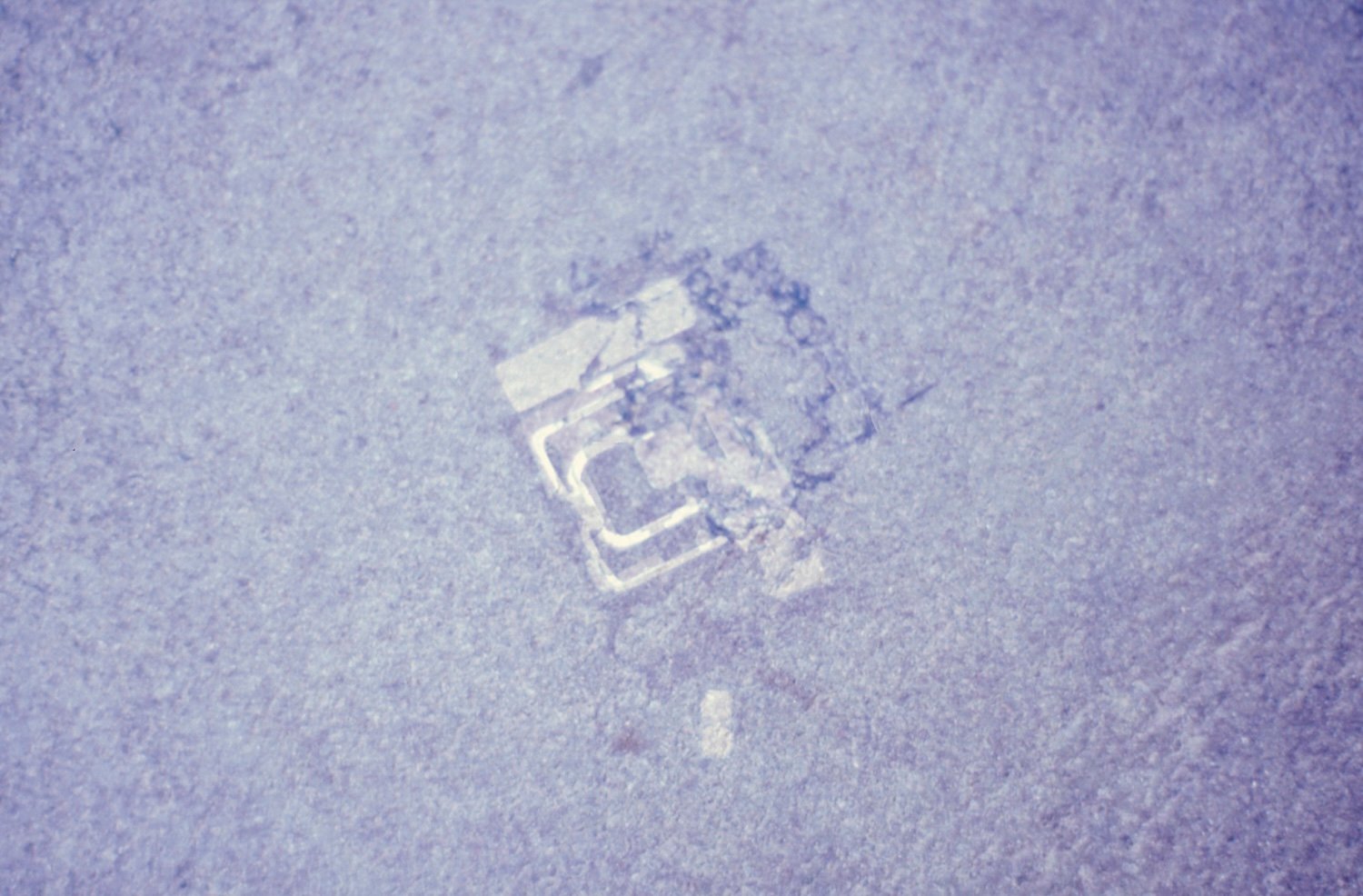
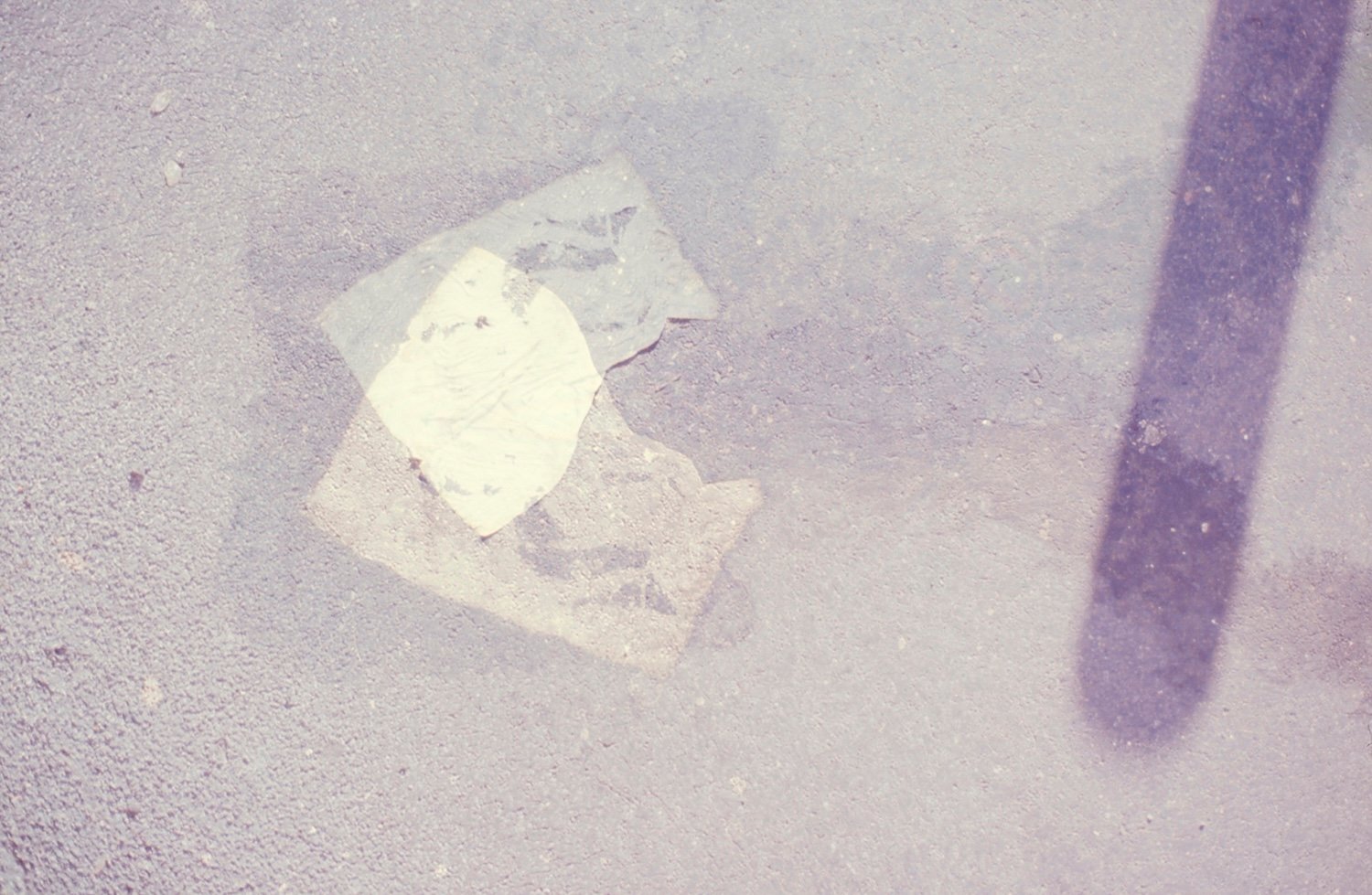
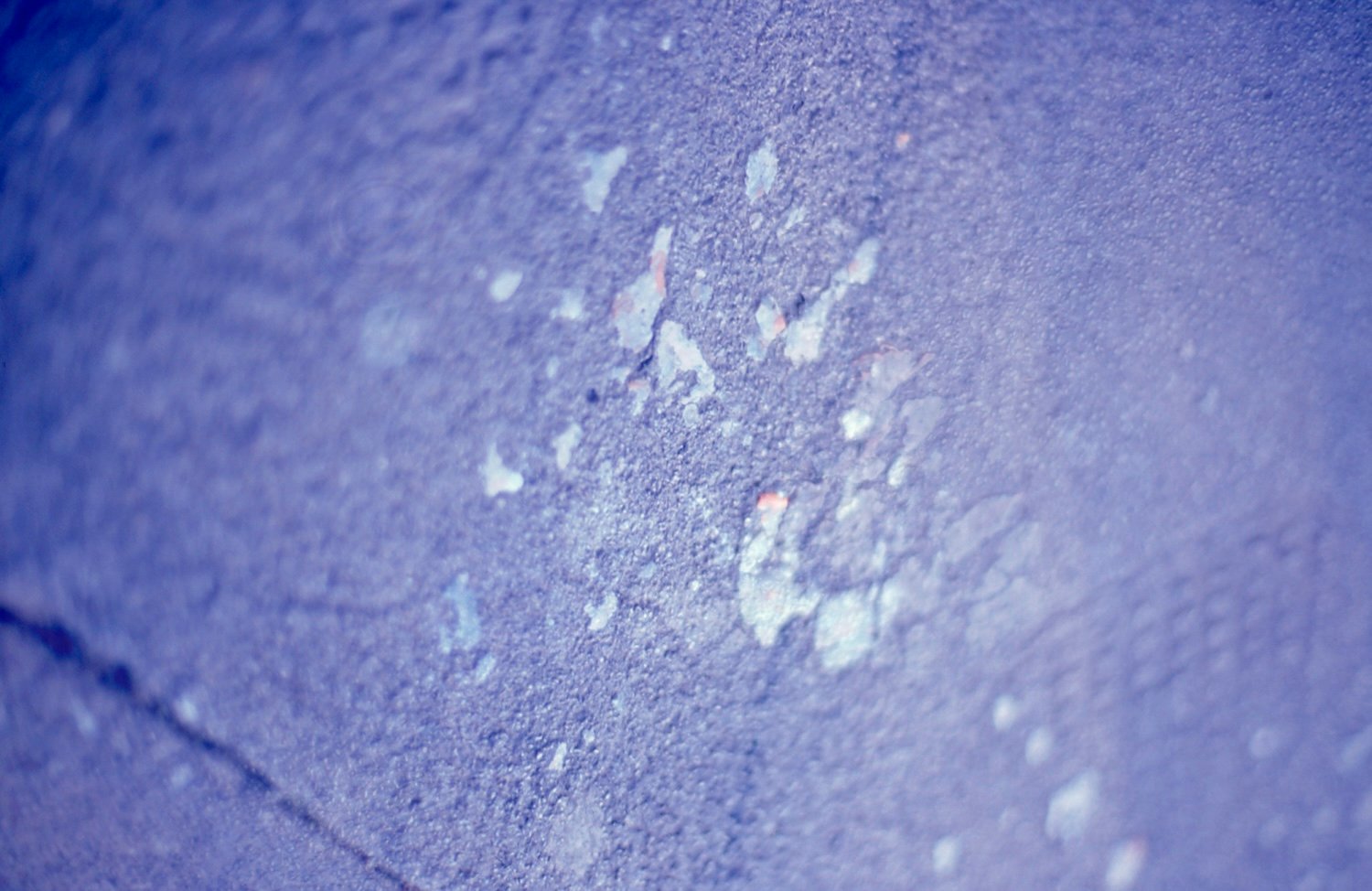
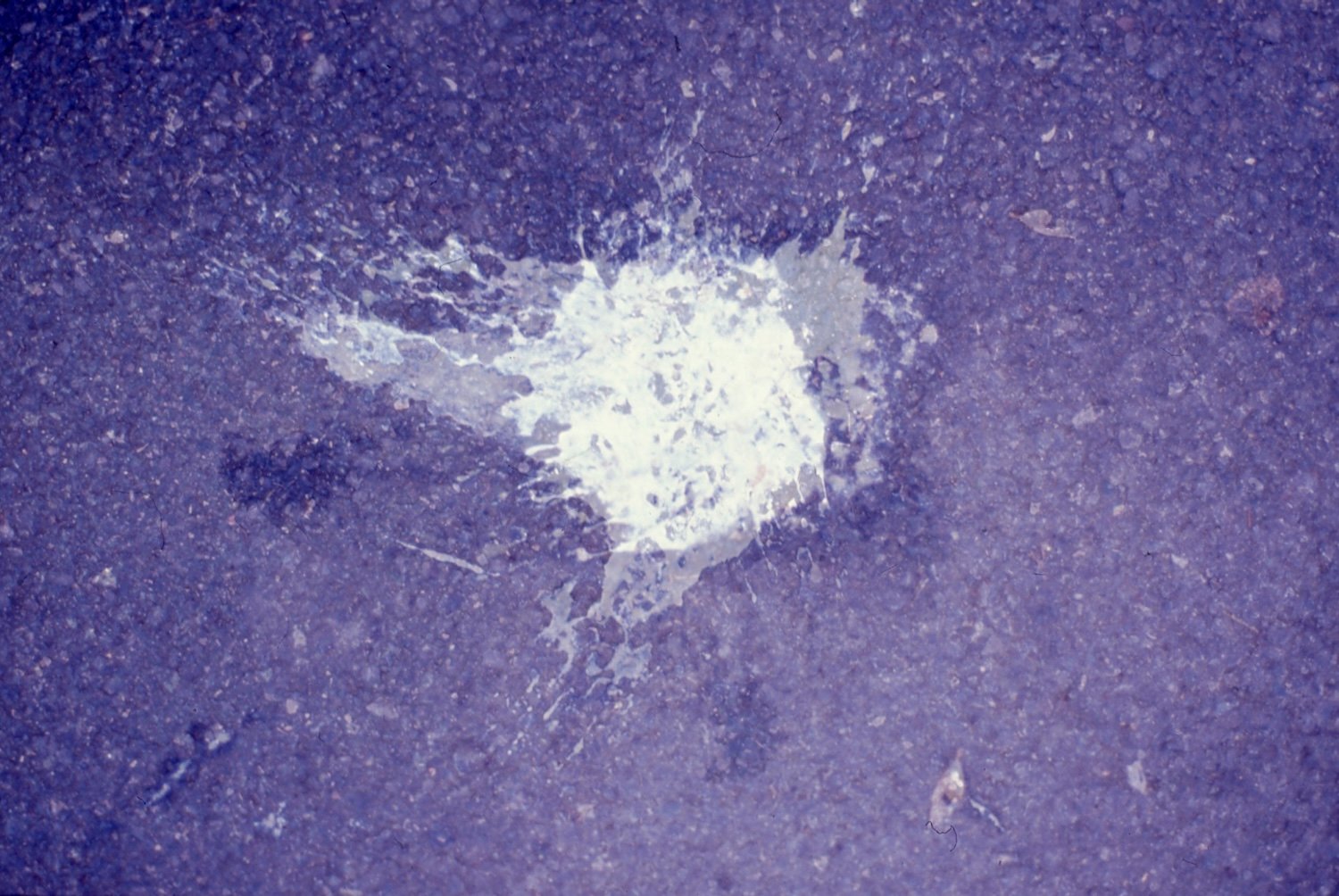
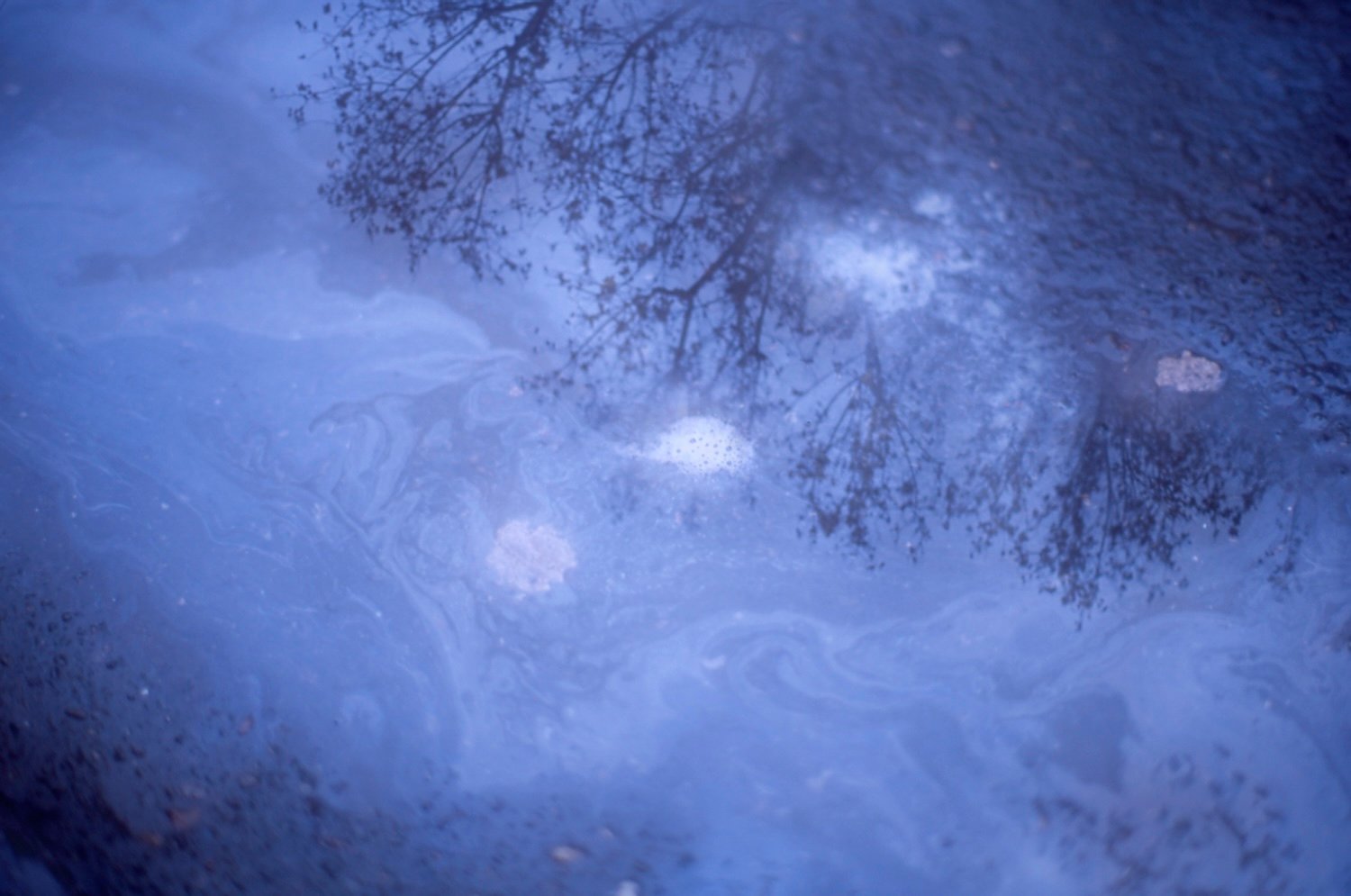
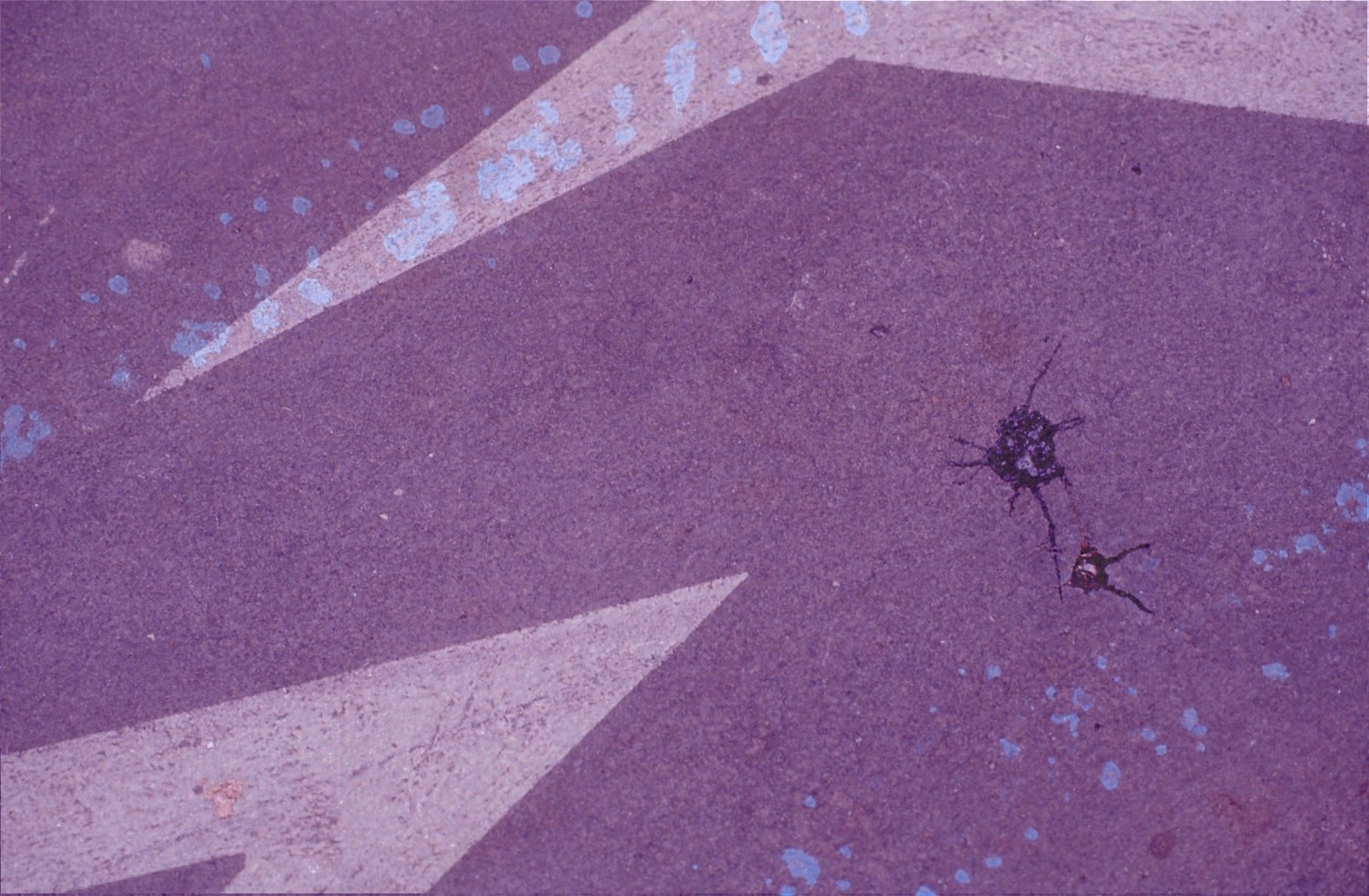
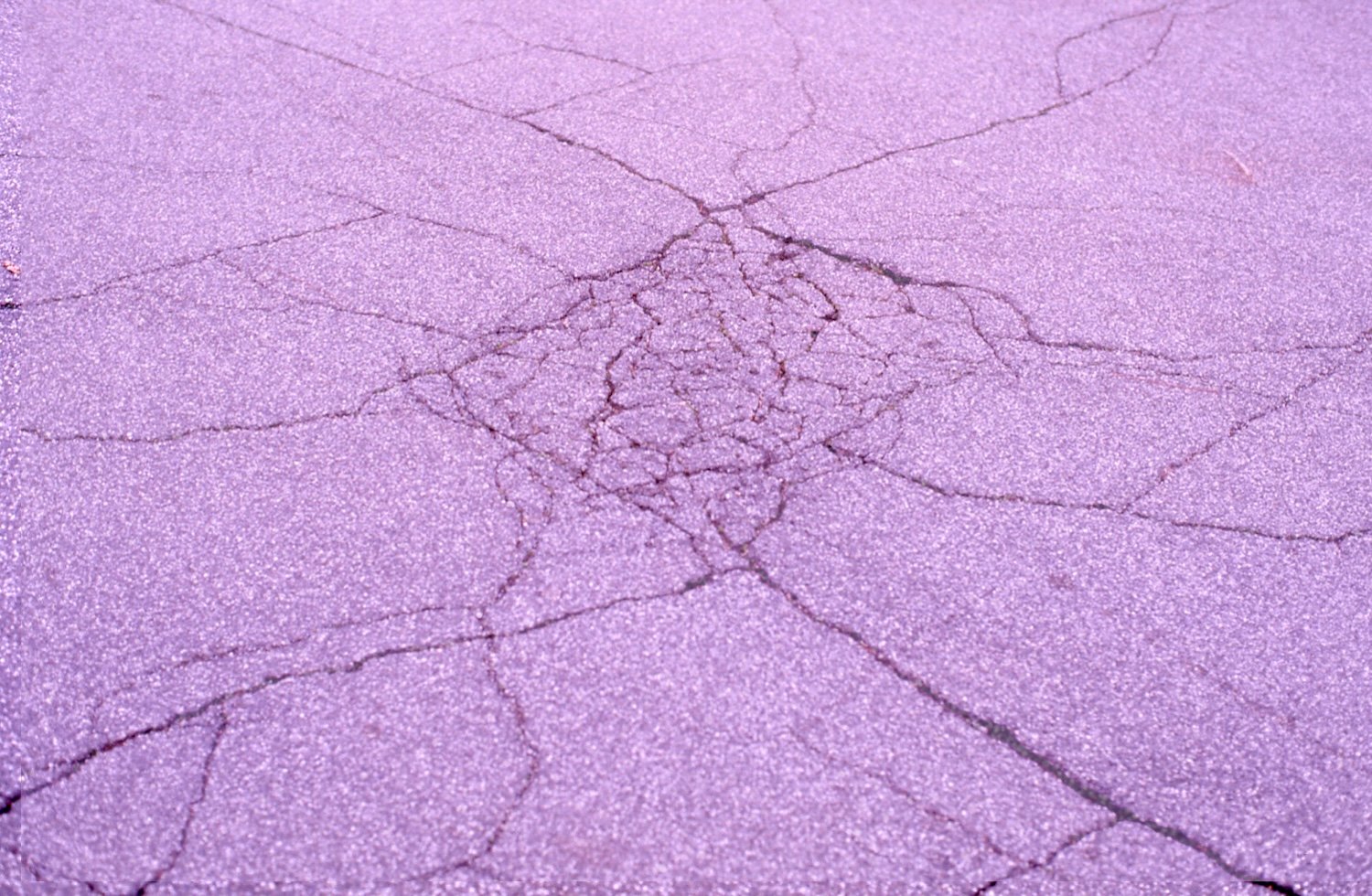
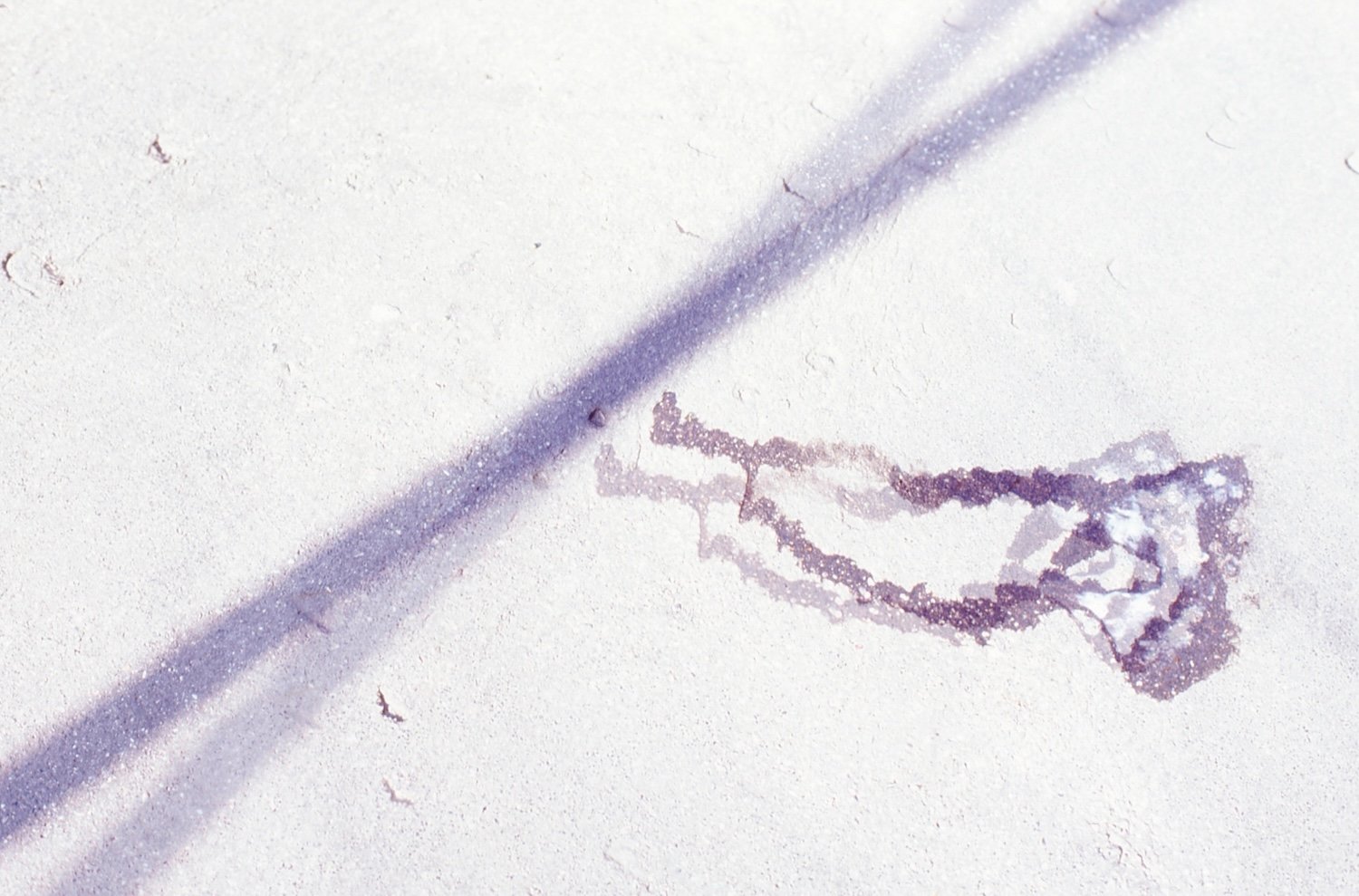
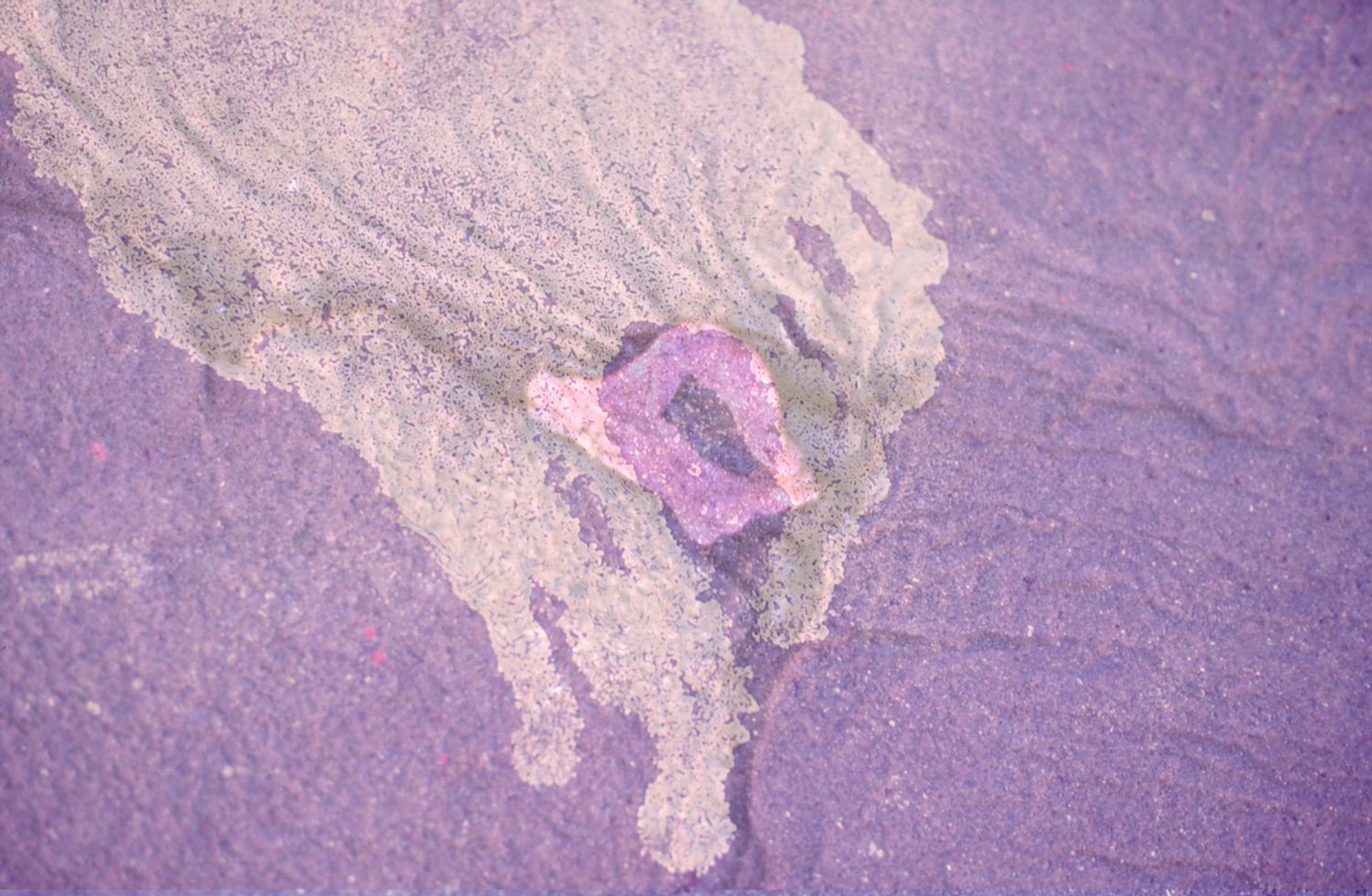
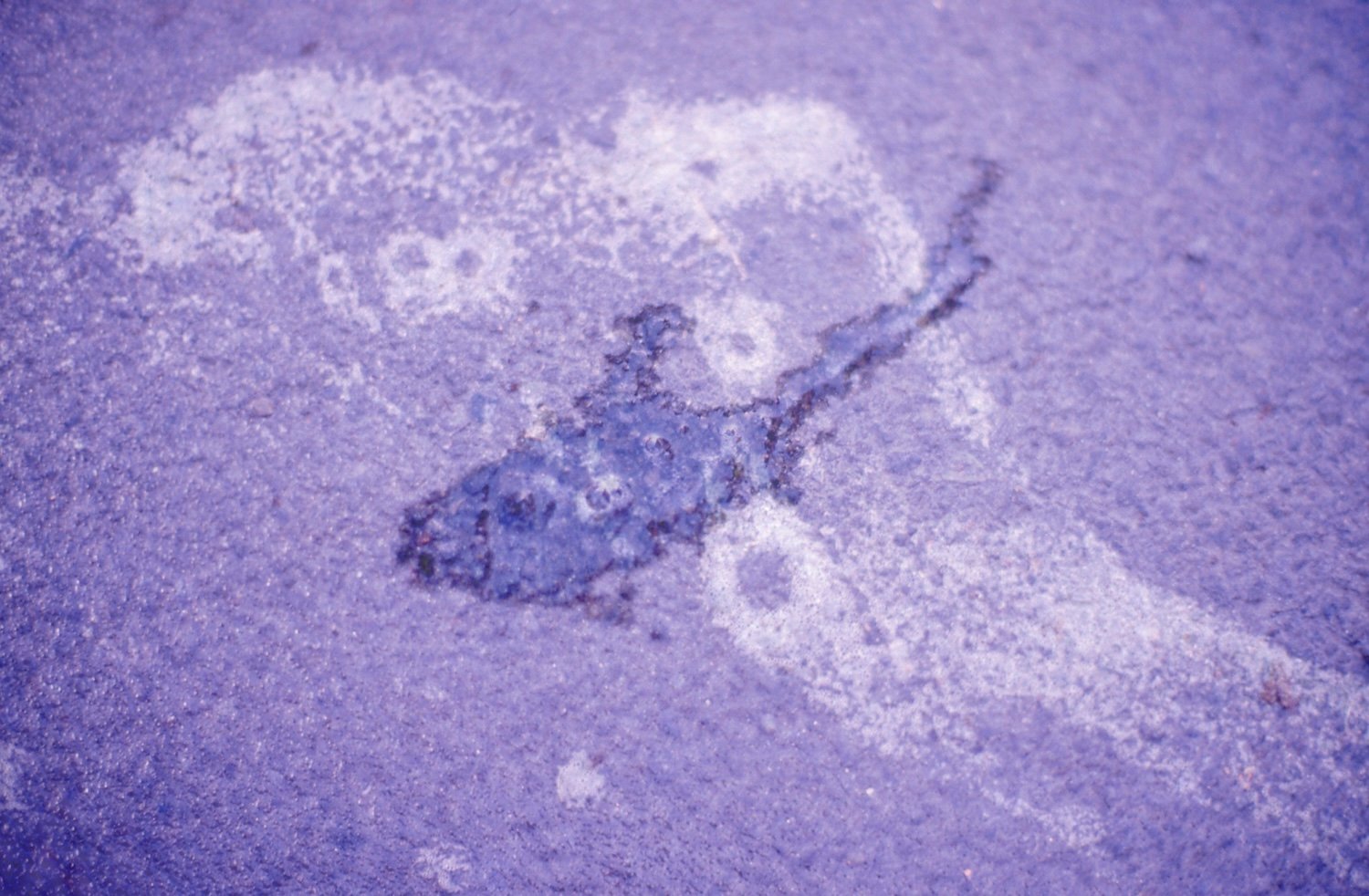
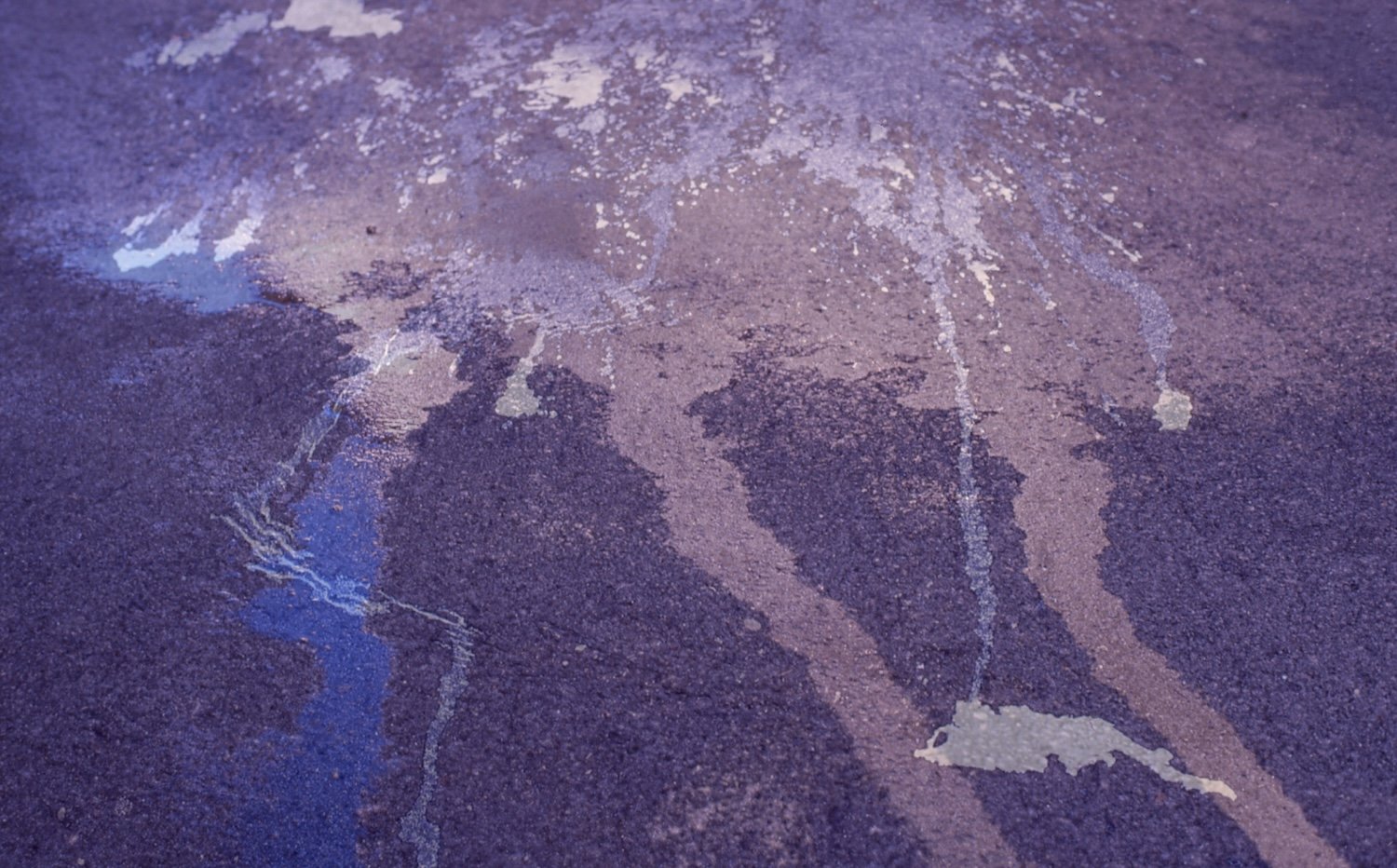
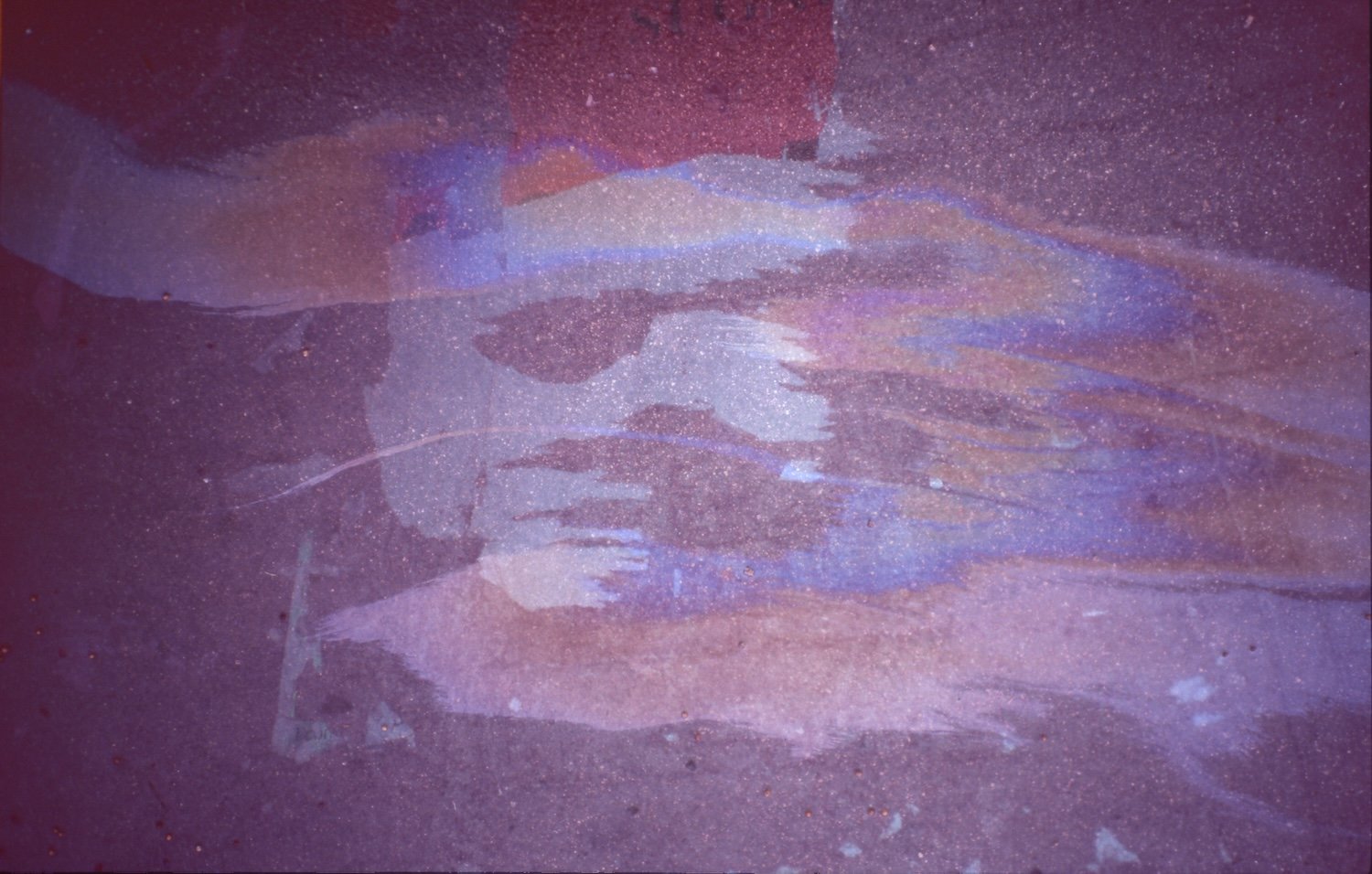
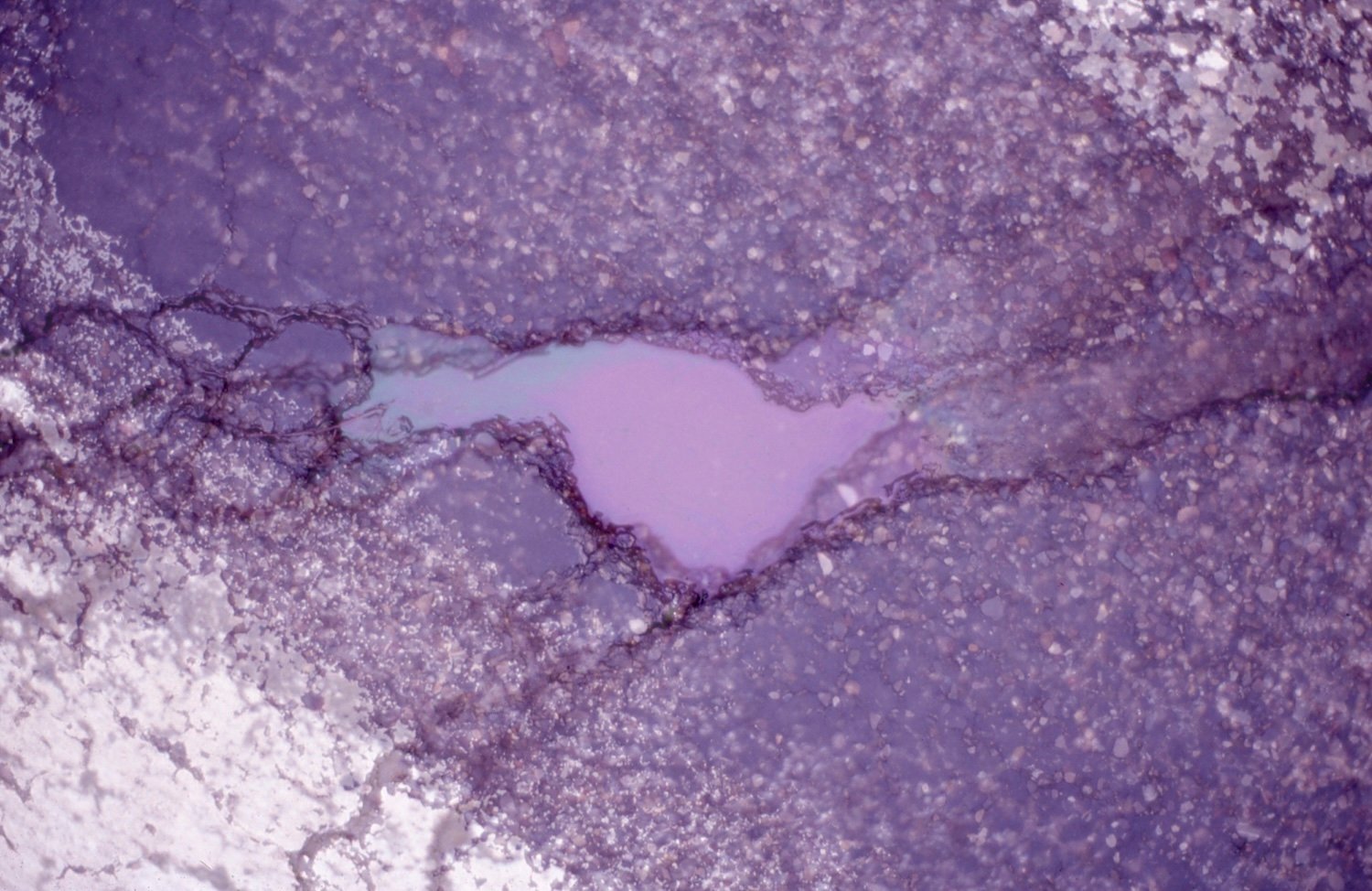
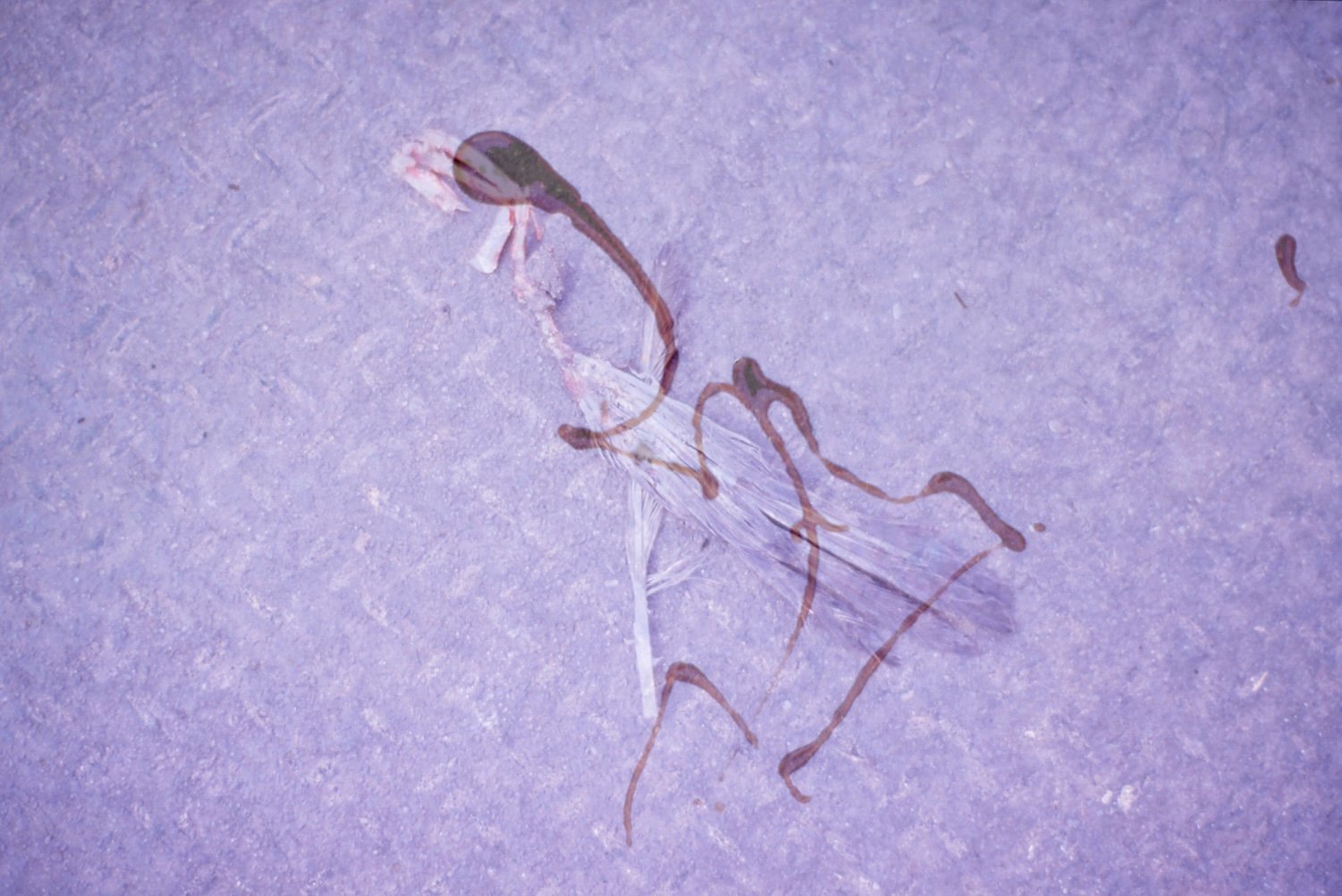
Split Spit is an installation composed of 160 slides projected in sequence through two Kodak Carousel projectors positioned face to face, so that the images, coming from opposite directions, overlap onto a single intermediate surface. The device thus produces a double and simultaneous projection in which each image interweaves with another, generating a third visual configuration—unstable and continuously shifting. The sequence—constructed from heterogeneous materials, including archival images and newly produced ones—presents a constellation of liquid traces, dried stains, residues, spit, fragments of landscape, and suspended forms, organized into a continuous flow that tends to dissolve the boundaries between figuration and abstraction.
It is from this structure that a disturbing quality emerges, not so much linked to the nature of the individual images as to their condition of existence: each appears as always already traversed by another, incapable of presenting itself as an autonomous unit. Superimposition, the core element of the device, introduces a torsion in the regime of representation that directly affects the functioning of the photographic sign. Images do not simply follow one another; they interpenetrate, generating excessive configurations that resist any univocal reading.
In semiotic terms, this process may be understood as a suspension of the referential relation: the photographic sign, traditionally conceived as an index—that is, as a trace of a real referent—is here disarticulated. Duplication and interference compromise its directionality, producing a condition in which the reference to reality becomes uncertain, opaque. The image no longer testifies to an event but presents itself as a surface of accumulation, as a field in which signifiers gather without stabilizing into definitive meanings¹.
The very nature of the images reinforces this dynamic. Stains, residues, and liquid traces already belong to an indexical regime: they are signs that refer to an occurrence, a contact, a gesture. Yet within the continuous flow and superimposition, such reference is lost or multiplied to the point of becoming undecidable. What emerges is a kind of archive without hierarchy, in which visual memory is not structured as a system but as a field of interference, traversed by slippages and overlaps².
The reference to déjà vu, which constitutes the generative core of the project, is inscribed precisely within this dynamic. Rather than being represented, it is produced as a perceptual effect: the viewer is immersed in a sequence that activates a familiarity without origin, a repetition devoid of stable identity. Each image seems to refer to something already seen, yet this recognition remains suspended, continuously deferred. The loop structuring the installation—without beginning or end—reinforces this condition, preventing any narrative articulation and establishing a circular temporality in which meaning is generated through minimal differential variations³.
Within this framework, Dapino’s work may be situated within a broader reflection on photography as a device that exceeds the author’s intentionality. The notion of *technological unconscious* developed by Franco Vaccari provides a pertinent theoretical horizon, insofar as it identifies within photographic practice an automatic dimension capable of producing meanings not fully controllable. However, in *Split Spit*, this dimension does not manifest as an openness to chance, but rather as the effect of a rigorous construction: the artist organizes a system in which the excess of meaning emerges from repetition, superimposition, and the concatenation of images. Rather than revealing a latent unconscious, the work seems to interrogate the very conditions of its possibility, staging the processes through which photography produces—and destabilizes—memory⁴.
What follows is a configuration in which the visible is constantly traversed by a dimension of loss: each image, at the very moment it appears, is already in the process of dissolving, absorbed into the flow that precedes and follows it. The continuity of the loop does not restore a totality but rather enacts a process of erosion in which differences tend to blur and forms to merge. In this sense, Split Spit operates as a device working on the threshold between perception and recollection, making evident how memory does not function as a stable repository but as a dynamic space of interference.
The viewer’s experience is situated precisely within this threshold: not so much called upon to interpret individual images as to dwell within an unstable perceptual field in which meaning is simultaneously produced and undone. It is within this oscillation, this impossibility of definitively fixing the visible, that Dapino’s work finds its critical density, configuring itself as a reflection on the very conditions of the photographic image and its irreducible ambiguity.
¹ See Roland Barthes, *Camera Lucida*, Gallimard, 1980.
² See Georges Didi-Huberman, *Confronting Images*, Minuit, 1990.
³ See Gilles Deleuze, *Difference and Repetition*, PUF, 1968.
⁴ See Franco Vaccari, *Photography and the Technological Unconscious*, Punto e Virgola, 1979.