NOTES ON CINEMA
Medium, Politics, Experience
8 November 2025
Iva Kontic
Three short reflections on what cinema is and does.
Rethinking Cinema as Medium: A Deleuzian Approach
In his theorisation of cinema as a medium, Gilles Deleuze deals with cinema at the level of image—as it appears to us—rather than analysing the cinematic medium as a language (a system of signs) or as an apparatus (its technology and the technical devices it employs from its conception to its display). He states: “cinema seems to us a composition of images and signs (a pre-verbal intelligible content) (…) which change with historical circumstances” (Deleuze, 1986, p.ix). What remains constant is the cinematic concept, which is represented by various types of images and signs that “correspond to each type” of images (p.ix). The cinematic concept is thus central for understanding the specificity of cinema as a generator of concepts—of “images of thoughts” (p.xi)—much as philosophy is. Deleuze places cinema’s ‘concept production’ in accordance with its own specific elements alongside—if not above—cinema’s conception as an art form. The given line of thought does not, however, imply distancing cinema from other forms of art production. Rather, it fits into a general trend within the visual arts, which moves away from understanding art as merely ‘retinal’, as an aesthetic form, as a faculty of what Bazin (1958) calls ‘pseudo-realism’ (p.6), toward embracing a notion of art that privileges ideas, the process of concept-making—a trend that started at the beginning of the 20th century (just as cinema was establishing itself as an artistic medium) and which continues today.
To identify the specificity of the cinematic concept, it is first necessary to pinpoint the essential features of the cinematic image. For Deleuze, the cinematic image is ‘automatic’, a product of mechanical devices (camera, projector), and is presented to the spectator as either movement-image or time-image (post-WWII cinema). These are two distinct regimes of the cinematic image, each representing time differently. Nevertheless, time remains central to both image regimes—and, consequently, to the cinematic concept itself—whether represented indirectly through movement (through the movement-images themselves or their distribution via montage) or written directly into the time-image. I will focus on the movement-image as the essence of the cinematic medium: what makes it novel in relation to the photographic image (from which it derives) and which differentiates it from human perception (whose desire for imitation brought cinema into being).
The movement-image is not a sum of instances, of immobile sections that reconstruct movement by adding time; it is already movement, characterised by constant change and a concrete duration. For Deleuze, this marks a break with human perception. While the reconstruction of movement occurs in the human mind/eye (a correction that creates an illusion of movement), that very illusion is already resolved within the cinematic apparatus itself, which presents photograms (frames) in a temporal flow. What the spectator sees, therefore, are ‘real’ movement-images, not a reconstruction of real movement. Cinema’s status as a non-human perception became more evident once it developed as an art form—in modernist terms, when it embraced its specificity as a medium and freed itself from imitation of natural perception—through “montage, the mobile camera and the emancipation of the viewpoint” (p.3). Moreover, cinema reproduces movement composed not of ‘poses’, of privileged instants (a transcendental synthesis of an entire movement) but of ‘any-instant-whatevers’ (immanent material elements that analyse a movement), always equidistant from one another so as to give an impression of continuity (p.4–5). Cinema, in other words, can’t be understood as photographs placed in sequence. The cinematic sections, or instants, are in fact ‘banalities’ which, through accumulation, produce ‘singularities’, generating “the qualitative leap” (p.6). Such features clearly mark a radical break from traditional fine art practices interested in ideal, timeless forms—which stands in sharp contrast to cinema’s unprivileged ‘any-instant-whatevers’. From today’s vantage point, however, the given aspect is no longer a specificity unique to cinema—no longer a point of differentiation between cinema, as ‘industrial art’, and the rest of the visual arts—given how art itself has evolved over the course of the 20th century. Performance art, video art, new media art are all likewise non-transcendental, while the latter two could be equally considered ‘industrial’ and mass-mediatic. Although cinema gave rise to a new art form, it no longer holds a ‘special position’ among the visual arts, at least not at the level of the cinematic image.¹
One reason Deleuze’s conceptualisation of cinema has withstood the ‘tests of time’ is that he grants the cinematic image a space of emancipation from the constraints of ‘reality’ by distinguishing cinematic perception from human perception. In this way, the essence of the moving-image remains unchanged and applicable to analog cinema and to the contemporary culture of the digital image. The objectivity of the cinematic image in relation to the reality it traces—which is central to Bazin’s (1958) belief in cinema’s ‘realism’ (p.3–12) and undermined by the evolution of image-production technologies—is bypassed by placing the ‘responsibility’ for illusion (for the falsification of reality) on the cinematic apparatus itself (camera/projector), thereby taking it away from the cinematic image and the spectator. The spectator’s belief in the cinematic image thus becomes, in a sense, beside the point—whether they are viewing a continuous or ‘discrete image’ (Stiegler, 1995, p.147–163)—without essentially altering the way that cinema produces autonomous forms of art/thought through cinematic images and corresponding signs.
Cinema and Politics: Missing People, the Oppositional Gaze, and The Headless Woman
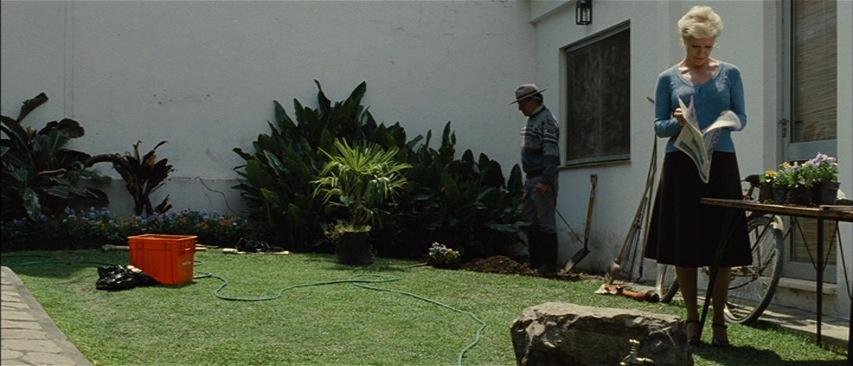
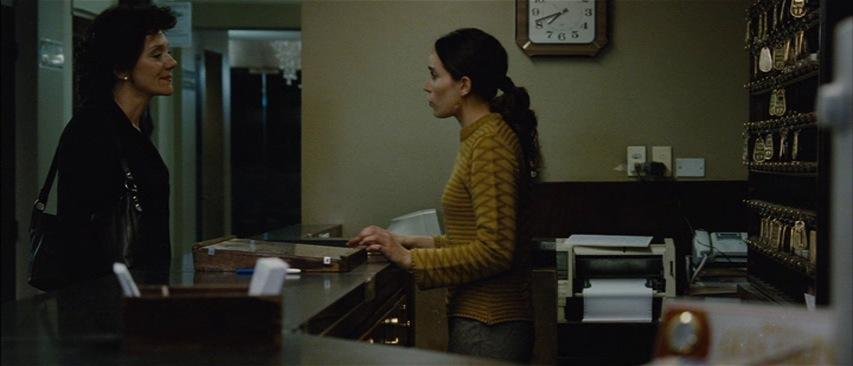
I will briefly examine the relationship between cinema and politics through the lens of Gilles Deleuze’s conceptualisation of ‘modern political cinema’ and bell hooks’ notion of ‘oppositional gaze’. These two theoretical approaches address distinct, yet neither oppositional nor mutually exclusive, categories of politics: the former broadly focused on the politics of minorities, the latter situated within the intersectional politics of race and gender. Both are concerned with identity politics in cinema, and both tackle the issues of diversity and inclusion within the framework of post-colonial thought. To show how these concepts can interact and complement one another, I want to put them into play by analysing Lucrecia Martel’s La mujer sin cabeza (“The Headless Woman”, 2008), arguing that this psychological thriller can be classified as political cinema—in which the genre itself operates in the service of social engagement.
At the core of Deleuze’s concept of ‘modern political cinema’ are two big absences that cinema announces and makes visible.² In the new political cinema, the people are missing (Deleuze, 1989, p.216)—they are excluded from the dominant narratives belonging to others, the colonisers, but are also colonised by their own impersonalised myths—which makes the colonisation and the identity fragmentation work from the outside and from the inside (Deleuze calls this the faculty of ‘double becoming’) (p.221). The second lack is that of the boundary between the spheres of the political and the private, which makes it impossible for the people—whose memories are neither psychological nor collective—to become conscious through the process of evolution or revolution. Deleuze, thus, defines modern political cinema as the cinema of the Third World, of the minorities, and of their ‘impossibility of living’ (p.219)—where the failure of identity fusion is acknowledged and the only thing left is a constant exchange between “a fragmented world and (…) a fragmented I” (p.221).
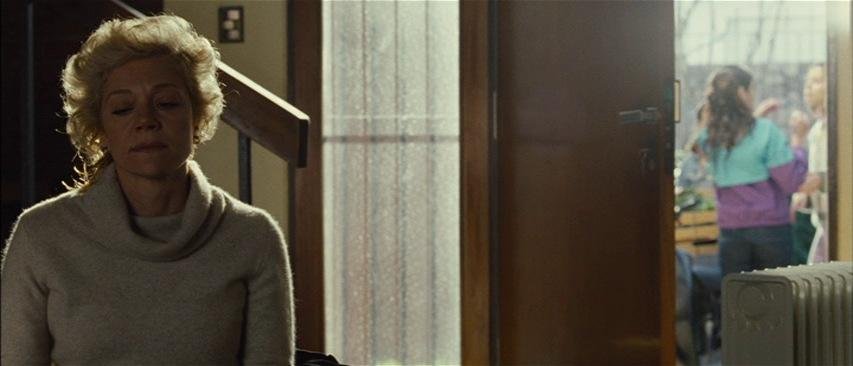
In these terms, La mujer sin cabeza can be viewed as the modern political cinema par excellence. Nothing is made more evident during the 87 minutes of the film than the absence of the people, that is, of the poor population (often of Indigenous origin or mestizo) within the Argentinian society divided by class and ethnicity. Except in rare moments, their presence and their reality are purposely cut, blurred, ignored and marginalised by the camera. As they appear in the role of domestic help, gardeners, caretakers and other types of assistance to the wealthy bourgeoisie, their faces are left undefined and without a portrait (identity on the iconographic level)—often seen from the inside of the car window. Their existence on screen is reduced to merely providing service to the main protagonist, Veronica, and her well-off family.³ Deleuze’s concept of ‘missing people’ expands as well to the identity crisis of the protagonist herself, metaphorically indicated in the film’s title—“the woman with the missing head”. After Veronica’s car hits a dog and (most probably) an Indigenous boy from the poor local community, her self-centred (or better, hair-centred) consciousness becomes fractured by shock, guilt and remorse, but also by her realisation of her privileged position, her belonging to the white, wealthy elite within the segregated society—which gives her the possibility of ‘conscious reversal’ (p.219), in this case, of ignoring and denial. It seems impossible for her to live, at least not as before.⁴
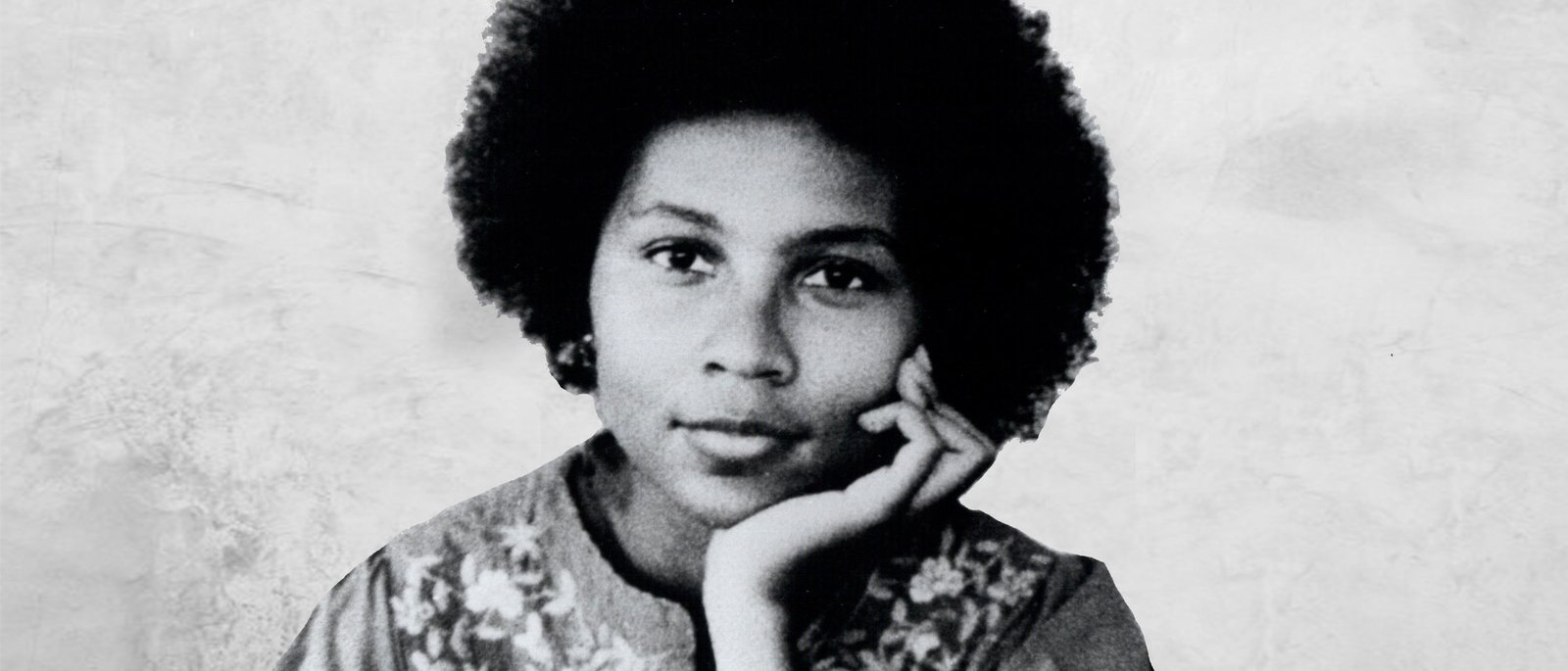
The same motives of lack, impossibility, identity crisis and double colonisation which Martel’s film brings up can be equally read through a feminist prism and, specifically, through bell hooks’ concept of ‘oppositional gaze’. Hooks develops this notion as an acquired strategy of resistance to the dominating, oppressive white gaze which, by means of mass media, television and mainstream cinema, controls and negates the representation of black identity. Hooks confirms Stuart Hall’s idea of “white representation of blackness as totalising” (as cited in hooks, 1996, p.254)—the ‘white presence’ being a power that is external and internal to black people.⁵ The oppositional gaze is a critical, interrogating and politicised way of looking, one that grants agency to black spectatorship in changing the reality. She particularly addresses the vulnerable position of black female spectators whose representation on the big screen has been missing or marginalised, often reduced to a simplistic presence in service of white characters or as an object of the black male gaze. Since this oppression concerns two aspects of their identity—gender and race—hooks criticises white feminist film theorists for failing to actively engage with the issue of black female spectatorship and its (under)representation in cinema.
Although hooks deals with discrimination and underrepresentation of African-American women in mainstream cinema, an analogous issue can be discussed concerning the race-gender-class oppression and colonisation of female identity—which La mujer sin cabeza addresses in its social commentary. Here again, Martel’s film works on two levels. First, it emphasises the total negation of an alternative concept of female beauty (which, in the film, is equated with female identity), that is, of the non-white, non-European/Caucasian woman. The faceless, peripheral Indigenous women—like the rest of the ‘missing people’—are reduced to mere function, service, movie extras. The only non-white female figure offered to the spectator is the school friend of Veronica’s young cousin. However, her feminine identity exists only as an extension of the hidden lesbian inclinations of the privileged rich girl. This is underlined by her merging back into the blurred community of the poor local neighbourhood (the background) after she gets out of Veronica’s car.
Secondly, Martel’s film displays a more subtle, internal process of colonisation by the dominant model of feminine identity proposed by classic Hollywood—the elegant, well-mannered blond girl with a bourgeois pedigree—to which the main protagonist is subjected. The central motif in the film—Veronica’s blond hair—is contemporarily a symbol of her bourgeois femininity and of her colonised, oppressed feminine identity. She tries to fight this by changing her hair colour, but, as the film seems to suggest, the radical change in the relations of dominating discourses and oppressed minorities isn’t only a question of appearance, of the visual. It requires a more profound shift in social structures and in the distribution of power and wealth—a change that starts from the critical, oppositional gaze of each of us as spectators and social agents (one which Martel herself embraces and awakens in the spectators through her film).
Cinema as Experience: The Eye and the Body
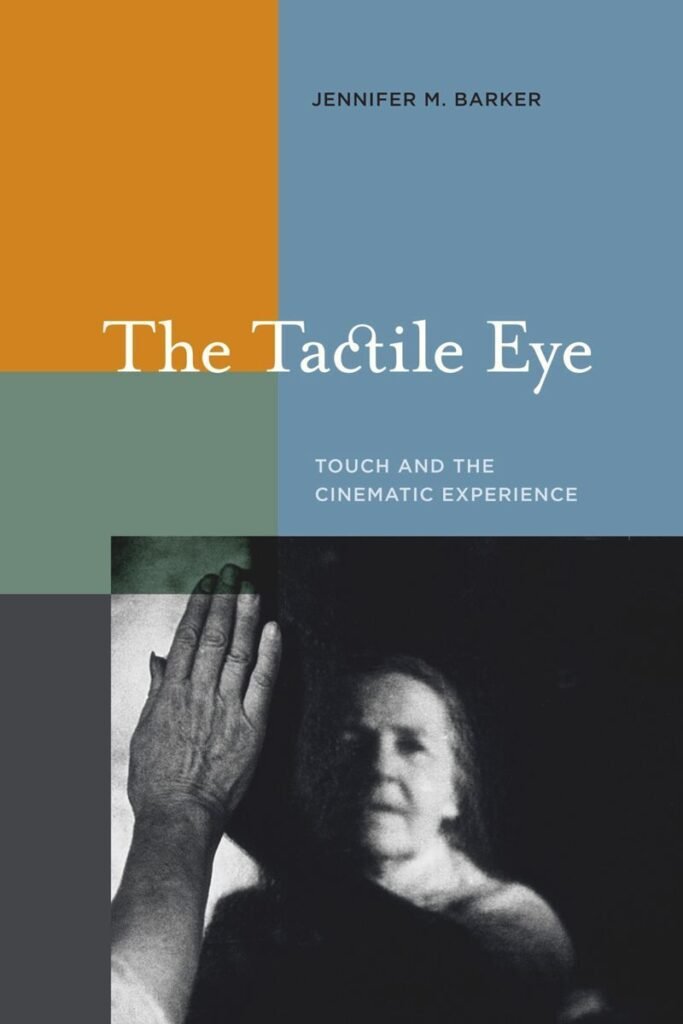
In her seminal essay The Tactile Eye: Touch and the Cinematic Experience, Jennifer M. Barker introduces the notion of “tactile eye” to theorise film spectatorship by grounding it in the idea of a materially embodied cinematic experience, where perception and expression happen through ‘tactility’ (2009, p.1–22). She defines ‘tactility’ as “a relationship with the [cinematic] world that is at once a mutual and intimate relation of contact”, which involves the entire body, not only its surface (p.3). This concept presupposes the existence of a film’s body that is separate from the reality shown on the film screen and from the spectators themselves, but also from the film director, the cinematographer, or other participants in the film’s production. According to Barker, the film itself is capable of perceiving the reality it films and sharing its experience, which it projects, in a manner similar to the spectator. Therefore, the cinematic experience can be interpreted as a reciprocal and reversible relationship between the embodied spectator and the embodied film. The interaction between their consciousnesses, their relationships to space and time, their being in the world⁶ (within their physical, historical, socio-political and cultural contexts) forms the foundation of their relationship, through which the emotions and the meaning of the film are generated.
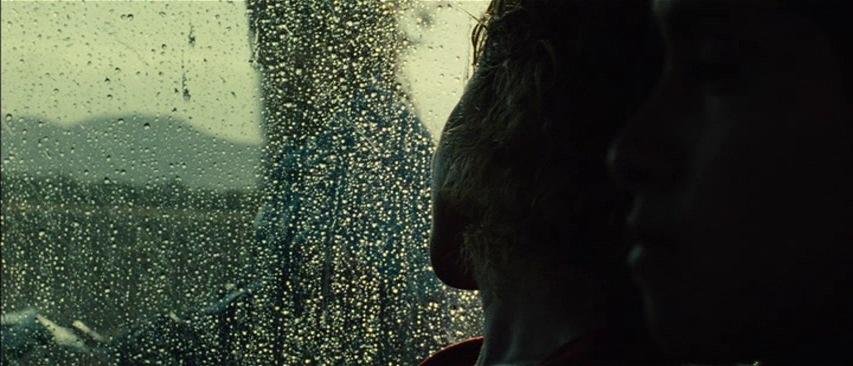
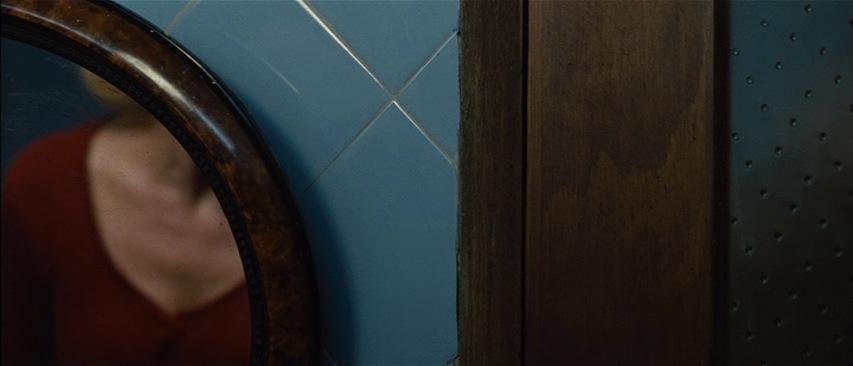
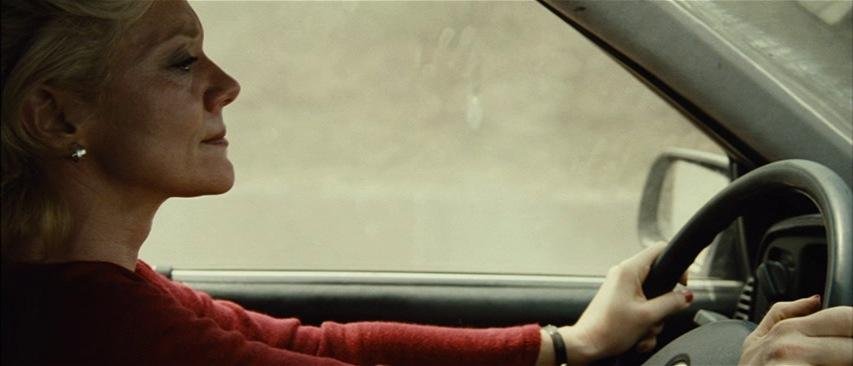
To illustrate Barker’s idea of tactile cinematic perception and the film’s body, I turn once more to La mujer sin cabeza, and try to look at the film from a different angle than previously. One notices, right from the start of the film—from the opening scenes, which set up both the film’s plot and its overall aesthetic approach—the alternating disconnections and interrelations between the camerawork, the sound and the actors/characters, as well as between the filmed reality and the cinematic image. At times, we see certain characters on screen but hear voices off-screen (as in the scene depicting the main protagonist and other women with their children talking around their cars). At times, the sound finds unity with the image, only to disconnect again. This unity is often displayed through reflections—direct contact with the film’s reality being denied to the spectator by the presence of car windows and other types of windows and mirrors, which announce their analogy with the film screen itself. Their presence is also rendered highly material through the emphasis placed on their textural quality (as with the child’s handprints or raindrops on the car window).
A similarly strongly tactile sensation is produced, and put in relation to the spectator’s sensory perception, through the constant touching, caressing and wetting of Veronica’s hair. Throughout the film, the camera rarely offers the opportunity to coherently and immersively follow the depicted reality or the dialogues. One seems constantly pulled in and out of the scenes through the use of particular angles, fragmented and asymmetric shots, blurred surroundings, and the overlapping of sounds from different sources, followed by their sudden silencing. The camera’s universe appears to revolve around the portrait of Veronica, yet this identification with her subjectivity is renounced through the film’s bodily presence at several crucial moments—as when the camera ceases to follow her actions and positioning in space (for instance, in the scene of the car accident, she gets out of the car, but the camera remains fixed, gazing at the door window from the car’s interior, leaving the spectator without a point of reference).
It is difficult not to see all the above-mentioned aspects as a series of strategic tools employed to stimulate a particular kind of emotion in the spectators and to guide their interpretation of the film’s meaning. Consequently, it is hard to understand how it is possible to distinguish the film’s body, which relates to the spectator’s body, from the film’s production as a whole (understood here as the film director and all those involved in the filmmaking, their decisions, work and the technology they employed), as Barker seems to suggest in her essay; nor why she finds it necessary to do so.
In effect, by implying an embodied exchange between the film and the viewer, rather than a one-way process of absorption (of being ‘lost in the film’), Barker’s theorisation of the cinematic experience can be particularly useful when it comes to forming a critical spectatorship in relation to the filmic reality and to the film itself as a cultural and artistic product—especially in the case of films that represent true-to-life characters and locations and address socio-politically sensitive issues (as La mujer sin cabeza does, in terms of class and ethnic divisions in Argentinian society). Declaring the film’s body and foregrounding the notion of tactile cinematic perception places emphasis on the process of intellectual, emotional and physical negotiation—by both the spectator and the film (that is, by its director and other participants in the filmmaking)—with the cinematic reality and the social reality that the film displays and addresses.
Notes
¹ Nor could it have been accepted as ‘art’ without the parallel radical changes in the conception of art in general, brought about by modernity.
² It is impossible to include all the aspects of the two theoretical approaches, and I will focus particularly on those aspects which are important to the analysis of the selected film.
³ The only two potential ‘subjects’, the brother of the killed boy and the school friend of Veronica’s young cousin, are individualised only insofar as they serve Veronica’s guilty conscience and her cousin’s sexual interests.
⁴Or should we say almost impossible — the director leaves this question open.
⁵ In these words, one can also recognise Deleuze’s conception of ‘double becoming’.
⁶ Here, Barker refers to the existential phenomenology of Maurice Merleau-Ponty (p.17–19).
References
—Barker, Jennifer M. (2009). “Introduction.” In The Tactile Eye: Touch and the Cinematic Experience (pp.1–22). Berkeley–Los Angeles: University of California Press.
—Bazin, André (1958/1967). “Ontology of the Photographic Image.” In What is Cinema? Vol. 1 (pp. 3–12). Berkeley–Los Angeles: University of California Press.
—Deleuze, Gilles (1989). “Cinema, Body and Brain, Thought.” In Cinema II: The Time-Image (pp. 215–224). Minneapolis: University of Minnesota Press.
—Deleuze, Gilles (1986). “Thesis of Movement.” In Cinema I: The Movement-Image (pp. ix–11). Minneapolis: University of Minnesota Press.
—hooks, bell (1996). “The Oppositional Gaze: Black Female Spectators.” In Reel to Real: Race, Class and Sex at the Movies (pp. 253–274). New York: Routledge.
—Stiegler, Bernard (1995/2002). “The Discrete Image.” In J. Derrida and B. Stiegler, Echographies of Television: Filmed Interviews (pp. 147–163). Cambridge: Polity Press.
Image sources:
https://film-grab.com/2022/12/01/the-headless-woman/
https://ethics.org.au/big-thinker-bell-hooks/
https://www.upress.umn.edu/9780816616770/cinema-2/
https://www.degruyterbrill.com/document/doi/10.1525/9780520943902/html
Iva Kontic is a visual artist, academic researcher and professor originally from Belgrade (Yu, 1982). She graduated in Painting from Accademia di Belle Arti di Brera, Milan, obtained a Master’s degree in Fine Art from Goldsmiths College, London, and earned a Master’s degree in Film Studies from the University of Amsterdam. She holds a PhD in Multimedia Arts from the University of Arts in Belgrade. Her works have been exhibited in numerous international exhibitions and festivals at institutions such as Museo Reina Sofía, Museo della Permanente, TEA Tenerife Espacio de las Artes, Fondazione Giangiacomo Feltrinelli, Kassel Dokfest, European Media Art Festival, Mixer Festival, Trieste Film Festival, the Cultural Centre of Belgrade, among others. Iva has participated in various academic conferences and symposia at institutions such as the Blinken Open Society Archives, Central European University, University of Warwick, University of Malta, the Institute for Cultural Development Research, and she published AGIT-PROP-FLASH-MOB. The Workers’ Dance into the Twilight (ProArtOrg), a book exploring the possibilities of social engagement in performance art through the use of urban public space
Copyright © Iva Kontic, all rights reserved
