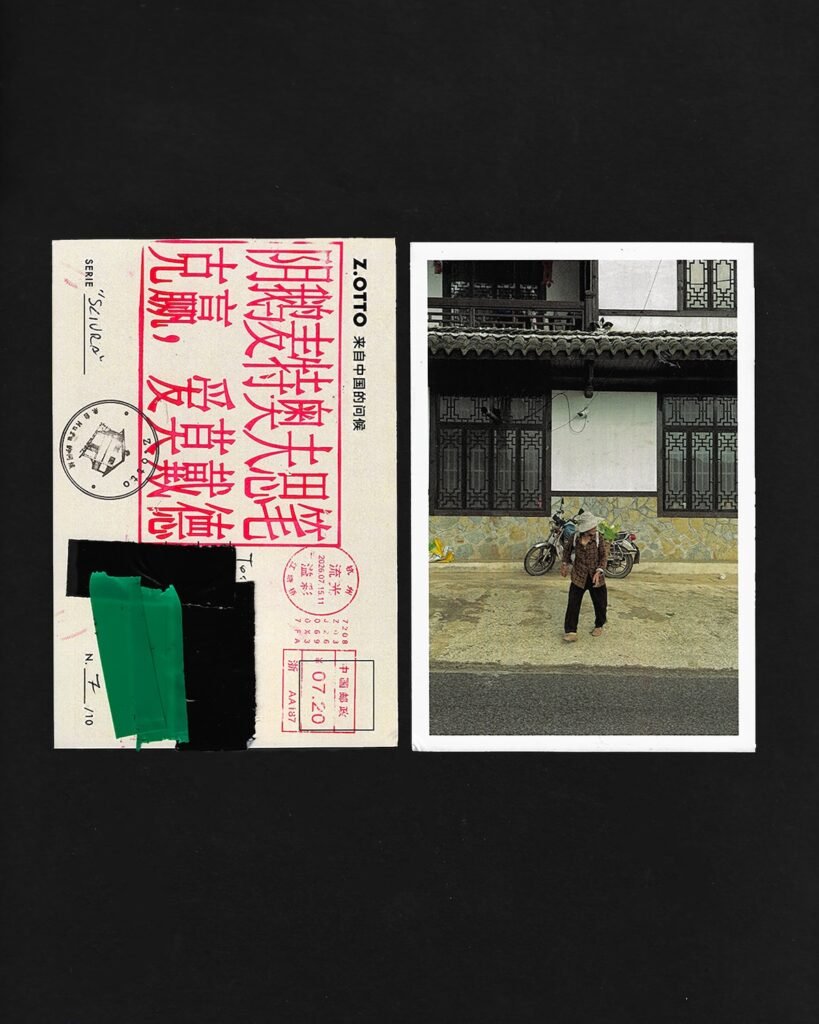
In the summer of 2026, I disappeared in China for a month. Anyone looking for me received no reply. In a matter of speaking, I’m dead. Then I sent a postcard, greetings from Mufu.
This is the text accompanying In a matter of speaking, I’m dead. In the summer of 2026, Zazzaro Otto is in China, in Mufu, a mountain village in Hubei province that, in population and atmosphere, resembles any village in the Emilian Apennines, with the difference that for many elderly people and children, the artist is the first “Western” apparition they have ever seen. For a month, he does not reply to those looking for him. He takes hundreds of photographs and videos that he would have liked to send to his loved ones, but he does not do so: he keeps them suspended, under the pretense of no longer existing. Not out of rejection, but for the illusion that being unreachable might coincide, at least for a moment,with a suspension of everything that calls him back to himself. In the last few days, however, he sends a postcard to those who had looked for him.
The postcards feature fifteen different photographs on the front, each printed in ten copies. The back is occupied by two stamps commissioned and carved for the occasion. The first, in red and in Chinese characters, phonetically renders the title of the work: a message that resists translation. The second, in black, bears the signature “Z.OTTO, greetings from Mufu” and, in the center, a small house taken from an old votive tile belonging to the artist: a stamp that officializes the sender. The mechanism is elementary: a journey, a period of unreachability, images, a postal object that resumes communication. But what it brings into play is not the journey, but rather the relationship between presence and absence,between experience and communication, between producing an image and making it available to the gaze of others.
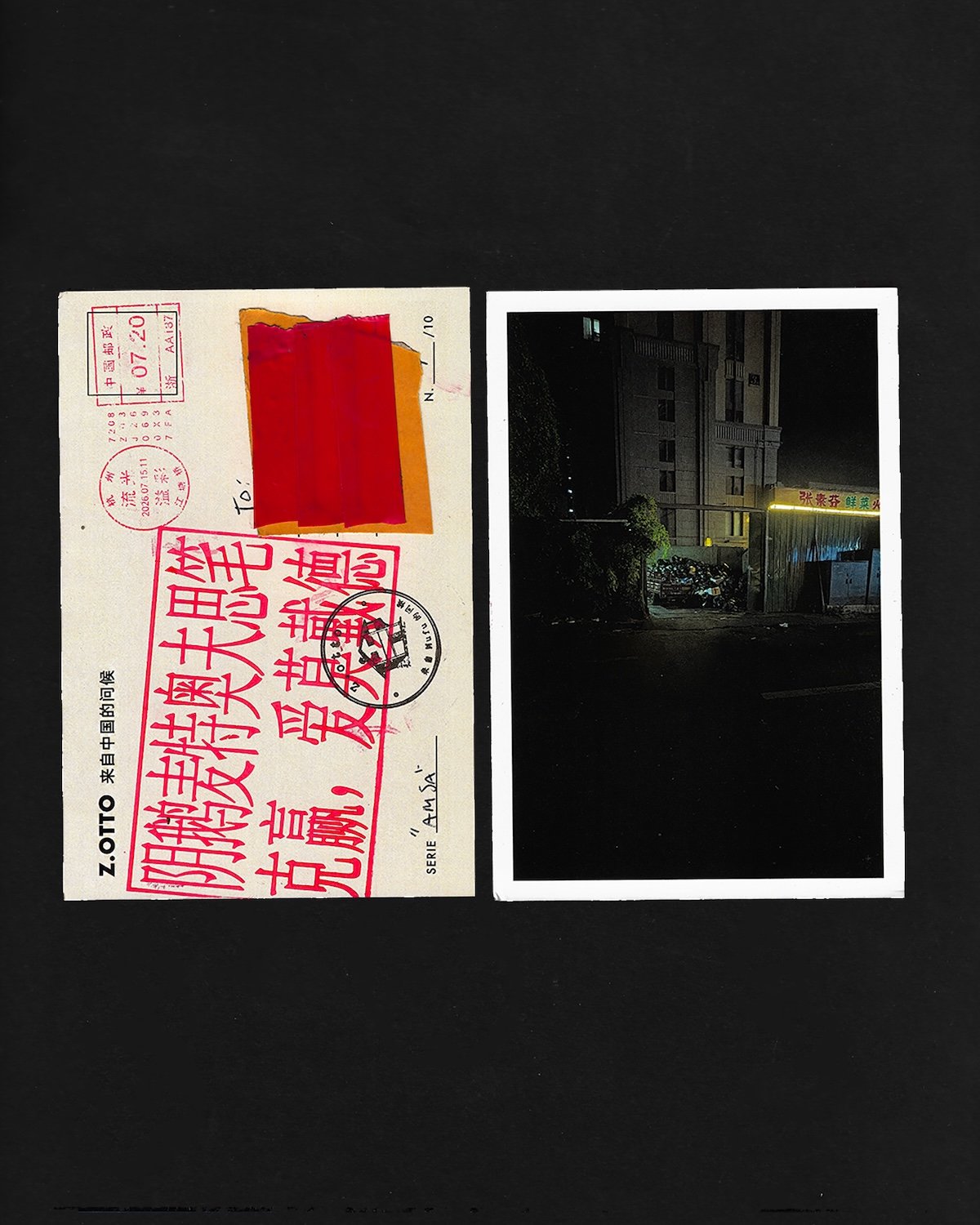
Amsa
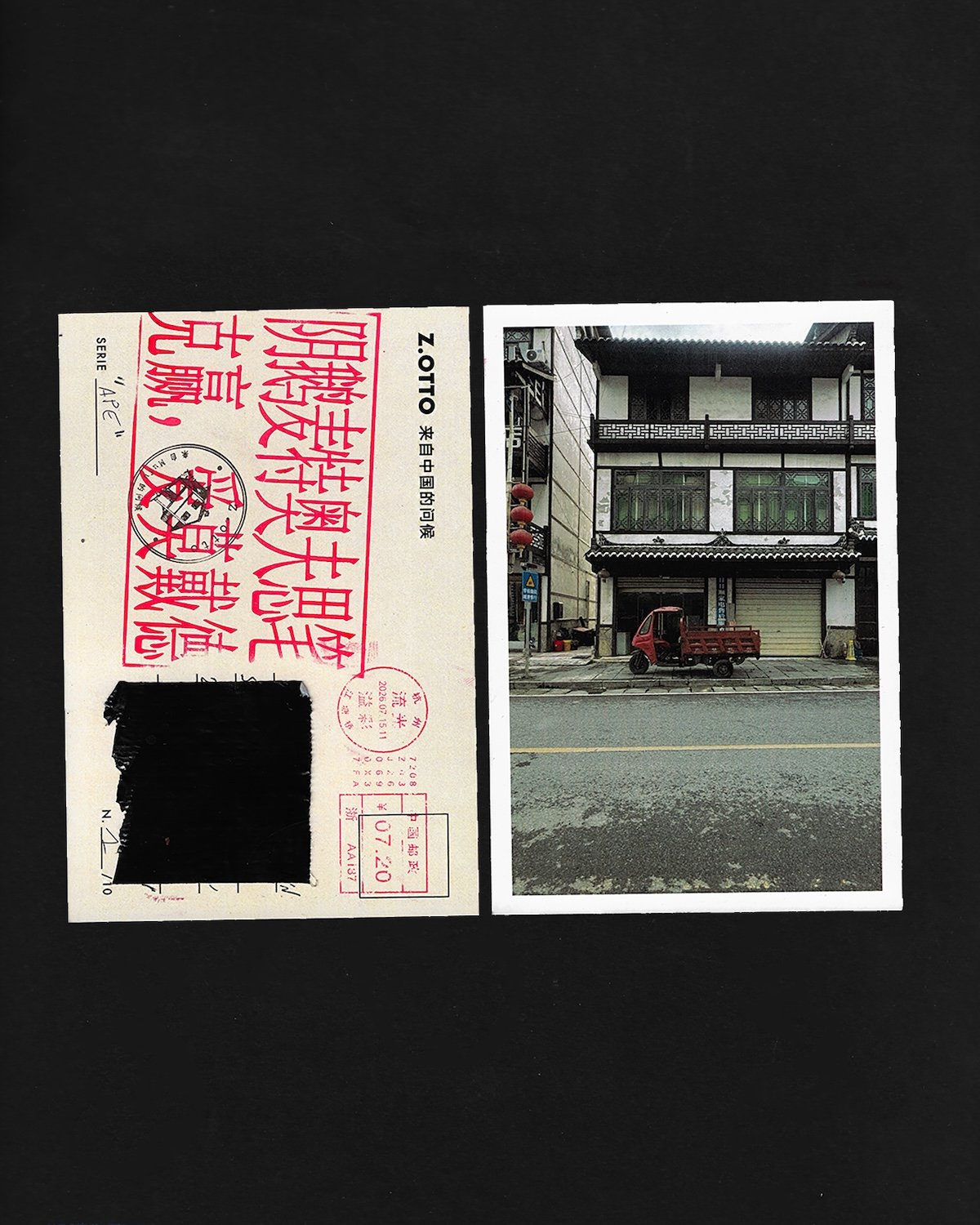
Ape
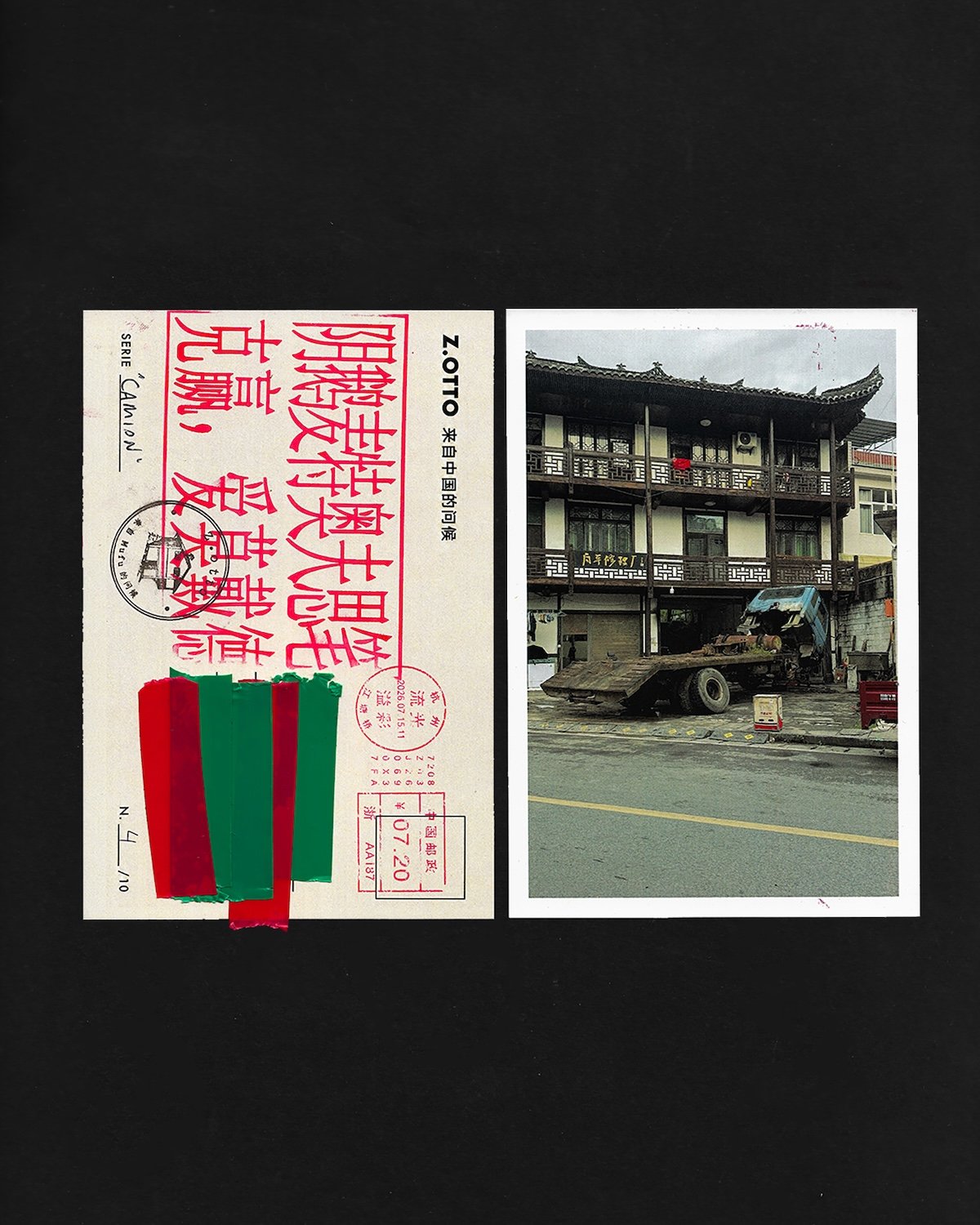
Camion
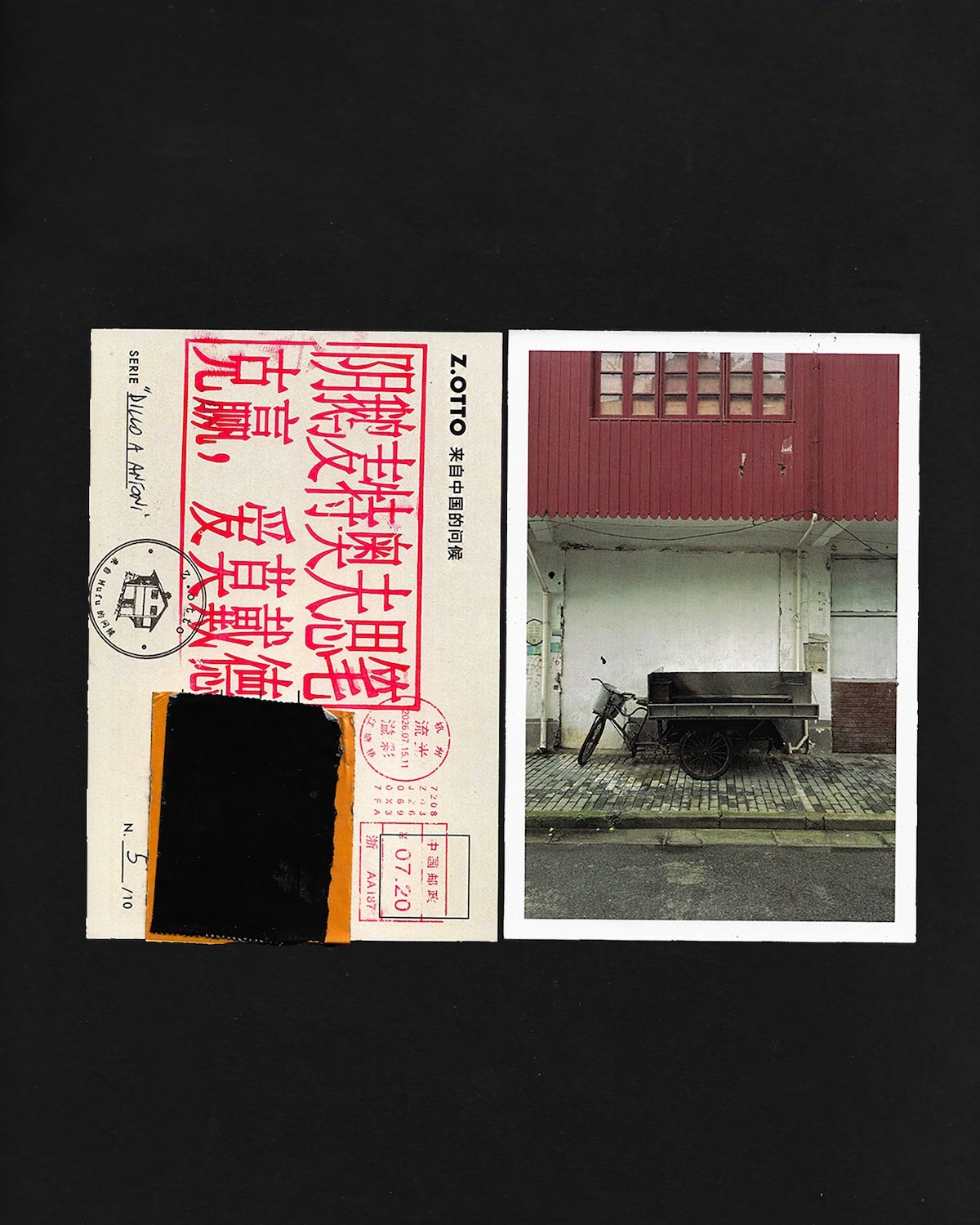
Dillo a Antoni
Disappearing
The operation fits into a tradition of artistic and performative practices that, from the 20th century to the present day, have identified disappearance (real, temporary, simulated, or programmed) as a possibility of withdrawal from the ordinary forms of presence. Disappearing, in these cases, does not coincide with not being there: it makes perceptible the social,technological, and symbolic devices through which an individual is recognized, located, contacted. Whoever does not reply is not simply absent; their absence begins to be felt as a condition, producing questions, hypotheses, expectations.
This is a tension that Susan Sontag identifies in the relationship between silence and modern art. In The Aesthetics of Silence (1967, later in Styles of Radical Will, 1969), silence is not the absence of speech, but a strategy by which art calls into question its own conventions and even its own need to continuously produce meaning. It is not a matter of rejecting the work, but of temporarily suspending its availability. In In a matter of speaking, I’m dead, this tension takes on an everyday form: Z.Otto does not stop looking and photographing; he interrupts the circulation of images and, with it, his own availability to others. He is present in the place where he is and absent for those trying to reach him: absence is first and foremost relational.
Travel and disappearance are, after all, an ancient pair. Modern literature has made estrangement, wandering, and exile into cognitive forms, ways of calling received identity into question. Here, however, the journey does not serve to construct a new identity: it creates the material conditions for temporary opacity. Zazzaro Otto does not leave to become someone else, but to escape, for a brief period, the necessity of being reachable.
Kawara, Hsieh
A precise genealogy of this procedure can be found in conceptual practices that have transformed ordinary communication into a system of attestation of existence. The most immediate comparison is with On Kawara. Starting in 1968, with I Got Up, Kawara sent postcards every day to two people, indicating the exact time he woke up and the addresses of the sender and recipient: an insignificant gesture becomes a systematic registration of existence. From 1970 onwards, with I Am Still Alive, the phrase “I AM STILL ALIVE” traveled by telegram as a minimal message of presence. The principle is almost administrative: not recounting existence, but certifying it.
In Zazzaro Otto, the structure is reversed. It is not “I am still alive,” but “in a matter of speaking, I’m dead.” Kawara uses the mail to keep the relationship open; Z.Otto to declare, a posteriori, that that relationship has been interrupted. In both cases, the postcard is not a medium but an elementary form of relation, with a recipient, a distance to cross, a travel time.In Kawara, these elements make up a grammar of existence; in Z.Otto, a grammar of unreachability.
By contrast, the work also approaches Tehching Hsieh. With the Thirteen Year Plan (1986–1999), Hsieh resolved for thirteen years to make art without showing it publicly, pushing himself toward a condition of withdrawal that calls into question the very possibility of the artist being defined by their presence in the art system. In Hsieh, subtraction is a discipline involving the body, biography, and social position.
Z.Otto is positioned between these two models. He does not build a continuous attestation like Kawara, nor does he subject his existence to a test of endurance like Hsieh. His gesture is minimal—not replying—but it has no fixed term: the question running through it remains open, how long will I be dead? Precisely the modesty of the scale prevents the work from becoming a replica of radical performance and brings that structure back to an ordinary, almost domestic dimension.The specificity of the gesture lies in the suspension of a now automatic action: replying. Today, presence and reachability tend to coincide, and absence must be continually explained. For a month, here, no explanation is offered.
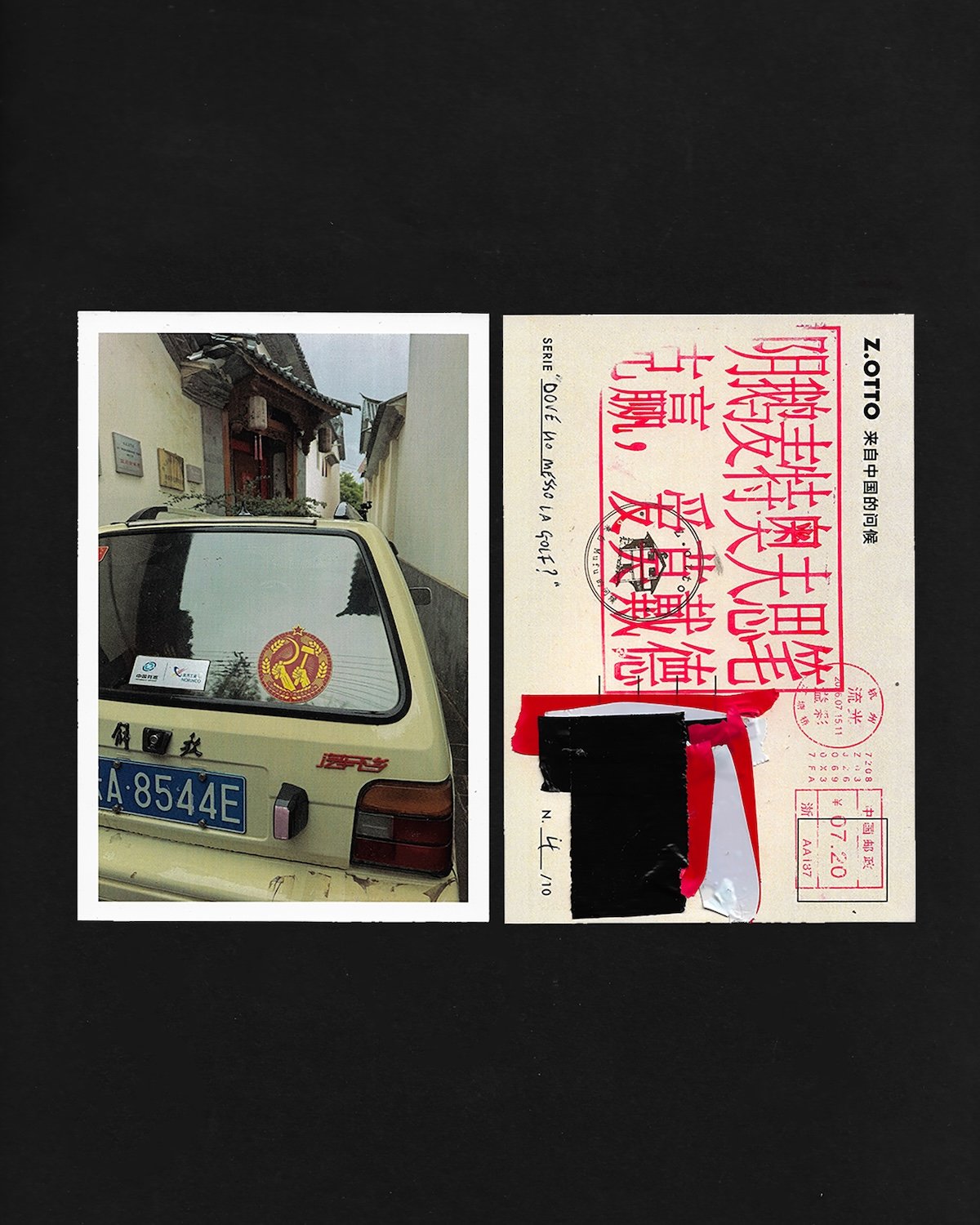
Dove ho golf
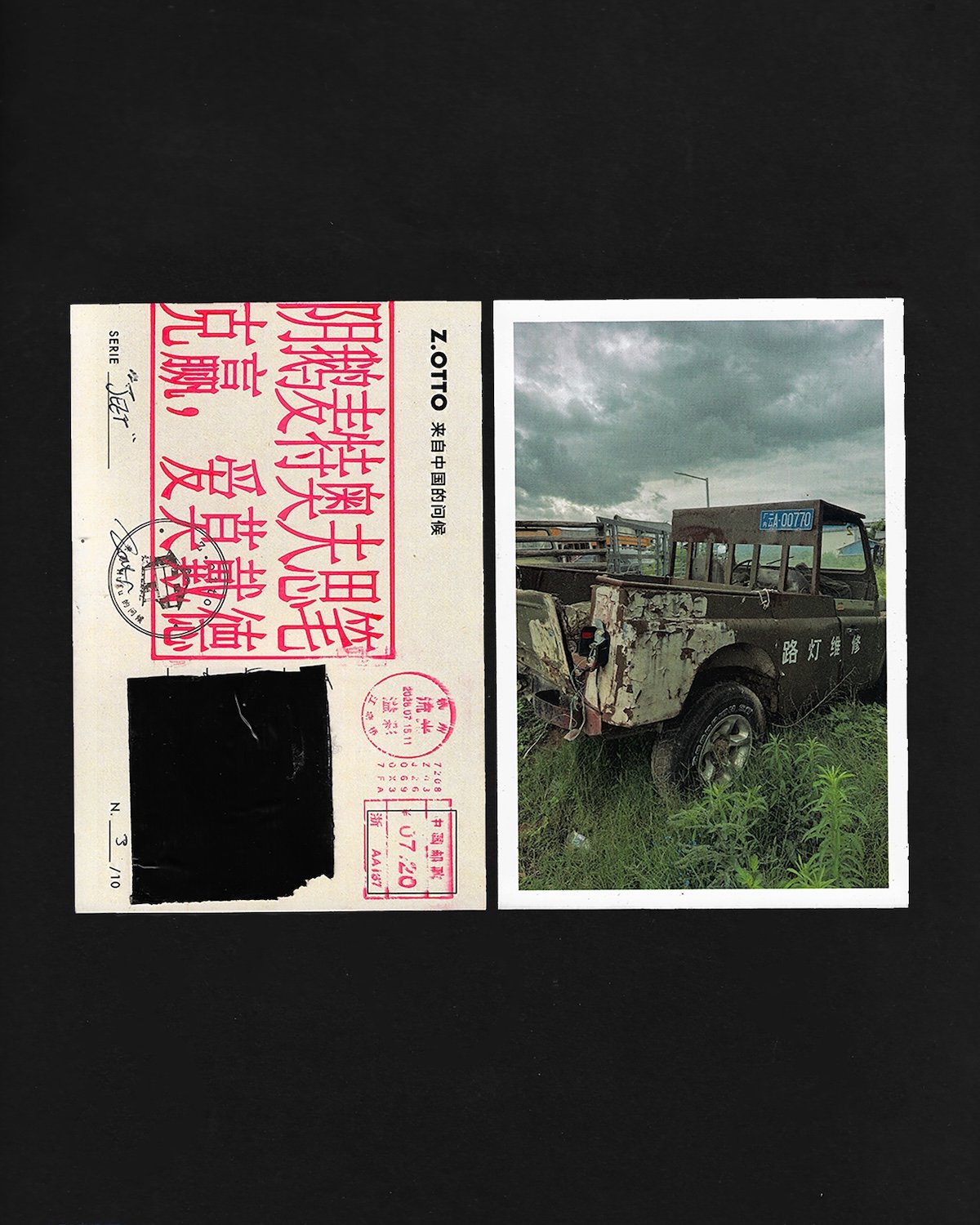
Jeep scan
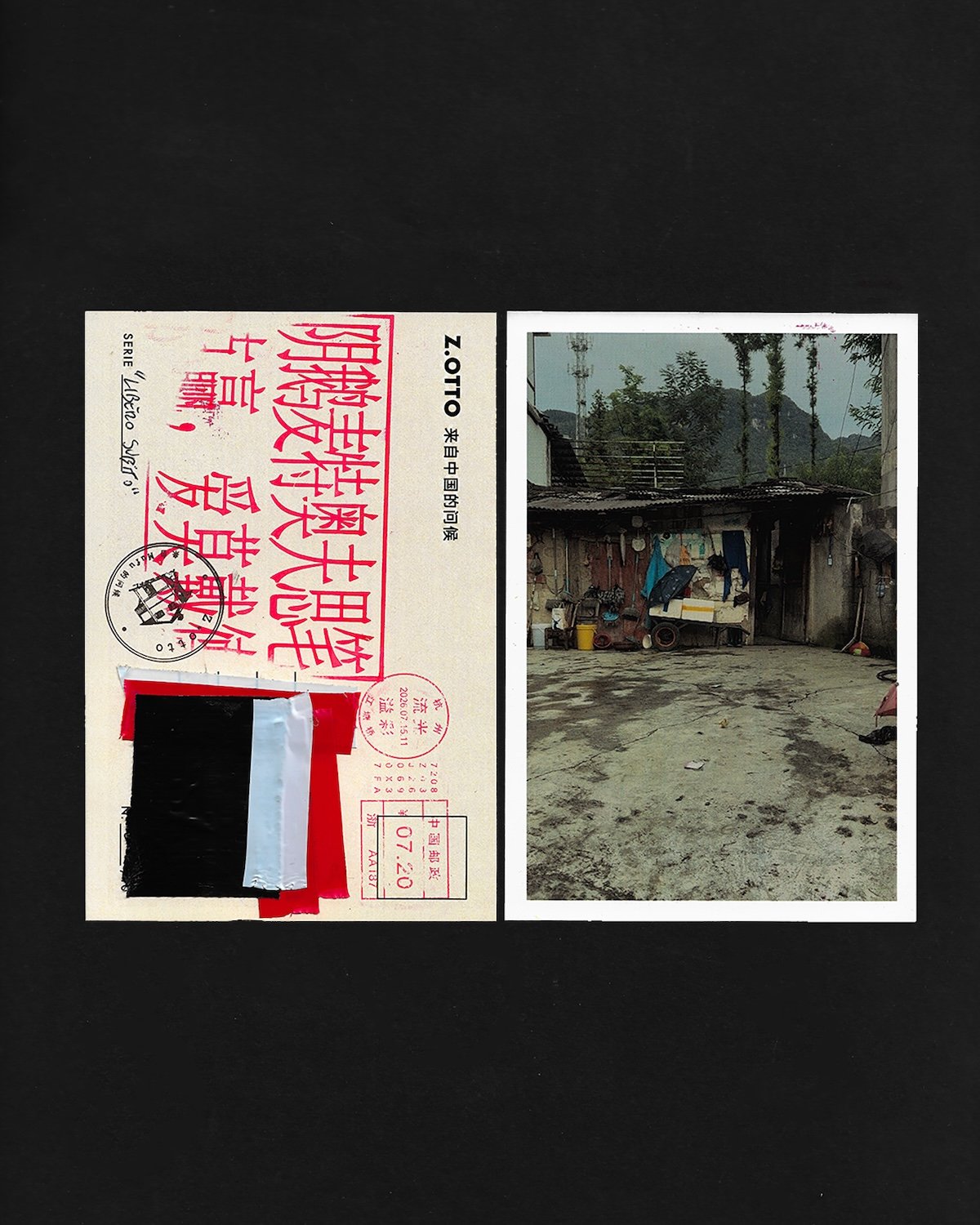
Libero subito
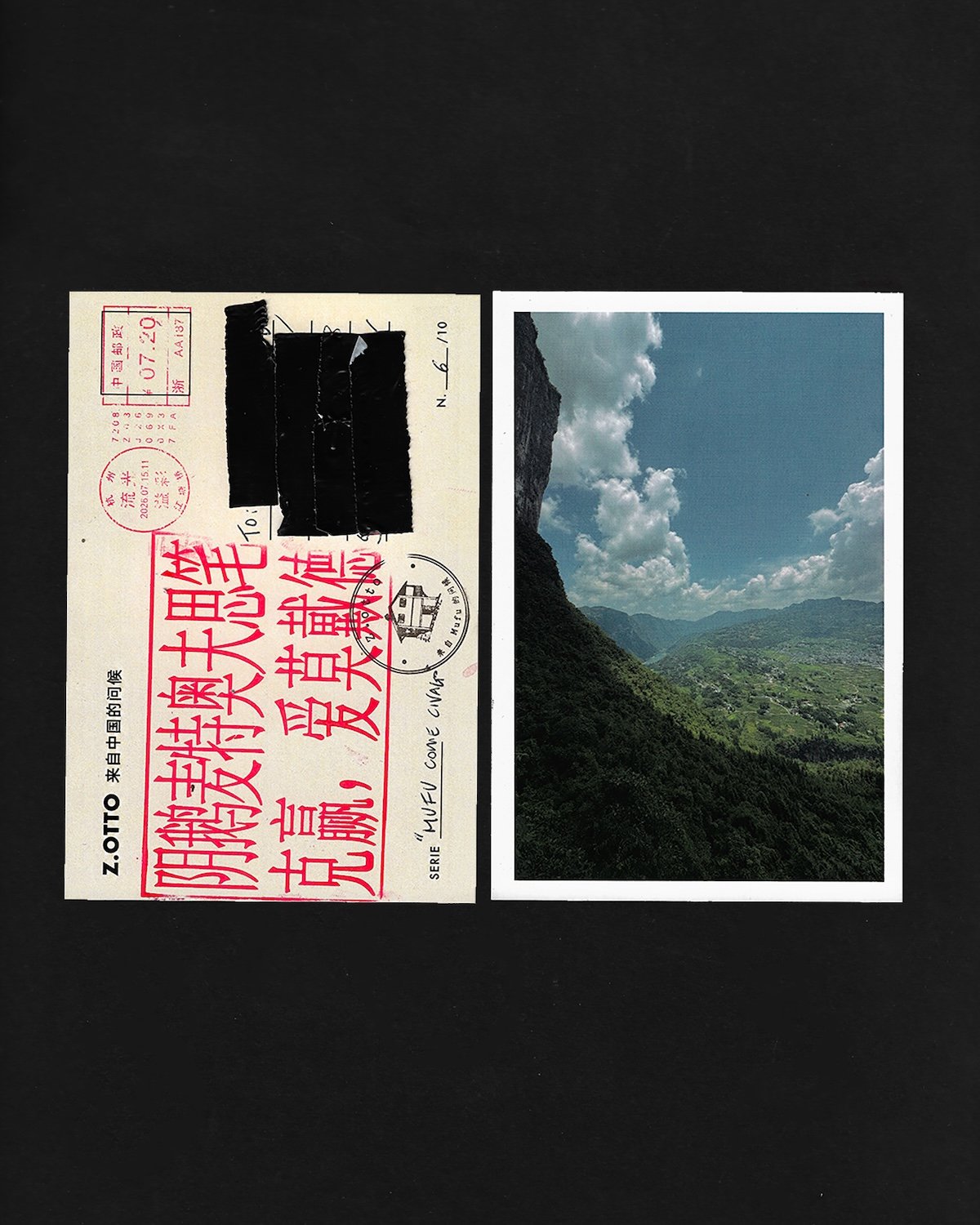
Mufu come Civago
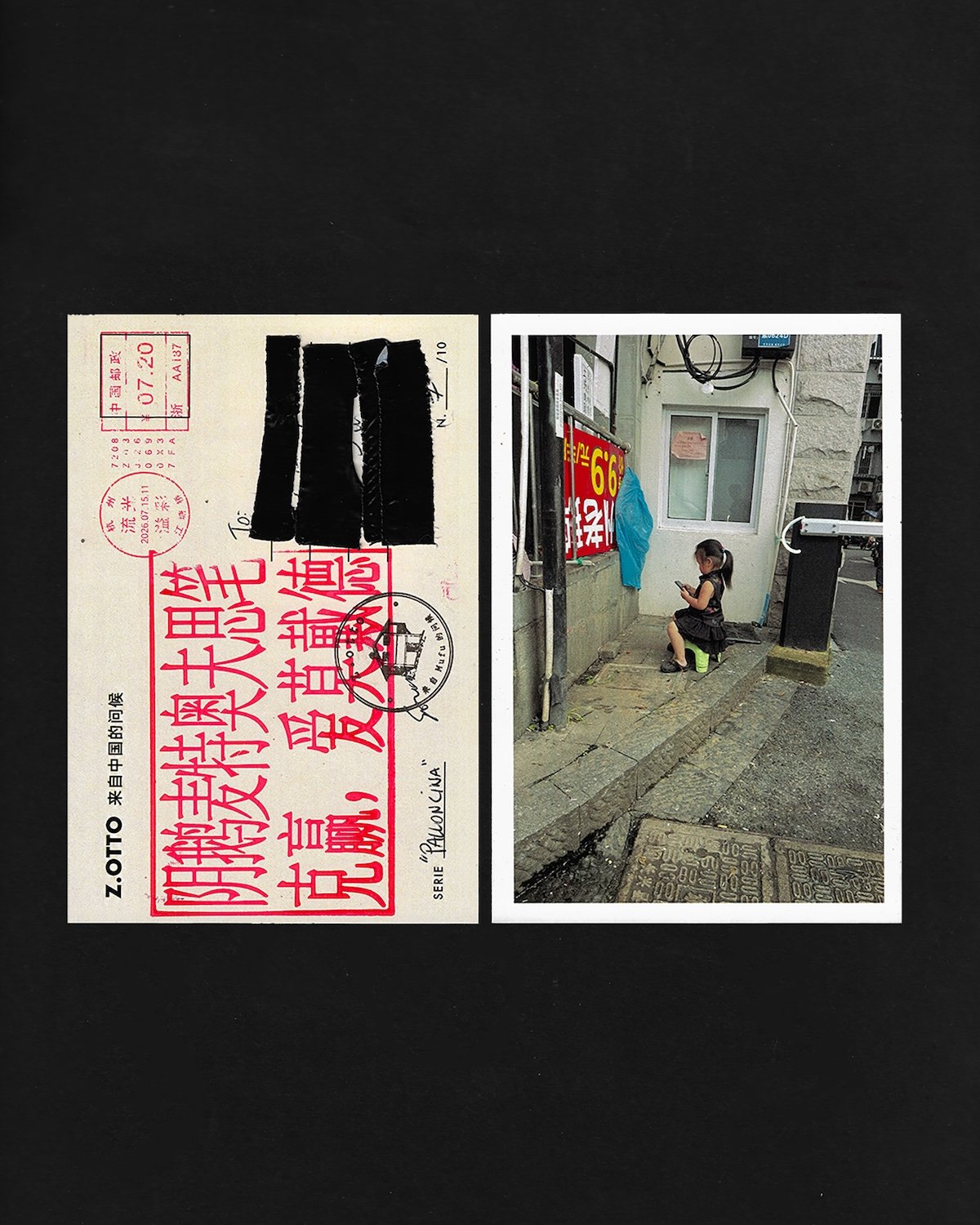
Palloncina
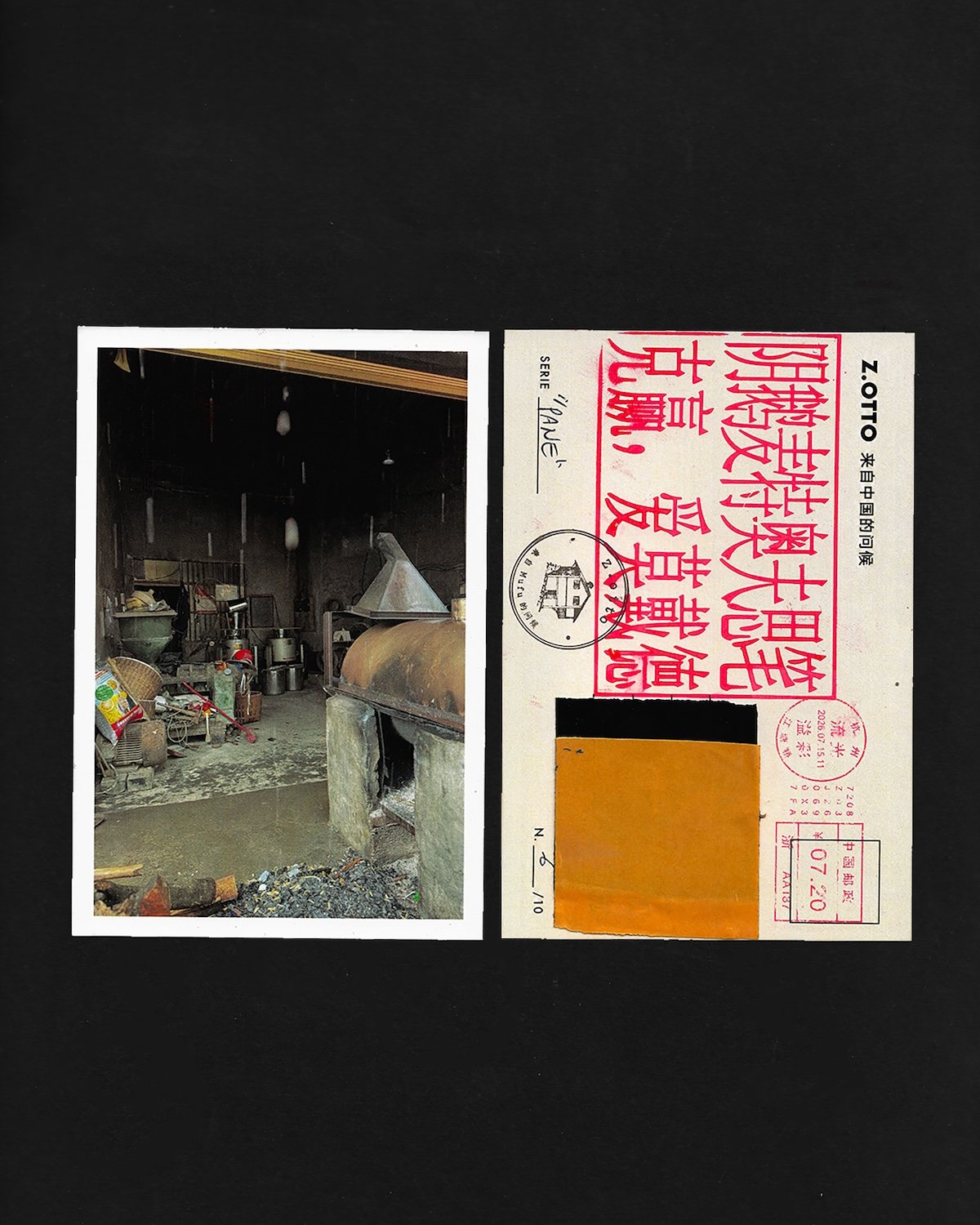
Pane
Images Without a Recipient
While interrupting communication, Z.Otto continues to photograph. The production and circulation of the image are separated: the photographs exist, but are not yet available. This is a significant separation in a context where photographic production is increasingly accompanied by the expectation of immediate sharing. Z.Otto introduces a gap between the moment of experience, that of image production, and that of its eventual transmission. In On Photography, and particularly in In Plato’s Cave, Sontag describes photography as the practice by which the world is transformed into an image and made available to the gaze, producing a distance from experience precisely while seeming to preserve it.Z.Otto adds a second suspension: the image separates the experience from the observer, and the delay separates the image from the recipient.
The photographs themselves, moreover, resist the rhetoric of travel. The artist describes them as “any nice crap you’d send to someone when you’re traveling that definitely shouldn’t have become a postcard”: engines, trucks, shacks, mountains,food. They do not pretend to represent China nor to turn it into an exotic image. Irony does not conceal a more serious meaning; it is the way the gaze remains coherent, preventing the journey from automatically producing a new iconography.
This relational dimension brings the work close to mail art. Since the 1960s, with Ray Johnson and the New York Correspondence School and with Fluxus, letters, postcards, envelopes, and stamps have become artistic materials, and the mail an operational space, an alternative network of exchange founded on movement rather than the stability of the object.Zazzaro Otto inherits the idea that a postal object can simultaneously be an image, a message, and the trace of a relationship, but changes its function: the mail is not used to keep contact open, but to reply after an interruption, without guaranteeing that contact will remain open.
A Late Reply
Without the postcard, the month of absence would remain a private matter. It is the mailing that turns it into communication, retroactively making the absence public. When it arrives, the journey is over: the image comes from the recent past and carries the trace of an absence whose conclusion remains uncertain. Its slowness is not a nostalgic residue,but the very substance of the work.
The two stamps work on this ambiguity. On the one hand, the title, rendered in Chinese characters, becomes a linguistic ghost: present yet illegible, it calls the artist’s presence into question. On the other hand, the name and place certify his identity. “I am dead” and, at the same time, “it is I who am sending you this message.” If the message is not clear, the artist writes, perhaps it is because the intent was uncertain: how much do I want you to understand that in a matter of speaking I am dead? How long will I be dead? What if the postcard doesn’t arrive? In a matter of speaking, “you” were there, but you didn’t see what I saw, and so I send you a postcard, as if I had replied to that message. The postcard,however, does not announce a return: the artist has not decided whether, after this message, he will reappear. In a matter of speaking, it might even be the last one the recipient receives from him.
The title also holds the two things together. In a matter of speaking softens and confirms what follows, but also evokes the act of speaking: the artist declares his own death while demonstrating that he can still speak. Death is here the ultimate figure of unreachability, the point beyond which a reply cannot arrive; the work simulates it without ever coinciding with it.
The decisive distinction is between invisibility and unavailability. Z.Otto does not renounce his presence: he suspends access to it. The postcard does not merely say “I was here”: it communicates that, while he was there, the artist was unavailable to those who would have liked to reach him. Disappearance does not coincide with a definitive refusal, just as the postcard does not guarantee a return. What remains is the trace of a withheld presence, for a time that is determined but not entirely resolved, removed from the continuous demand to be reached.
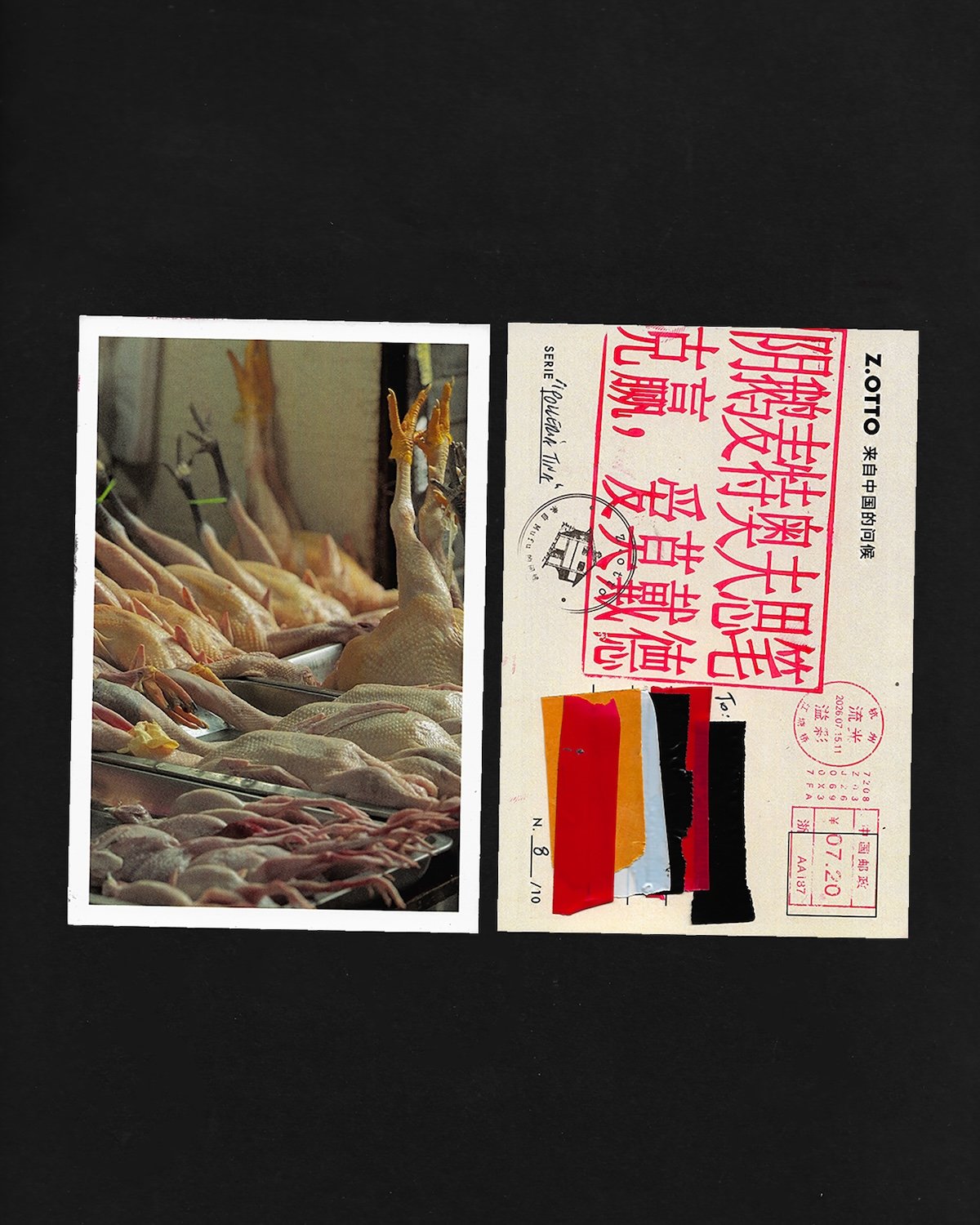
Polleria
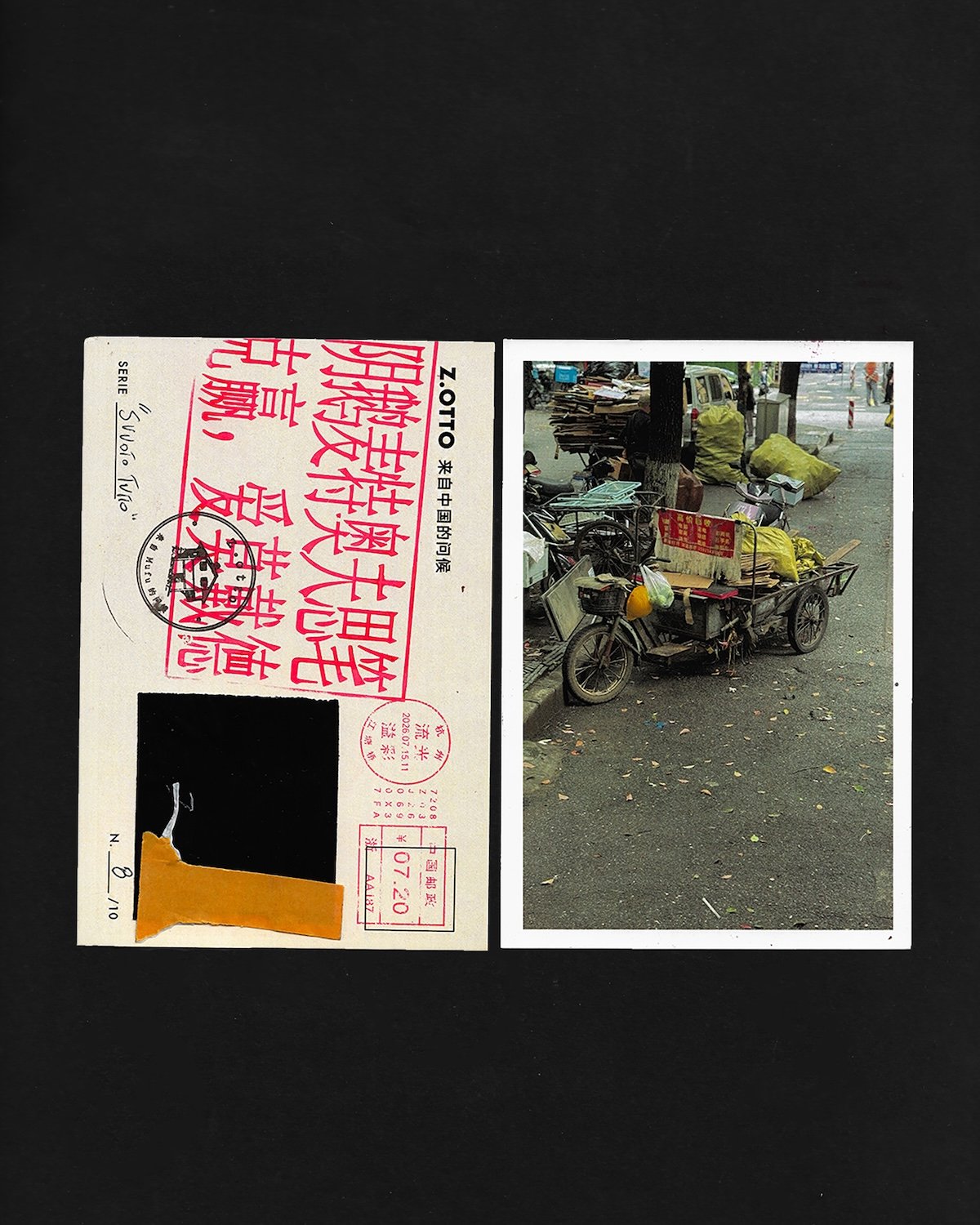
Svuoto tutto
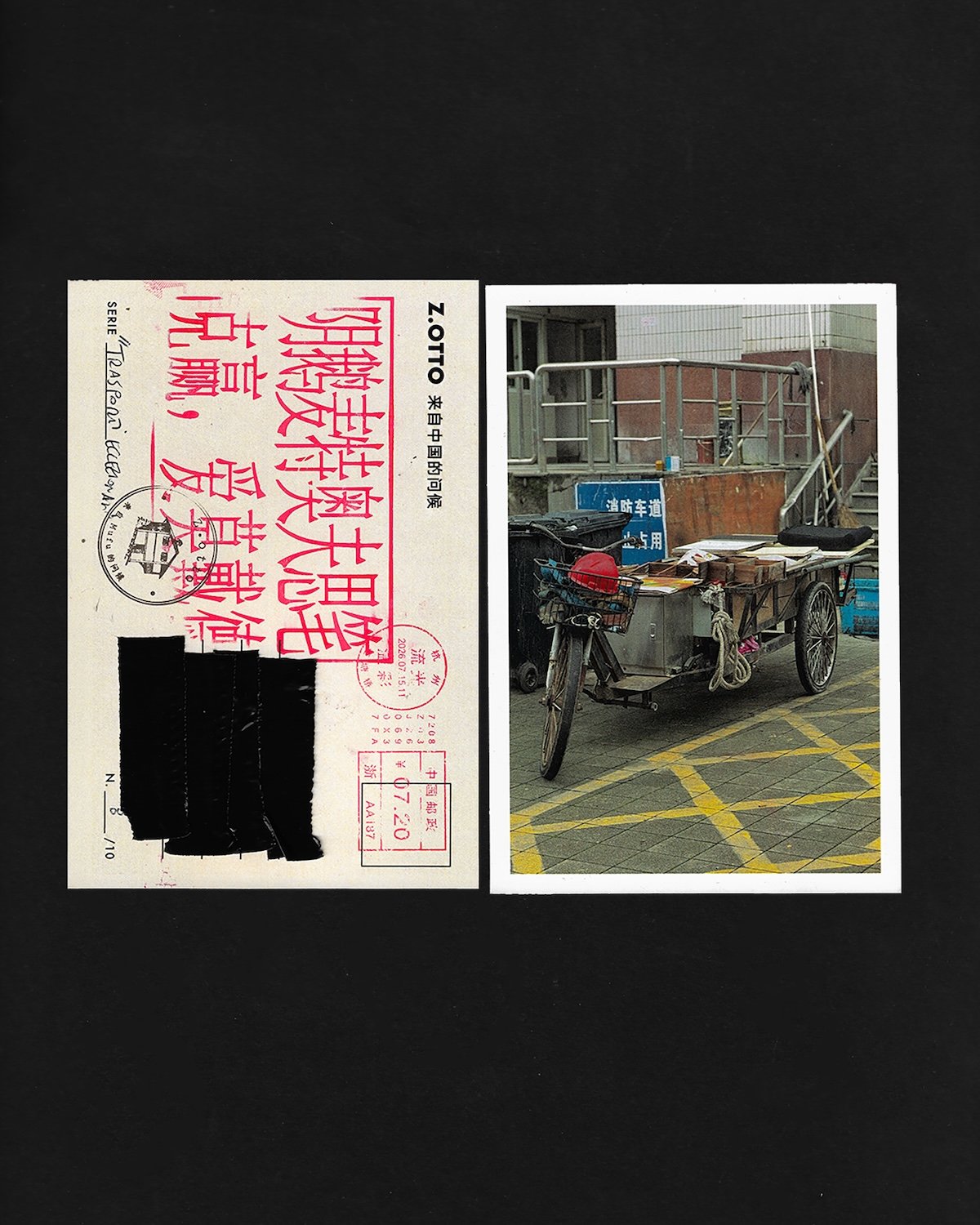
Trasporti ecc
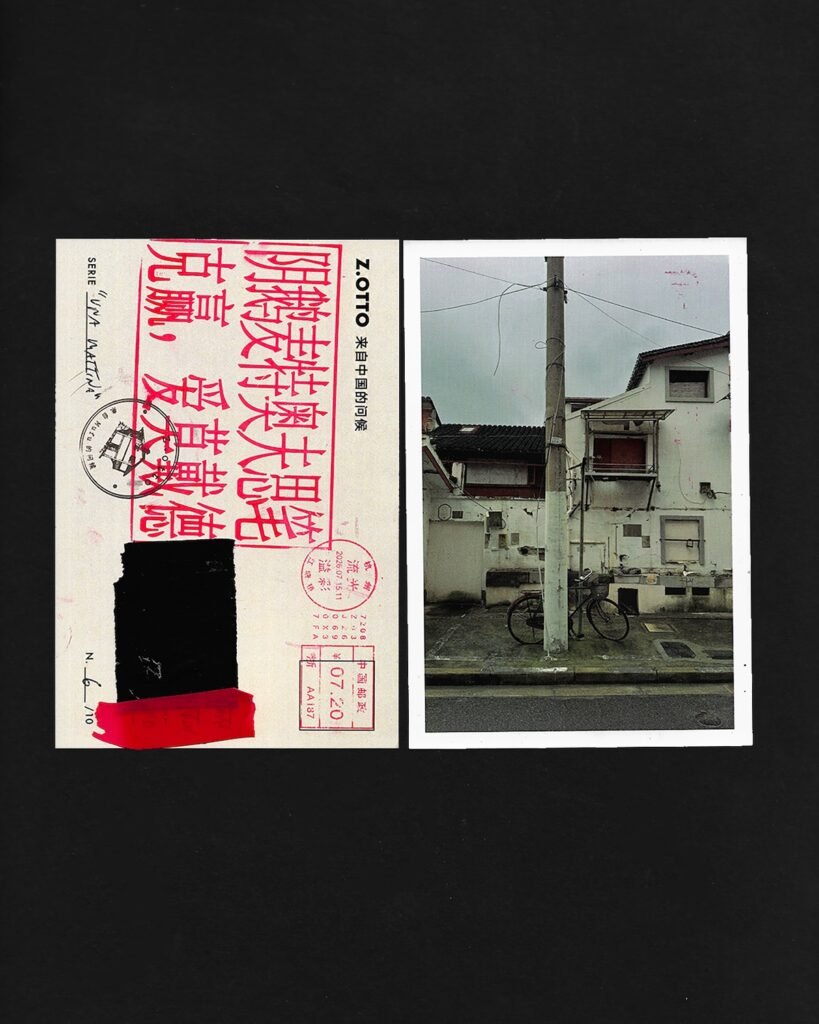
Una mattina
Notes
- Susan Sontag, “The Aesthetics of Silence”, in Styles of Radical Will, New York, Farrar, Straus and Giroux, 1969, pp. 3–34. Originally published in 1967, the essay is Sontag’s primary reference on the relationship between silence, modern art, and the crisis of conventional forms of expression.
- On Kawara, I Got Up, 1968–1979. Daily mailing of postcards indicating wake-up time and sender and recipient addresses. The Metropolitan Museum of Art preserves and documents several bodies of work from the series.
- On Kawara, I Am Still Alive, 1970–2000. Telegrams bearing the phrase “I AM STILL ALIVE”. Cf. Museum of Modern Art, New York, I Am Still Alive, 1973.
- Tehching Hsieh, Thirteen Year Plan, 1986–1999. The final major temporal structure of Hsieh’s practice, based on the decision to continue making art without showing it publicly. Cf. M+, Hong Kong, and Taipei Fine Arts Museum.
- On Hsieh’s progressive withdrawal from public visibility, cf. the documentation of the Taipei Fine Arts Museum relating to the Thirteen Year Plan. Hsieh describes the final phases of his research as a withdrawal from the art world and a form of sustained invisibility over time.
- Susan Sontag, On Photography, New York, Farrar, Straus and Giroux, 1977, particularly the essay “In Plato’s Cave”.
- On the relationship between postal practices, Fluxus, conceptual art, and mail art, cf. Museum of Modern Art,Analog Network: Mail Art 1960-1999, and Kröller-Müller Museum, I AM STILL ALIVE. Mail Art in the Kröller-Müller Collection.
Zazzaro Otto graduated in 2016 from the Universität der Kunst (Berlin) where he was awarded the Preis der Ursula-Hanke-Förster-Stiftung in 2016 and Bernhard-Heiliger Stiftung in 2018.
Otto’s artistic practice revolves around themes related to social hierarchies, the alienation of labour and other issues that characterise the precariousness of the present and past. Between post-war salvage elements, textiles and bronze work, materials and objects acquire a different meaning, inviting the observer to change their point of view. Through his works Otto highlights, with subtlety and irony, the complexities of the multifaceted contemporary world.
Otto’s work has been featured in many international institutions and project-space including, Biennale Malta (Malta), Kunsthaus Dahlem (Berlin) Art Stays Festival(Ptuj), Kunstraum Kreuzberg Bethanien (Berlin), Westpol (Leipzig), Mediterranea 18 Young Artist Biennale (Tirana), 20qm (Berlin Art Week 2018), Rinomina (Paris) Sadnaot HaOmanim (Tel Aviv) and Triennale Milano (Milan).
Over the years he founded the Schwanzo Kollektiv (Berlin,2012-*), EinMal temporary gallery (Modena,2014-2016) and CHEZPLINIO (Milan 2022-*).
Copyright © Zazzaro Otto, all rights reserved
